Sanjuro (1962)
★★★★½ — Sanjuro (1962)

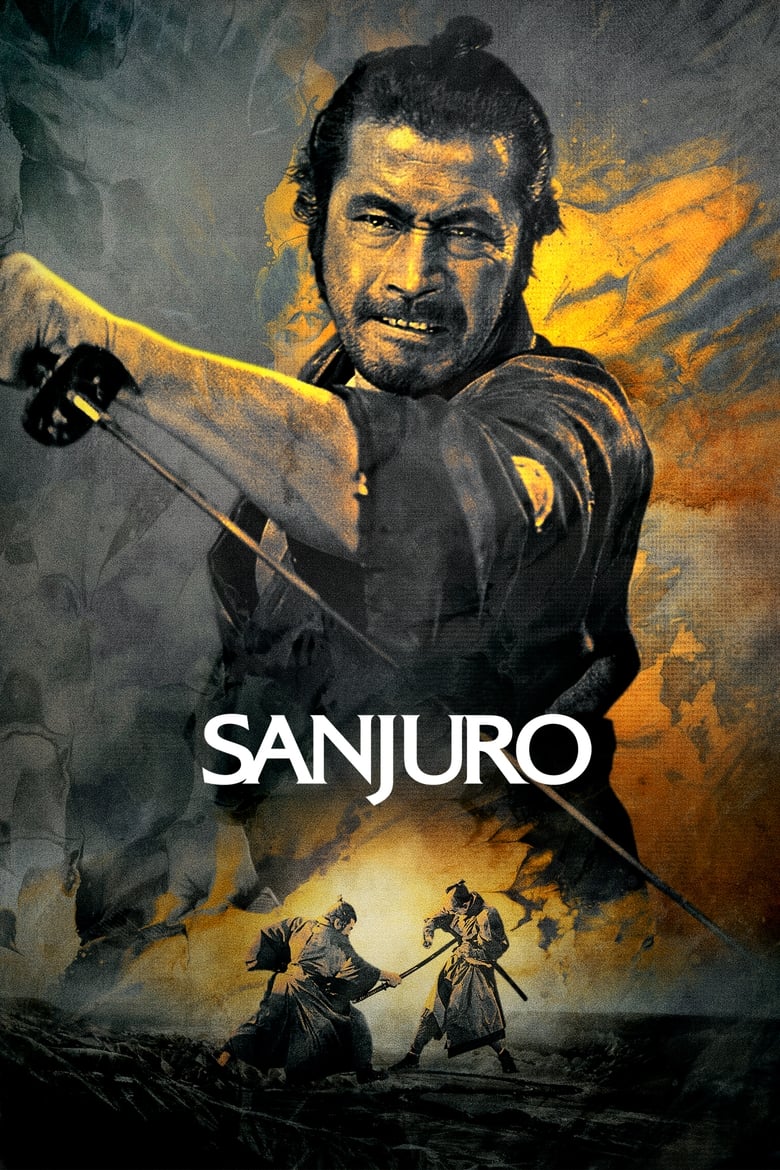
There's a moment in Sanjuro where Toshiro Mifune raises a single eyebrow, and it says more than most actors manage in an entire performance. No speech, no grand gesture. Just that look, loaded with contempt and amusement in equal measure, and you understand everything you need to know about this man. That's the film in miniature, really: precise, confident, and doing far more with less than you'd expect.
I've always thought the Yojimbo and Sanjuro pairing is one of cinema's great double acts, but here's my possibly controversial take: Sanjuro is the better film. It doesn't carry the same mythic swagger as Yojimbo, and it knows it. It isn't trying to. Where Yojimbo is a force of nature, all chaos and bravado, Sanjuro is sharper, quieter, more perfectly balanced. The craftsmanship here is so controlled, so assured, that it makes its predecessor look almost showy by comparison.
Mifune returns as the wandering ronin, still scruffy, still sardonic, still magnificent. But the character has shifted slightly. He's less the unstoppable violent engine he was before, and more the cunning operator working quietly in the background, letting the situation breathe while he figures out the best way to puncture it. He's poking fun at samurai pride even as he embodies it, and that tension is where the film finds its wit. Warrior, clown, and sage, sometimes all three within the same beat. His range is staggering, and this role shows it off beautifully. I've said it before and I'll keep saying it: Mifune is, without question, one of the greatest actors who ever lived.
Kurosawa directs with a precision that feels almost playful. The premise surrounds nine young, idealistic samurai, well-meaning but gloriously clueless, who are trying to expose corrupt officials and badly need someone to stop them getting themselves killed. The dynamic between Sanjuro's weathered instincts and their naive enthusiasm is where most of the comedy comes from, and it's genuinely funny. Not broad, not silly, but the kind of dry, knowing humour that makes you grin rather than laugh out loud. The tone is heavier than Yojimbo, yes, but the stakes still land. It never tips into farce, even when it's being quietly ridiculous.
What really strikes me on every rewatch is the way Kurosawa uses space and silence. The framing is impeccable throughout, tension built not through noise or urgency but through stillness and geometry. A corridor. A garden. A held breath. Kurosawa at his most confident and playful is still Kurosawa at one of cinema's highest levels, and if you've been following my reviews of his work, from Throne of Blood (1957) to High and Low (1963), you'll know I never tire of watching him work within a genre while quietly dismantling it from the inside.
There's also a final scene that I won't spoil, except to say it is one of the most startling, audacious, and perfectly earned moments in Kurosawa's entire filmography. It reframes everything that came before it in about three seconds flat. The film builds to it so methodically, with such dry good humour along the way, that when it arrives it hits like a cold wave. Elegant right up until the moment it isn't, and even then, it feels exactly right.
Sanjuro isn't as iconic as Yojimbo and it probably never will be. But it's every bit as essential, and in some ways, it's the smarter, more human film of the two. Endlessly rewatchable, genuinely funny, and anchored by a performance from Mifune that I suspect I could watch on a loop without it ever getting old.
Four and a half stars.
Rating: ★★★★½ | Year: 1962 | Watched: 2025-09-08
Where to watch
Watch in the UK
Stream: BFI Player · BFI Player Amazon Channel · BFI Player Apple TV Channel
Rent: Apple TV Store · Amazon Video
Buy: Apple TV Store · Amazon Video
Physical: Amazon UK · Zavvi
Watch in the US
Stream: Criterion Channel
Rent: Amazon Video · Apple TV Store · Fandango At Home
Buy: Amazon Video · Apple TV Store · Fandango At Home
Physical: Amazon US
Affiliate disclosure: Movies With Macca may earn a small commission on purchases or subscriptions started via these links. It costs you nothing extra.
Related on Movies With Macca
More from Akira Kurosawa: High and Low (1963) · Stray Dog (1949) · Throne of Blood (1957) · Ikiru (1952)
More with Toshirō Mifune: High and Low (1963) · Stray Dog (1949) · Throne of Blood (1957) · Drunken Angel (1948)
More from Japan: Mononoke the Movie: The Phantom in the Rain (2024) · Mononoke the Movie: Chapter II - The Ashes of Rage (2025) · Blue (1993) · The Ghost of Yotsuya (1959)
More from the 1960s: Viy (1967) · Persona (1966) · Carnival of Souls (1962) · Daisies (1966)
More drama: Viy (1967) · Wonder (2017) · A Better Tomorrow (1986) · Beautiful Boy (2018)
More action: A Better Tomorrow (1986) · The General (1926) · Hand of Death (1976) · Daredevil (2003)