Viy (1967)

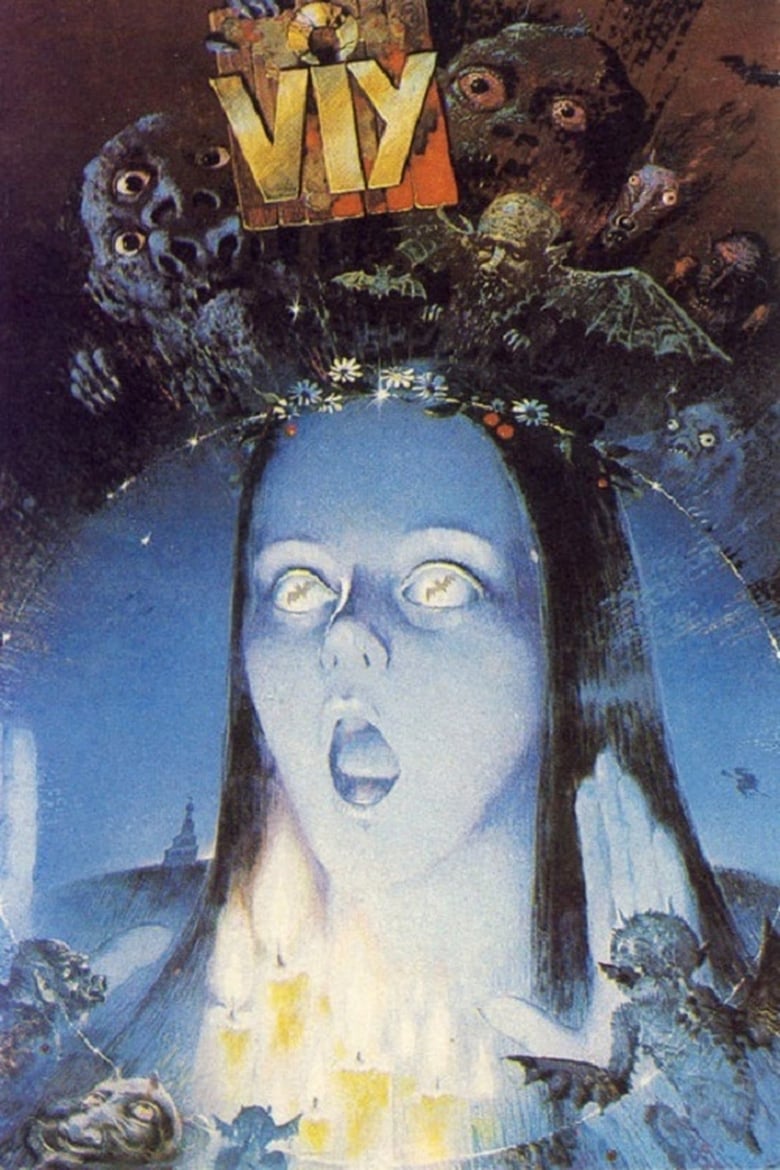
The last fifteen minutes of Viy are something else. A church fills with demons, spectral hands reach through stone walls, a levitating corpse traces slow circles through the dark, and then the creature itself is revealed: an ancient, monstrous thing with eyelids that have to be lifted by its servants just so it can look upon you. It's genuinely wild filmmaking, the kind of folk-horror climax that makes you understand exactly why this Soviet curiosity has survived six decades with its reputation intact. The problem is you have to earn it, and the film makes you work hard for the privilege.
Viy is based on a Nikolai Gogol folktale, and it follows a young seminarian who finds himself tasked with keeping a three-night vigil over the corpse of a mysterious young woman in a remote country church. Every night, the dead rise. Every morning, he stumbles out harrowed and speechless. The setup is rich with Slavic folklore and religious mysticism, a collision of Orthodox ritual and something far older and stranger lurking underneath. The production design is remarkable for when it was made, all candlelight and carved iconostases and creatures built from nightmare logic, and there are moments where the atmosphere alone is enough to make your skin prickle.
Historically, this is significant stuff. It's widely considered the Soviet Union's first and only officially sanctioned horror film, and you can feel the weight of that novelty in how ambitiously the filmmakers threw themselves at it, especially in those final sequences. The practical effects are inventive in ways that big-budget horror of the same era often wasn't, and the folkloric specificity gives it a texture that feels both culturally rooted and universally unsettling. It prefigures a whole strand of folk horror that wouldn't fully arrive in English-language cinema for another fifty years.
But getting there is a genuine test of patience. The first two acts move with what I can only describe as liturgical slowness. Long stretches of chanting, of walking through fields, of dialogue-heavy scenes that don't quite have the visual dynamism to carry their own weight. I understand what the directors were going for: a sense of dread built through repetition and ritual, the oppressive rhythm of something inevitable closing in. And sometimes it works. Often, though, it tips over from atmospheric into stagnant, and I found myself watching the candles burn rather than feeling any mounting tension.
The performances are earnest throughout, but the restrained, almost theatrical style of the early scenes makes the film feel oddly airless in places. There's a version of this story that sustains its creepiness across all three acts, where every vigil escalates meaningfully. Viy isn't quite that film. It's more like a slow trudge through fog that eventually opens onto a genuinely spectacular view. Worth seeing? Yes. Consistently rewarding? Not really.
I kept thinking about how Stalker does something similar with slowness, using near-glacial pacing as a kind of spiritual pressure, and how Tarkovsky earns every single minute of it. Viy is working in a different register entirely, closer to fairy tale than philosophical allegory, and perhaps that's why the deliberate tempo feels harder to justify. The slowness there feels necessary. Here, it feels like the film occasionally loses the thread of its own dread.
Two and a half stars, and I mean that honestly as a mixed verdict rather than a dismissal. If you can tune into its ritualistic wavelength and let the folklore wash over you, the finale delivers the sort of payoff that sticks with you. But if you go in expecting consistent tension or a narrative that builds with any kind of propulsive energy, you'll likely end up admiring it from a slight distance rather than being genuinely gripped by it. A fascinating piece of cinema history, and an occasionally brilliant one. Just not a timeless classic.
Rating: ★★½ | Year: 1967 | Watched: 2026-05-19