
The Ghost of Yotsuya (1959)
★★★ — The Ghost of Yotsuya (1959)

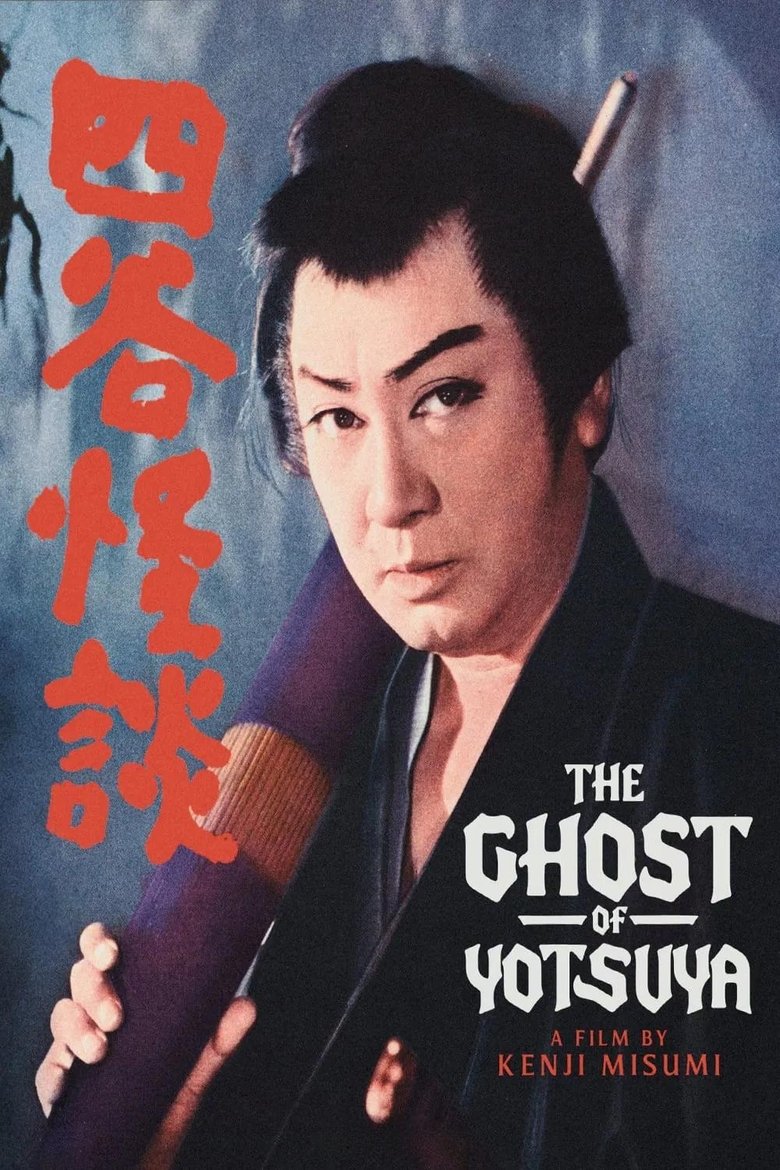
The story of Oiwa, the wronged wife whose spirit rises to torment the man who destroyed her, is about as central to Japanese popular culture as ghost stories get. First performed as a kabuki play by Tsuruya Nanboku IV in 1825, the tale of Yotsuya Kaidan has been adapted for stage and screen more times than most scholars can reliably count, with each generation finding fresh reasons to return to its themes of betrayal, guilt, and retribution. By 1959, when Daiei Film produced this version, the story was already a well-worn piece of national mythology, the kind of material that Japanese audiences would recognise from childhood and bring their own associations to long before the lights went down.
The film was directed by Kenji Misumi, a Daiei contract director who over the course of a long career became one of the studio's most reliable craftsmen, comfortable across samurai pictures, period dramas, and genre fare of various kinds. His feel for the formal demands of chambara filmmaking gives the film a measured, disciplined visual foundation, though as you will read below, the supernatural elements push things into rather more unsettling territory than his typical output. Misumi would later direct Shogun Assassin, which gives some sense of his range across violent, stylised genre pictures. The source material here, rooted in kabuki performance tradition, brings with it a theatricality that the film wears fairly openly: exaggerated staging, symbolic imagery, and a moral architecture drawn in broad, confident strokes. The principal cast is led by Kazuo Hasegawa, one of the biggest stars of Japanese cinema in the postwar decades and a performer whose background in kabuki theatre made him a natural fit for material of this kind. Alongside him, Yasuko Nakada takes on the role of the doomed wife, with Yōko Uraji, Mieko Kondō, and Jōji Tsurumi filling out a cast that reads as polished but unremarkable by the standards of the era's bigger productions.
For anyone coming to Japanese horror cinema of the 1950s and wanting a sense of how the country's genre films sat alongside their Western contemporaries, this is a useful reference point. While Hollywood was occupied with alien invasions and atomic anxieties (films like Invasion of the Body Snatchers being a reasonable parallel from the same year) and European filmmakers were finding their own corners of the uncanny, Japanese cinema was drawing on a much older folk tradition, one rooted in shame, honour, and the particular terror of the unavenged dead. The Snow Woman, made nearly a decade later and also drawing on classical Japanese supernatural folklore, offers a useful point of comparison for those interested in how that tradition developed across the decade that followed.
The Ghost of Yotsuya (1959), directed by Nobuo Nakagawa, is a striking early entry in Japanese horror that blends samurai drama with supernatural vengeance and does so with eerie elegance and visual daring. Based on a classic kabuki ghost story, it follows a dishonourable ronin whose betrayal and murder of his wife unleash a spectral force that haunts him with chilling persistence. Unlike Western horror of the same era, which often relied on monsters or mad scientists, Yotsuya leans into psychological torment and poetic justice, where guilt manifests as hallucination, decay, and inescapable retribution. The film’s greatest strengths lie in its surreal, dreamlike sequences: faces peeling away, ghostly figures emerging from mist, and blood that flows like ink across tatami mats. Nakagawa uses stark lighting, abrupt cuts, and theatrical staging (echoing its kabuki roots) to create an atmosphere thick with dread. These moments feel genuinely unsettling even today, not because of gore, but because of their uncanny stillness and symbolic weight. That said, the pacing can be uneven, and the narrative occasionally gets bogged down in period detail or melodrama. The moral framework is clear-cut (sin leads to ruin), leaving little room for ambiguity, and some character motivations feel rushed. Yet these flaws are part of its charm. It’s less a polished thriller and more a feverish morality play rendered in shadow and smoke. The Ghost of Yotsuya may not be as widely known as Kwaidan or Onibaba, but it’s a worthy precursor to Japan’s golden age of horror. Decent samurai storytelling meets genuinely great surreal horror imagery, resulting in a film that’s atmospheric, haunting, and historically significant, even if it doesn’t fully cohere as a modern narrative. A must-watch for fans of folk horror and ghost stories rooted in cultural tradition.
What stays with me after all of that is the sense that Yotsuya Kaidan works best when you stop expecting it to behave like a conventional horror film and let it operate on its own terms, somewhere between morality tale, theatrical spectacle, and waking nightmare. The surreal imagery really does linger, and for me that counts for quite a lot. It is the kind of film that earns its reputation not through relentless tension but through a handful of moments that lodge themselves somewhere uncomfortable and refuse to shift. Flawed, yes, and occasionally a bit of a slog, but the good bits are genuinely good. Worth an evening and a bit of patience.
Rating: ★★★ | Year: 1959 | Watched: 2026-05-01
Where to watch
Watch in the US
Stream: AMC Plus Apple TV channel · AMC+ · Night Flight Plus · OVID
Rent: Amazon Video
Buy: Amazon Video
Physical: Amazon US
Affiliate disclosure: Movies With Macca may earn a small commission on purchases or subscriptions started via these links. It costs you nothing extra.
Related on Movies With Macca
More from Kenji Misumi: Shogun Assassin (1980)
More from Japan: Mononoke the Movie: The Phantom in the Rain (2024) · Mononoke the Movie: Chapter II - The Ashes of Rage (2025) · Blue (1993) · Street Fighter (1994)
More from the 1950s: Invasion of the Body Snatchers (1956) · Alice in Wonderland (1951) · Letter from Siberia (1957) · Invaders from Mars (1953)
More drama: Viy (1967) · Wonder (2017) · A Better Tomorrow (1986) · Beautiful Boy (2018)
More horror: Invasion of the Body Snatchers (1956) · Viy (1967) · Nightmare City (1980) · Angst (1983)



