A Better Tomorrow (1986)
★★★½ — A Better Tomorrow (1986)

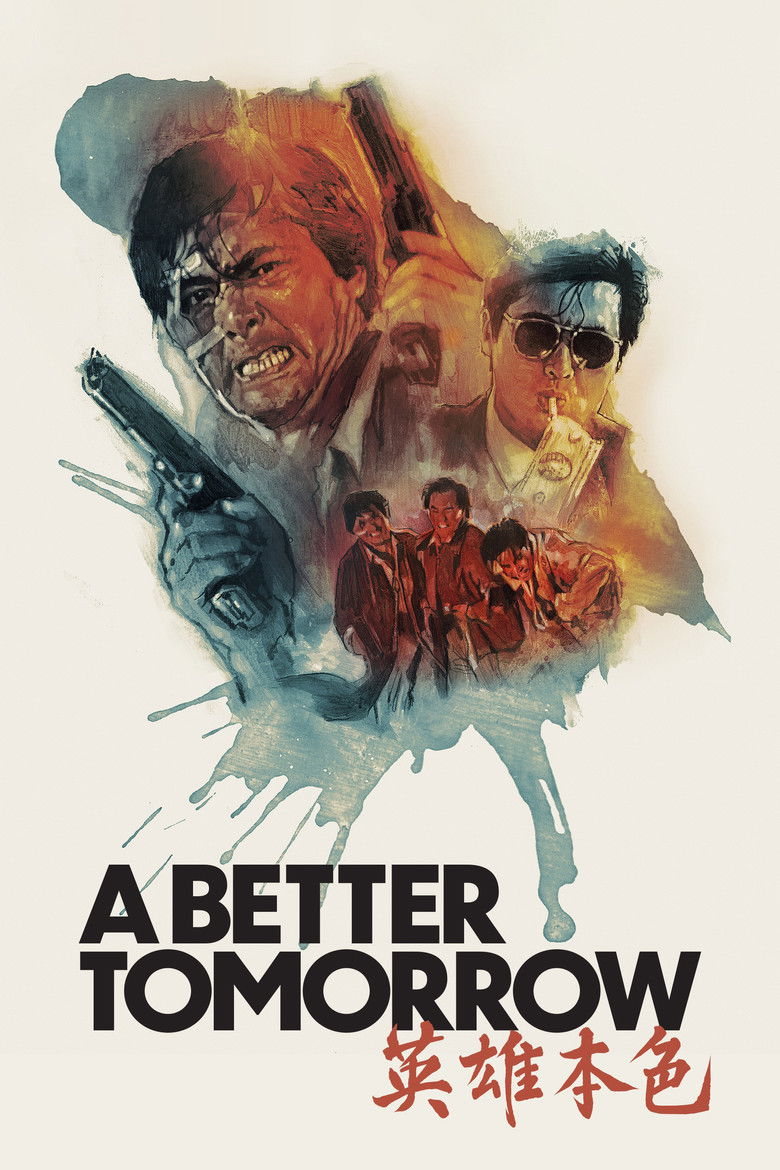
There's a moment in A Better Tomorrow where Chow Yun-fat lights a cigarette with a burning banknote, and I genuinely don't think I've seen anything cooler put on screen before or since. It's not a plot-critical moment. Nothing hinges on it. But it tells you everything about who this man is, what he values, what he's lost, and what he's still clinging to. That's John Woo's gift, and it's all over this film: the ability to make gesture speak louder than dialogue, to turn the smallest action into character revelation.
This is Hong Kong triad melodrama, and it wears that proudly. Two brothers, one going straight, one neck-deep in the criminal world, a loyal friend caught between honour and the wreckage of his own ambitions. You've seen that architecture before. But what Woo does with it is something else entirely. The shootouts aren't just exciting, they're mournful. They feel like funerals for men who made their choices and are now paying the tab. Slow motion, rain-soaked alleyways, doves cutting through the gunsmoke, chiaroscuro lighting that makes every frame feel like a stage set for Greek tragedy. It's operatic in the best sense, big, sincere, and completely committed to its own emotional register.
Chow Yun-fat as Mark is the engine of the whole thing. His star-making performance here is one of those rare occasions where you can almost see a career crystallising in real time. He oozes charisma without effort, but underneath that cool exterior there's genuine vulnerability, a man who knows the world he believed in no longer exists and hasn't yet worked out how to live in the new one. It became the template for what you might call the Woo hero: stylish and doomed and achingly human all at once. Ti Lung brings real stoic weight to the conflicted elder brother, and Leslie Cheung captures a kind of raw, youthful anguish that stops the whole thing from tipping into pure style exercise.
The action sequences are choreographed with a precision and emotional logic that still feels fresh. Every bullet fired seems to carry a specific feeling behind it, regret, loyalty, rage, grief. The soundtrack leans hard into sweeping, synth-soaked sentimentality, and it works, amplifying the quieter sorrow just as effectively as the explosive set pieces. I'm always a bit suspicious of action cinema that mistakes noise for feeling, but this is the opposite problem, it earns every emotional beat it reaches for.
It's not without its rough edges. The pacing does sag a little through the middle stretch, and some of the dialogue tips into melodrama that even the sincerest performance can't quite rescue. But honestly, I'm not sure those flaws matter much in the grand scheme of what's being achieved here. The film has such conviction, such genuine artistic ambition, that the imperfections feel like they belong. This is a film that believes in itself completely, and that belief is contagious.
What strikes me most, having come to Hong Kong cinema through a range of different eras and styles (I've written about the Shaw Brothers before, see my piece on Come Drink with Me), is how seismic the shift that A Better Tomorrow represents actually was. This is where a new visual language was being forged, one that would echo through Hollywood action cinema for decades, through gun-fu, through the whole aesthetic of cool-under-pressure heroism. You can draw a direct line from this film to a great deal of what followed, globally.
Modern tragedy dressed in leather and gun smoke is the most accurate description I can offer. It's more than a great action film, it's a genuinely moving piece of work about brotherhood, sacrifice, and the cost of loyalty in a world that treats loyalty as a weakness. Decades on, it still hits.
Three and a half stars.
Rating: ★★★½ | Year: 1986 | Watched: 2026-05-15
Where to watch
Watch in the UK
Rent: Apple TV Store · Amazon Video
Buy: Apple TV Store · Amazon Video
Physical: Amazon UK · Zavvi
Watch in the US
Stream: fuboTV
Rent: Amazon Video · Apple TV Store · Google Play Movies · YouTube
Buy: Amazon Video · Apple TV Store · Google Play Movies · YouTube
Physical: Amazon US
Affiliate disclosure: Movies With Macca may earn a small commission on purchases or subscriptions started via these links. It costs you nothing extra.
Related on Movies With Macca
More from John Woo: Hand of Death (1976)
More from Hong Kong: Hand of Death (1976) · Come Drink with Me (1966) · Street Fighter (1994) · Rumble in the Bronx (1995)
More from the 1980s: Nightmare City (1980) · Style Wars (1983) · Garlic Is as Good as Ten Mothers (1980) · Angst (1983)
More action: The General (1926) · Hand of Death (1976) · Daredevil (2003) · Hulk Hogan: Real American (2026)
More crime: Angst (1983) · Stolen Face (1952) · Cairo Station (1958) · The Naked Gun: From the Files of Police Squad! (1988)