
Throne of Blood (1957)
★★★★½ — Throne of Blood (1957)

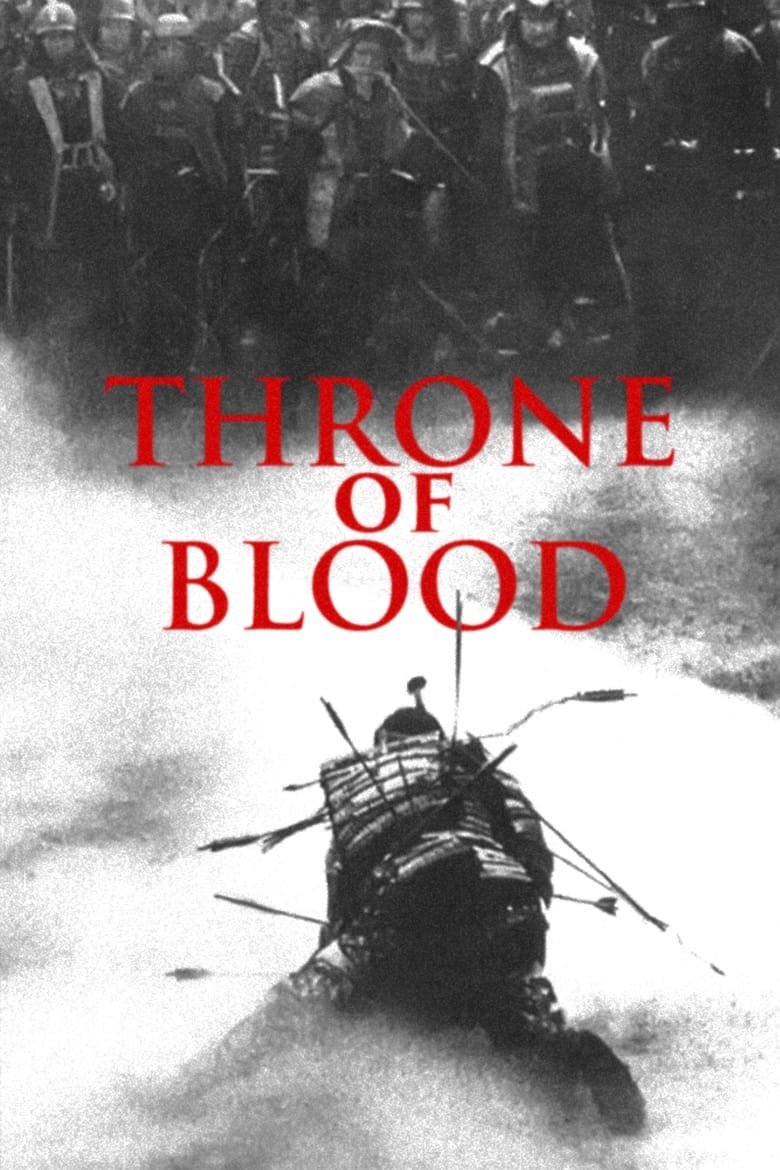
There's a moment early in Throne of Blood where two soldiers ride through a fog-drenched forest, the mist so thick it swallows them whole, and you realise you're watching something genuinely uncanny. Not scary in the jump-cut sense. Scary in the way a half-remembered dream is scary, where the wrongness seeps in before you can name it. That feeling never fully leaves the film. It just gets darker.
This is Kurosawa's adaptation of Macbeth, though calling it an "adaptation" feels almost too modest. It's a transplanting of Shakespeare's soul into feudal Japan, where the rhythms of Noh theatre replace the iambic pentameter, and where fate feels less like a literary device and more like weather. The prophecy here doesn't come from witches on a heath. It comes from a spirit in the trees, barely glimpsed, almost serene, which somehow makes it worse.
I'll be honest: the opening act demands patience. The pacing is deliberate, almost meditative. Fog, silence, slow rides across barren hills. If you come in expecting action and incident, it might feel like a test of will. But Kurosawa is doing something specific with that stillness. He's building the weight of inevitability, the sense that these men are already trapped, already falling, and just haven't understood it yet. By the time the ambition kicks in, the dread is already fully loaded.
And then Toshiro Mifune takes hold of the film and doesn't let go. His Washizu, the loyal general seduced by prophecy and his own hunger for power, is one of the great screen performances. Controlled fury, trembling paranoia, moral collapse rendered in every twitch and glare. He doesn't signal ambition so much as he embodies its corrosion, the way it hollows a man out from the inside. Watching him, you believe utterly in the destruction. I've seen Mifune across a lot of Kurosawa's work, from Rashomon to Yojimbo, and this might be the performance where I feel the most genuine unease from him. There's no swagger here. Just rot.
Isuzu Yamada is equally terrifying as Lady Asaji, his wife. Where Mifune erupts, she controls. She's glacially calm on the surface, every word measured, every glance calculated, and the manipulation beneath is all the more chilling for how quiet it is. Their scenes together have the texture of a pact being slowly, irrevocably signed. She's the one who keeps her composure longest, and so her eventual unravelling lands with devastating force.
The cinematography is extraordinary throughout, stark and high-contrast, the kind of imagery that burns itself into memory. But it's the finale that stops the breath entirely. Arrows rain down in a volley that feels simultaneously brutal, poetic, and almost absurd in the best possible way, a sequence of pure physical spectacle that could only have been staged by someone who understood that excess, in the right hands, is its own kind of truth. It's one of the most astonishing things I've ever seen in a film, full stop.
What makes Throne of Blood so enduring is how completely it earns its mythic quality. The Noh-inspired performance style, the ghostly ambiance, the sparse, almost ritualistic use of sound and silence: it all coalesces into something that feels less like a story being told and more like a curse being enacted. Shakespeare's Macbeth is a great play. This is something else entirely. Something that gets under the skin in a way no straight theatrical staging ever quite manages.
Slow at first, yes. But that stillness is the point. It makes the collapse all the more devastating when it comes, because you've felt the weight of the world pressing down on these people for nearly two hours, and when it finally crushes them, it feels earned and inevitable and awful. Not just one of Kurosawa's greatest films. One of the greatest films ever made. Four and a half stars, and I'd argue for five on a dark night.
Rating: ★★★★½ | Year: 1957 | Watched: 2025-10-25
Where to watch
Watch in the UK
Stream: BFI Player · BFI Player Amazon Channel · BFI Player Apple TV Channel
Rent: Apple TV Store · Amazon Video
Buy: Apple TV Store · Amazon Video
Physical: Amazon UK · Zavvi
Watch in the US
Stream: HBO Max Amazon Channel · Criterion Channel · HBO Max
Rent: Amazon Video · Apple TV Store · Fandango At Home
Buy: Amazon Video · Apple TV Store · Fandango At Home
Physical: Amazon US
Affiliate disclosure: Movies With Macca may earn a small commission on purchases or subscriptions started via these links. It costs you nothing extra.
Related on Movies With Macca
More from Akira Kurosawa: High and Low (1963) · Stray Dog (1949) · Ikiru (1952) · Sanjuro (1962)
More with Toshirō Mifune: High and Low (1963) · Stray Dog (1949) · Sanjuro (1962) · Drunken Angel (1948)
More from Japan: Mononoke the Movie: The Phantom in the Rain (2024) · Mononoke the Movie: Chapter II - The Ashes of Rage (2025) · Blue (1993) · The Ghost of Yotsuya (1959)
More from the 1950s: Invasion of the Body Snatchers (1956) · Alice in Wonderland (1951) · Letter from Siberia (1957) · Invaders from Mars (1953)
More drama: Viy (1967) · Wonder (2017) · A Better Tomorrow (1986) · Beautiful Boy (2018)
More history: Apocalypto (2006) · Rio 2096: A Story of Love and Fury (2013) · Harakiri (1962) · Night and Fog (1956)



