Ikiru (1952)
★★★★ — Ikiru (1952)

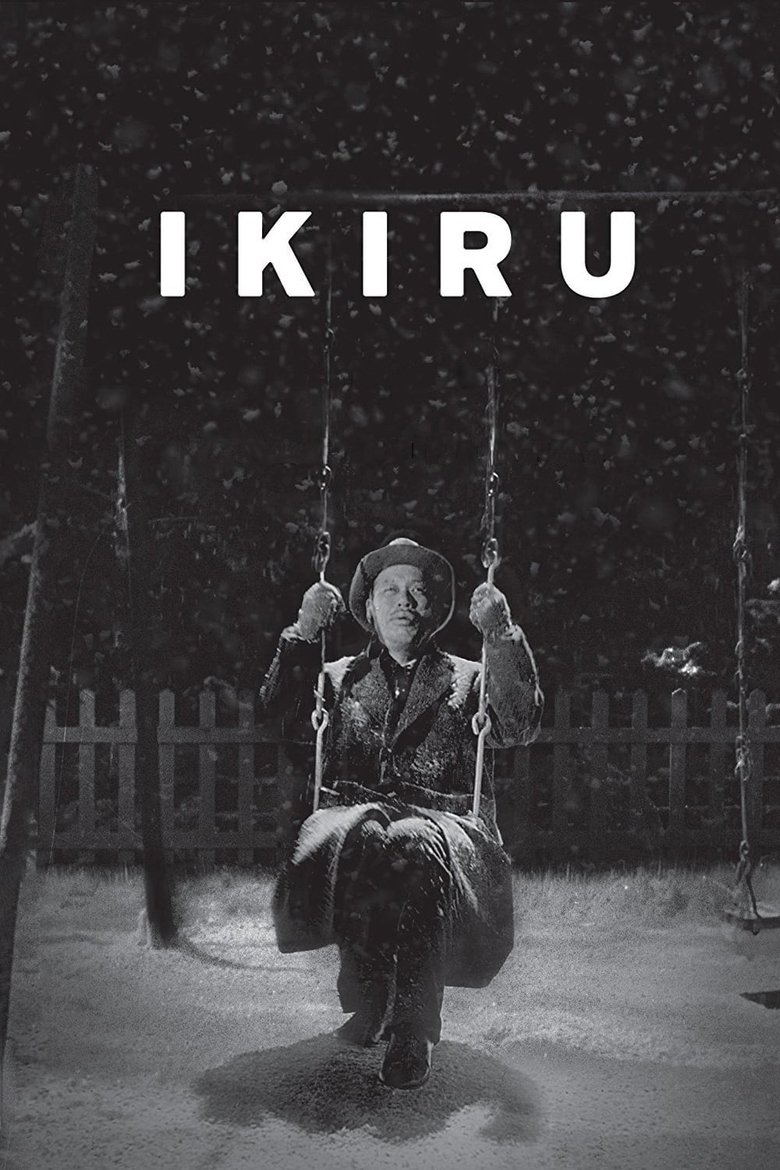
There's a scene near the end of Ikiru that I genuinely don't think I'll ever shake. A man sits alone on a children's swing in a snow-dusted park, rocking gently back and forth, humming a song. He's dying. He knows it. And yet something in his expression sits closer to peace than despair. I've seen a lot of films. That image belongs to a very short list.
Akira Kurosawa made spectacles. He made epics. I loved Seven Samurai (1954), which crackles with energy and urgency and all the dynamism you'd expect from one of cinema's great action directors. Ikiru is something else entirely. It's quiet. Deliberately, almost stubbornly quiet. And it earns every second of that silence.
Takashi Shimura plays Kanji Watanabe, a mid-level government bureaucrat who has spent roughly thirty years doing very little of consequence. Stamp this, file that, pass it along, wait for someone else to make the call. He's become a piece of furniture in the office. Then comes the diagnosis: stomach cancer, terminal. And suddenly all those wasted decades rush up to meet him at once.
What Shimura does with this role is extraordinary. There's no grand speech, no explosive breakdown. It's all in his eyes, in the way he carries his body, the slight tremor of a man who has realised, too late, that he sleepwalked through his own life. Heartbreaking is an overused word, but I'm using it here because it fits.
I'll be honest with you: the first half is a slow burn. Deliberately so, and I think Kurosawa knows exactly what he's doing. We're made to sit inside the suffocating grind of bureaucratic inertia, to feel the same grey weight that has crushed Watanabe for decades. It's sharp social commentary, and the observations about how institutions swallow human beings whole are still painfully relevant today. But it's not gripping in the way that, say, High and Low (1963) is gripping. If you go in expecting that kind of moral tension and procedural momentum, you might find yourself fidgeting. Fair warning.
The second half, though. That's where Ikiru becomes something genuinely rare. Structured almost like a wake, it shifts perspective and dissects Watanabe's final months through the eyes of colleagues and bystanders who didn't quite understand what they were witnessing while it happened. It's a formally bold decision, and it pays off completely. The question the film keeps circling, asking it in different ways through different mouths, is one none of us can avoid: how do we live? Not how do we survive, not how do we succeed, but how do we actually live?
Kurosawa doesn't moralize. He doesn't point a finger. He just lets Watanabe's small, stubborn act of purpose speak for itself. The man decides to get one thing done. A children's playground, of all things, carved out of a patch of wasteland. It shouldn't be enough. Somehow it is. The film makes you believe it is, and that's the real achievement.
It is demanding. Its pacing asks for patience and a certain willingness to sit with discomfort. This isn't Rashomon (1950), where the formal puzzle keeps you leaning forward. Ikiru leans back, and asks you to do the same. Some viewers will bounce off it. I understand that. But I also think those who give it the time it asks for will come away changed, at least a little.
Because that's what the best films about mortality do. They don't just make you feel sad for the character on screen. They make you feel something about your own life, your own days, your own accumulation of small choices and deferrals. Ikiru got under my skin in that way. The swing, the snow, the song. I closed my laptop and sat with it for a while.
Four stars. One of the most honest films about what it means to be alive that I've ever had the privilege of watching.
Rating: ★★★★ | Year: 1952 | Watched: 2025-10-11
Where to watch
Watch in the UK
Stream: BFI Player · BFI Player Amazon Channel · BFI Player Apple TV Channel
Rent: Apple TV Store · Amazon Video
Buy: Apple TV Store · Amazon Video
Physical: Amazon UK · Zavvi
Watch in the US
Stream: HBO Max Amazon Channel · Criterion Channel · HBO Max
Rent: Amazon Video · Apple TV Store · Google Play Movies · YouTube
Buy: Amazon Video · Apple TV Store · Google Play Movies · YouTube
Physical: Amazon US
Affiliate disclosure: Movies With Macca may earn a small commission on purchases or subscriptions started via these links. It costs you nothing extra.
Related on Movies With Macca
More from Akira Kurosawa: High and Low (1963) · Stray Dog (1949) · Throne of Blood (1957) · Sanjuro (1962)
More with Takashi Shimura: Stray Dog (1949) · Throne of Blood (1957) · Drunken Angel (1948) · Rashomon (1950)
More from Japan: Mononoke the Movie: The Phantom in the Rain (2024) · Mononoke the Movie: Chapter II - The Ashes of Rage (2025) · Blue (1993) · The Ghost of Yotsuya (1959)
More from the 1950s: Invasion of the Body Snatchers (1956) · Alice in Wonderland (1951) · Letter from Siberia (1957) · Invaders from Mars (1953)
More drama: Viy (1967) · Wonder (2017) · A Better Tomorrow (1986) · Beautiful Boy (2018)