Persona (1966)
★★★ — Persona (1966)

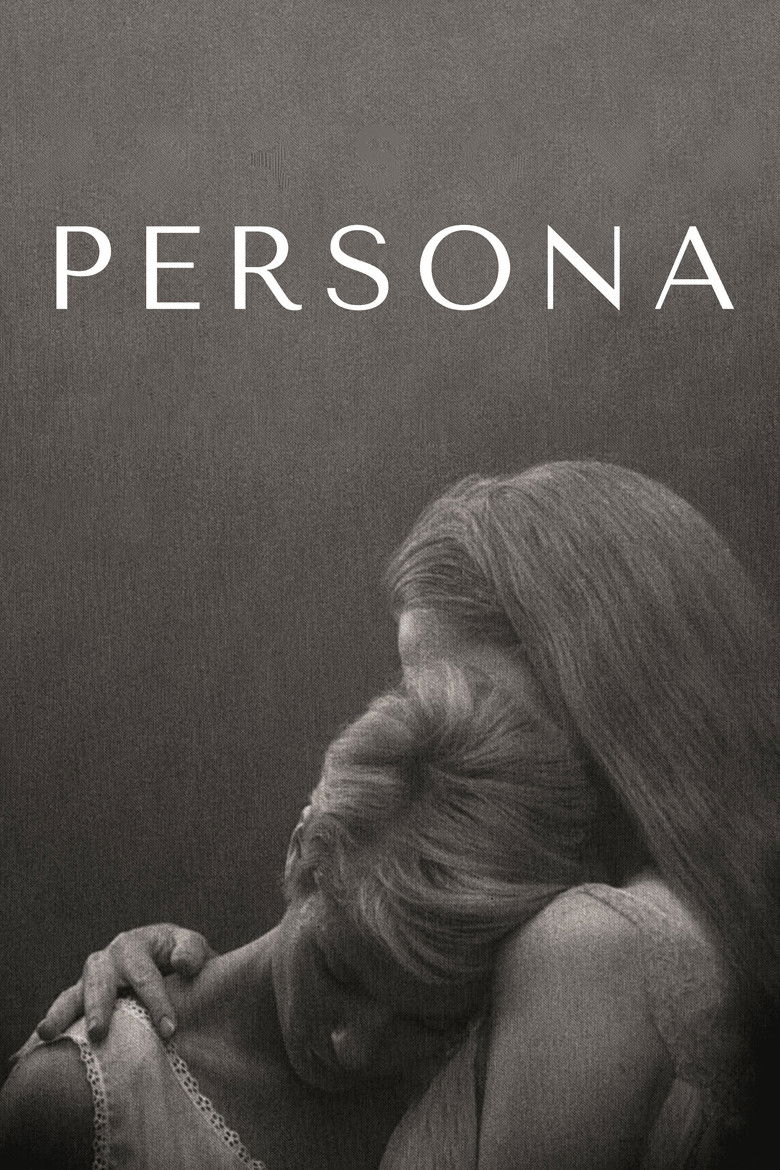
Let me be straight with you: Persona is one of those films where the reputation and the reality sit in slightly uncomfortable tension with each other. It's brilliant in ways that are genuinely hard to argue with, and it contains a scene that I found genuinely disturbing, and not in the way Bergman probably intended. Three stars feels right to me, and I want to explain why.
Start with what works, because plenty does. Liv Ullmann and Bibi Andersson are extraordinary here. Ullmann plays a celebrated stage actress who has, for reasons the film never fully explains, simply stopped speaking. Andersson is the young nurse assigned to care for her, first in a hospital and then in an isolated seaside house. What develops between them is one of cinema's great two-handers: a slow, unsettling merging of identities where you begin to lose track of where one woman ends and the other begins. The performances do this heavy lifting with barely a word from one of them. A flicker of an eye, a slight curl of the lip, a pause held a beat too long. It's the kind of acting that makes you lean forward without realising you've done it.
The black-and-white photography is something else. Sharp contrasts, faces filling the entire frame, shadows that feel like they have their own interior life. Visually, the film earns every superlative that's ever been thrown at it. And Bergman's structural choices, the fragmented narrative, the dream logic, the moments where the film itself seems to break down, feel genuinely bold rather than merely showy. If you've spent time with his other work, and I'd point you towards my review of Winter Light (1963) as a companion piece, you'll recognise his preoccupations: silence as a form of power, the masks we construct to survive, the terrifying proximity of other people's inner lives to our own. Persona explores all of that with real intelligence.
But here's where I have to be honest about something that cast a long shadow over my viewing. There's a monologue, delivered matter-of-factly by one character, in which she recounts a sexual encounter involving two underage boys. It's framed as part of her psychological unravelling, a glimpse into something dark and complicated about her character. I understand the dramatic intention. I don't think the intention is adequate.
The scene has no critical weight behind it. There's no consequence, no framing that acknowledges what's actually being described. It just sits there. And I kept thinking: if a male character had calmly recounted a similar encounter with young girls, the reaction, in 1966 and certainly now, would have been very different. The discomfort would have been intentional and acknowledged. Here, it feels like Bergman simply didn't register the same alarm. That's not a small thing. It felt gross to me, and I don't think artistic ambition or historical context fully excuses it.
This is the kind of scene that makes you think about what we mean when we call something a masterpiece. I've sat with similar discomfort watching other provocateurs, Lars von Trier among them, and you can read my thoughts on his approach in my reviews of Nymphomaniac: Vol. I (2013) and Nymphomaniac: Vol. II (2013). The question of where provocation ends and ethical failure begins is one I don't think we should stop asking, regardless of how canonical a film has become.
So where does that leave Persona? It's a genuinely important piece of filmmaking. The performances are astonishing, the images are unforgettable, and the ideas it's wrestling with about identity, projection, and the violence hidden inside intimacy are real and worth your time. But important isn't the same as unimpeachable. Artistic genius doesn't automatically confer moral authority, and I think the honesty of any serious engagement with this film requires saying so out loud.
Three stars.
Rating: ★★★ | Year: 1966 | Watched: 2026-05-10
Where to watch
Watch in the UK
Stream: BFI Player · BFI Player Amazon Channel · BFI Player Apple TV Channel · Artiflix
Rent: Apple TV Store · Amazon Video
Buy: Apple TV Store · Amazon Video
Physical: Amazon UK · Zavvi
Watch in the US
Stream: HBO Max Amazon Channel · Darkroom · HBO Max · Artiflix
Rent: Amazon Video · Apple TV Store · Fandango At Home
Buy: Amazon Video · Apple TV Store · Fandango At Home
Physical: Amazon US
Affiliate disclosure: Movies With Macca may earn a small commission on purchases or subscriptions started via these links. It costs you nothing extra.
Related on Movies With Macca
More from Sweden: Only God Forgives (2013) · The Match Factory Girl (1990) · Nymphomaniac: Vol. I (2013) · Nymphomaniac: Vol. II (2013)
More from the 1960s: Viy (1967) · Carnival of Souls (1962) · Daisies (1966) · Symbiopsychotaxiplasm: Take One (1968)
More drama: Viy (1967) · Wonder (2017) · A Better Tomorrow (1986) · Beautiful Boy (2018)