Invasion of the Body Snatchers (1956)

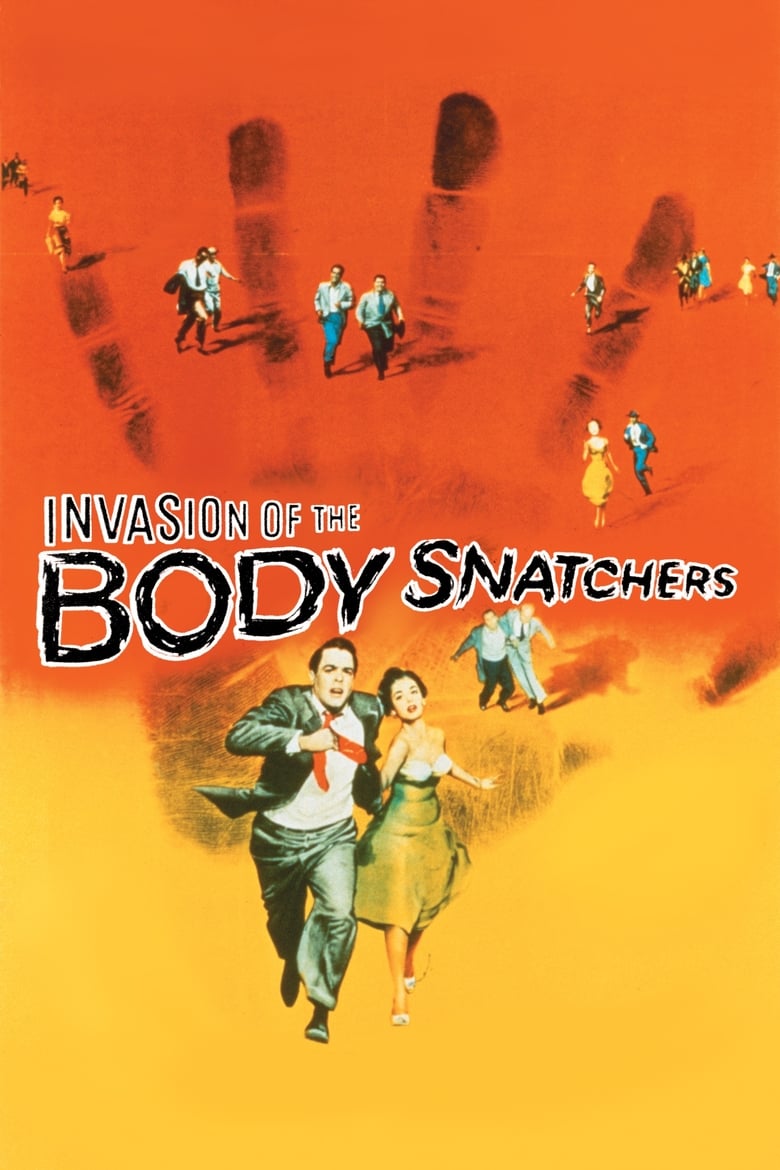
There's something uniquely unnerving about a horror film that doesn't bother with monsters in the traditional sense. No fangs, no slime, no creature lurching out of the dark. Just your neighbour, your wife, your doctor, looking exactly as they always did but with something quietly, irretrievably gone behind the eyes. That's the terror at the heart of Don Siegel's Invasion of the Body Snatchers, and fifty-odd years on, it still gets under your skin.
I came to this one having already seen the 1978 remake first, which probably shaped my reaction more than I'd like to admit. That version hit me hard: grimy San Francisco streets, a genuinely bleak ending, a score that felt like the sound of your own sanity slipping. So watching the original, I was always going to be measuring it against something I'd already fallen for. That's not entirely fair on a film that essentially invented the template, but it's the honest truth of how I experienced it.
And the original is genuinely great, for most of its running time. Siegel directs with a lean, no-nonsense efficiency that suits the material perfectly. There's no fat here. The black-and-white photography keeps things stark and slightly dreamlike, and the score ratchets up the dread without ever tipping into melodrama. Kevin McCarthy anchors it all with a performance that's earnest and grounded, which matters enormously when you're asking audiences to buy into a premise this strange. You believe his panic. You believe his desperation. And that belief is what makes the horror land.
What the film does brilliantly is keep the threat human-shaped and domestic. The pod people don't announce themselves. They don't arrive with explosions or spectacle. They're already in your living room, already sitting across from you at the breakfast table, already wearing the face of someone you love. It's that proximity that makes the film's central allegory cut so deep, whether you read it as a warning about Cold War conformity, the creeping pressure of McCarthyism, or just the quieter, everyday fear of looking at someone familiar and finding a stranger. The film is flexible enough to hold all of those readings at once.
It reminded me, in some ways, of Invaders from Mars, another fifties sci-fi that uses an alien invasion as a lens for domestic paranoia. That film leans more into the nightmare logic of childhood dread, but both are working the same nerve: the terror of not being able to trust the people closest to you.
Where Invasion of the Body Snatchers loses me slightly is in its framing device. The film opens with McCarthy's character already in full crisis mode, raving in a hospital, before flashing back to explain how we got there. I understand the impulse, and I've read that it was partly a studio-mandated addition. But it does blunt the slow-burn dread of the main story. A more linear structure would have let the creeping unease build more organically, letting us arrive at the horror at the same pace as the protagonist, rather than knowing from the outset that things go very wrong. It's not a fatal flaw, but it's a real one.
Some of the dialogue, too, leans into the period melodrama in ways that occasionally pull you out of the atmosphere Siegel is working so hard to build. Small complaints, but worth naming.
None of that stops this from being essential viewing. The 1978 remake might be my preferred version on a purely visceral level, but the original earns its iconic status honestly. It got there first. It captured the anxieties of its moment with a clarity and economy that most films with twice the budget and twice the running time never manage. The scariest invasions don't come with fanfare. They come quietly, with a familiar face and a warm smile, in broad daylight.
Three and a half stars.
Rating: ★★★½ | Year: 1956 | Watched: 2026-05-19