
High and Low (1963)
★★★★★ — High and Low (1963)

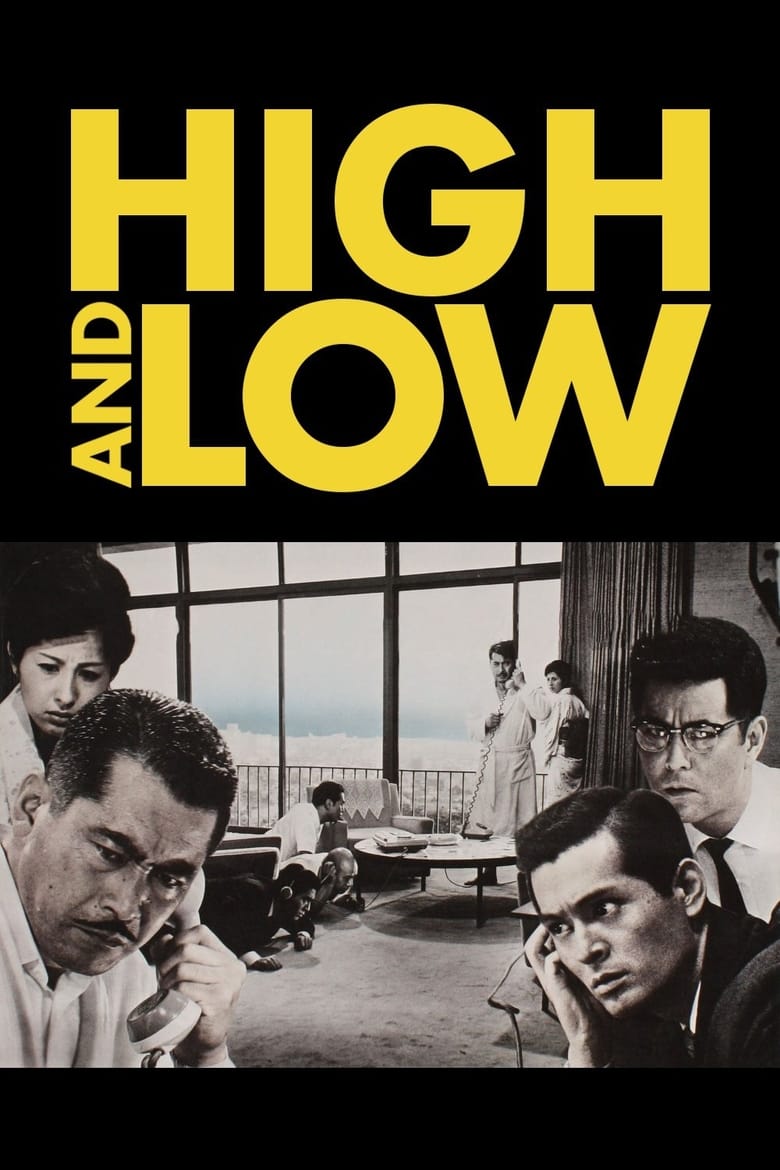
Akira Kurosawa is the greatest director who ever lived. I'll say it plainly and I'll stand by it. And if you want one film to make that case, High and Low might just be it.
Coming into this one, my experience of Kurosawa and Toshiro Mifune together had been entirely through their samurai pictures. Sanjuro, Rashomon, the whole glorious run of them. So there was a real curiosity for me in watching them both step away from that world entirely and into something rooted in modern Japan, in crime, in moral anguish played out across boardrooms and back streets. What I found was a film so confident, so precisely constructed, that it left me a bit stunned by the end of it.
Mifune here is extraordinary. I'd put him alongside Al Pacino as one of the finest screen actors who has ever drawn breath, and this performance only cements that for me. There's so much going on behind his eyes in this film. He's playing a man caught in an impossible situation, and the weight of that sits on him in every single frame. He doesn't need to shout to fill a room. He just exists in a scene and you cannot look at anything else.
What's remarkable about High and Low is how little it relies on spectacle. This isn't an action film. There are no sword fights, no chases that exist purely for the thrill of them. What drives the whole thing forward is the writing and the performances, and both are absolutely flawless. The film shifts in structure partway through in a way that should feel jarring but instead feels completely earned, like Kurosawa is saying: right, you thought you knew what kind of film this was. You didn't. The tension never lets up, it just changes shape.
The soundtrack deserves a mention too, because it does something really specific. It never overdoes it. It knows exactly when to press and when to pull back, which is more discipline than most films manage.
There's a moral seriousness to the whole thing that reminds me of what Kurosawa does in Ikiru. That film asks what a life amounts to. This one asks what a conscience costs. Both questions are posed without easy answers, and both films are better for it.
Now. I'm going to be honest about something. Getting my friends to watch a subtitled film is an absolute nightmare. Five minutes in and someone's already moaning or reaching for their phone. And it drives me absolutely mad, because films like this are exactly why I love cinema. There is nothing lost in reading subtitles. You adjust in about ten minutes and then you're just watching a film, a brilliant film, one that makes most English-language thrillers look quite timid by comparison. The reluctance to engage with world cinema is one of the most baffling things I encounter as someone who genuinely loves this medium, and High and Low is perhaps the film I'd most want to sit a reluctant mate down in front of, if only they'd let me.
Five stars. No hesitation. This is flawless cinema from the greatest director who ever worked, and Mifune is absolutely magnetic in it. If you've only ever seen Kurosawa in a feudal Japan setting, this is the film that shows you just how far his range stretched. It's a powerhouse, start to finish.
Rating: ★★★★★ | Year: 1963 | Watched: 2026-04-09
Where to watch
Watch in the UK
Stream: BFI Player
Rent: Apple TV Store · Amazon Video
Buy: Apple TV Store · Amazon Video
Physical: Amazon UK · Zavvi
Watch in the US
Stream: HBO Max Amazon Channel · HBO Max
Rent: Amazon Video · Apple TV Store · Fandango At Home
Buy: Amazon Video · Apple TV Store · Fandango At Home
Physical: Amazon US
Affiliate disclosure: Movies With Macca may earn a small commission on purchases or subscriptions started via these links. It costs you nothing extra.
Related on Movies With Macca
More from Akira Kurosawa: Stray Dog (1949) · Throne of Blood (1957) · Ikiru (1952) · Sanjuro (1962)
More with Toshirō Mifune: Stray Dog (1949) · Throne of Blood (1957) · Sanjuro (1962) · Drunken Angel (1948)
More from Japan: Mononoke the Movie: The Phantom in the Rain (2024) · Mononoke the Movie: Chapter II - The Ashes of Rage (2025) · Blue (1993) · The Ghost of Yotsuya (1959)
More from the 1960s: Viy (1967) · Persona (1966) · Carnival of Souls (1962) · Daisies (1966)
More drama: Viy (1967) · Wonder (2017) · A Better Tomorrow (1986) · Beautiful Boy (2018)
More crime: A Better Tomorrow (1986) · Angst (1983) · Stolen Face (1952) · Cairo Station (1958)



