
Blue (1993)
★ — Blue (1993)

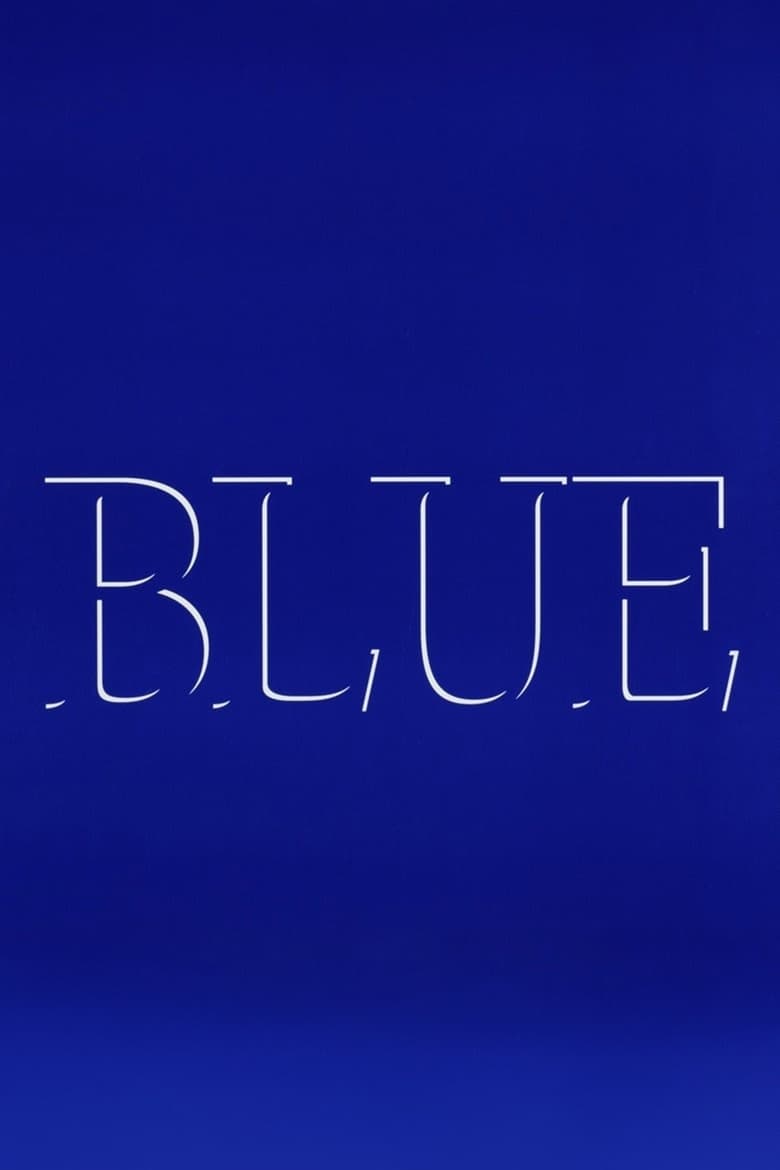
Here's my honest problem with Derek Jarman's Blue: I can hold two entirely contradictory thoughts about it at the same time, and after sitting with it for a while, I still can't reconcile them. The first thought is that the words are genuinely beautiful, raw, and at times devastating. The second thought is that this isn't a film. And that tension is the whole review, really.
What Jarman made in 1993, as his sight failed him due to AIDS-related illness, is a 79-minute fixed shot of International Klein Blue. A single, unmoving, unchanging screen of colour. Beneath it, a voiceover carries memoir, elegy, poetry, fragments of memory and grief and love and fury. There are no characters, no settings, no images beyond that one relentless hue. It is, stripped back honestly, a radio play you're paying to watch. Or more precisely, a radio play you're paying to not watch, because there is nothing to watch.
I want to be careful here, because the context matters. Jarman made this while going blind. The blue screen isn't laziness, it's a statement, a confrontation, an act of defiance against the very loss he was suffering. You look at a screen full of colour precisely because he was losing his ability to look at anything. That's moving. That's genuinely, painfully moving. And some of the language is extraordinary, the kind of thing you'd want to write down and carry with you. The emotional weight of what he's expressing is real, and it would be crass to dismiss it.
But I'm a film reviewer. And judged as a film, Blue offers none of the things that make cinema what it is. No movement, no composition, no visual storytelling, no imagery, no editing in any meaningful sense. It rejects every tool in the medium's kit, not by accident but by design. Fine. That's a choice. But if you choose to abandon the entire vocabulary of cinema, you can't then be surprised when someone points out that what you've made isn't cinema.
The experience of watching it is, frankly, an endurance test for anyone coming to it as a piece of filmmaking. My mind wandered. Repeatedly. Not because I stopped caring about what was being said, but because there was nothing anchoring me visually, nothing pulling focus, nothing doing the work that images do. The moments when the words are extraordinary enough to hold you on their own are real, but they're interrupted by stretches where you become acutely aware that you're staring at a blue rectangle in the dark. It felt less like engagement and more like being asked to prove something, to prove that I could sit with it, that I was serious enough, patient enough. I'm not sure that's what art should ask of you.
I think of something like Lessons of Darkness (1992), Werner Herzog's documentary made around the same time, which finds devastating, almost abstract meaning in images of burning oil fields. That's a film that pushes against conventional form too, but it uses the camera, uses the image, uses what cinema actually is. Jarman deliberately puts the camera down. Which is his right. But it has consequences for how the thing functions.
One star feels harsh when I type it out, because there's genuine artistry in the writing and genuine courage in the making. But the rating is for the film. And as a film, it doesn't work, because it has consciously decided not to be one. Respect it as a document? Yes, without question. Admire the bravery? Of course. Recommend it to someone who loves cinema? I'd tell them to listen to it instead, because that's actually what it is: a profound audio piece that happens to have been projected in theatres.
Call it a spoken-word elegy, call it a sound installation, call it a moving piece of personal testimony. All of those are true and all of those are fair. But a great film? That requires a definition of the word "film" so loose it barely holds shape. I'm not willing to stretch it that far, even for something made under circumstances this heartbreaking.
Rating: ★ | Year: 1993 | Watched: 2026-05-11
Where to watch
Watch in the US
Physical: Amazon US
Affiliate disclosure: Movies With Macca may earn a small commission on purchases or subscriptions started via these links. It costs you nothing extra.
Related on Movies With Macca
More from United Kingdom: Lessons of Darkness (1992) · Shinjuku Boys (1995) · The Curse of Frankenstein (1957) · Stolen Face (1952)
More from the 1990s: Lessons of Darkness (1992) · Shinjuku Boys (1995) · Cemetery Man (1994) · Anastasia (1997)
More documentary: Letter from Siberia (1957) · Lessons of Darkness (1992) · Style Wars (1983) · Here and Elsewhere (1976)
More drama: Viy (1967) · Wonder (2017) · A Better Tomorrow (1986) · Beautiful Boy (2018)



