Daisies (1966)
★★½ — Daisies (1966)

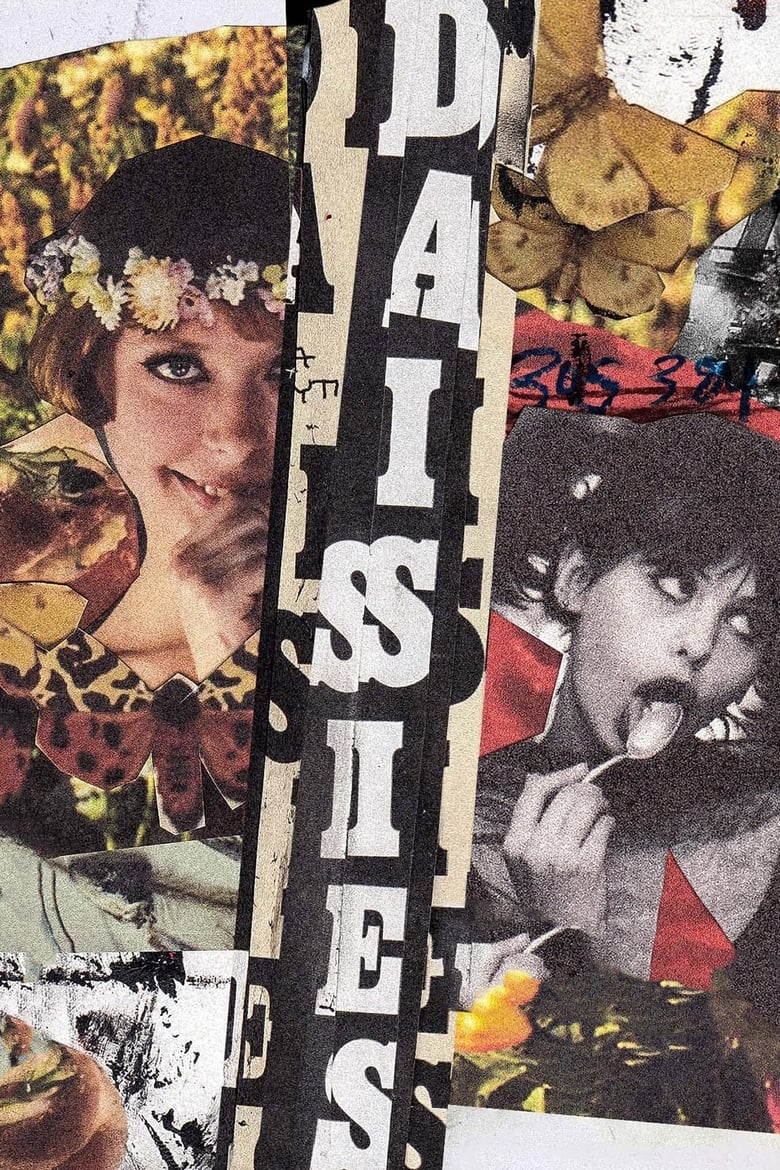
There's a scene in Daisies where two young women sit at a banquet table that wasn't intended for them and just... eat. Everything. With complete, unashamed, almost violent enthusiasm. It's funny, it's transgressive, it's a little disgusting, and it tells you everything you need to know about what Věra Chytilová is doing here. Whether that sounds like a brilliant provocation or an exhausting ninety minutes depends entirely on what you want from a film.
I'll be honest: I'm somewhere in the middle, and I've been sitting with that ambivalence since the credits rolled.
Daisies is a Czech New Wave oddity that throws logic, decorum, and narrative coherence straight out the window in favour of pure, chaotic energy. Two young women, bored with existence and apparently immune to consequence, spend the film giggling, pranking, dismantling furniture, stringing along older men for free meals, and generally behaving as though the rules of polite society are a joke they've already heard. The film isn't asking to be understood in any traditional sense. It's a visual protest against conformity, consumerism, and the expectation that women should be tidy, passive, and grateful. In that spirit, it's genuinely bold.
Chytilová shoots in striking combinations of black-and-white and heavily saturated colour sequences, with rapid cuts, collage-like editing, and a jazzy, eclectic soundtrack that lurches between styles the same way her heroines lurch between situations. The whole thing feels like a fever dream choreographed by mischievous fairies who've stumbled into the human world and decided to break everything just to see what happens. There are moments of real wit here, particularly in how the film subverts gender roles and social expectations. These two women aren't victims, aren't seeking approval, and aren't punished with a tidy moral lesson. That refusal alone felt radical in 1966 and still carries a charge today. It's easy to see why the film is considered a feminist landmark.
But here's my honest problem with it: for all the popping visuals and rebellious charm, Daisies too often veers into weird for weird's sake. There are no emotional stakes. There's no character depth to speak of. There isn't even a loose plot thread to follow when the images stop startling you. What begins as refreshing gradually becomes repetitive, and the relentless absurdity starts to alienate as much as it delights. I found myself admiring the spirit of it while simultaneously feeling entirely untethered from anything resembling an experience I could hold onto.
It's a feeling I've had with similarly confrontational work. I had it watching Symbiopsychotaxiplasm: Take One (1968), which dismantles the idea of a film in a comparably aggressive way, and I had it, to a lesser extent, with Persona (1966), though Bergman at least gives you two characters whose interiority you can feel even when the surface cracks apart. Chytilová isn't interested in interiority. Her two leads are more like forces of nature than people, which is probably the point, but it does make it hard to care what happens to them.
If you revel in surrealism and anti-narrative filmmaking, you'll likely adore this. It's the kind of film that rewards a certain temperament completely. If, like me, you need some grounding beneath the chaos, some emotional handhold to keep you from floating away entirely, you may find yourself checking your watch somewhere around the hour mark. I did.
Three stars might be more generous to the ambition, two might be fairer to the experience. Two and a half feels right. A film I'm glad exists, glad I've seen, and not entirely sure I'd sit through again.
Rating: ★★½ | Year: 1966 | Watched: 2026-04-30
Where to watch
Watch in the US
Stream: HBO Max Amazon Channel
Rent: Apple TV Store
Buy: Apple TV Store
Physical: Amazon US
Affiliate disclosure: Movies With Macca may earn a small commission on purchases or subscriptions started via these links. It costs you nothing extra.
Related on Movies With Macca
More from Czechoslovakia: Fantastic Planet (1973) · Men Without Wings (1946) · The Firemen's Ball (1967) · The Pied Piper (1986)
More from the 1960s: Viy (1967) · Persona (1966) · Carnival of Souls (1962) · Symbiopsychotaxiplasm: Take One (1968)
More comedy: The Eagle (1925) · The General (1926) · Americana (2023) · The Naked Gun: From the Files of Police Squad! (1988)
More drama: Viy (1967) · Wonder (2017) · A Better Tomorrow (1986) · Beautiful Boy (2018)