The War Game (1966)
★★★½ — The War Game (1966)

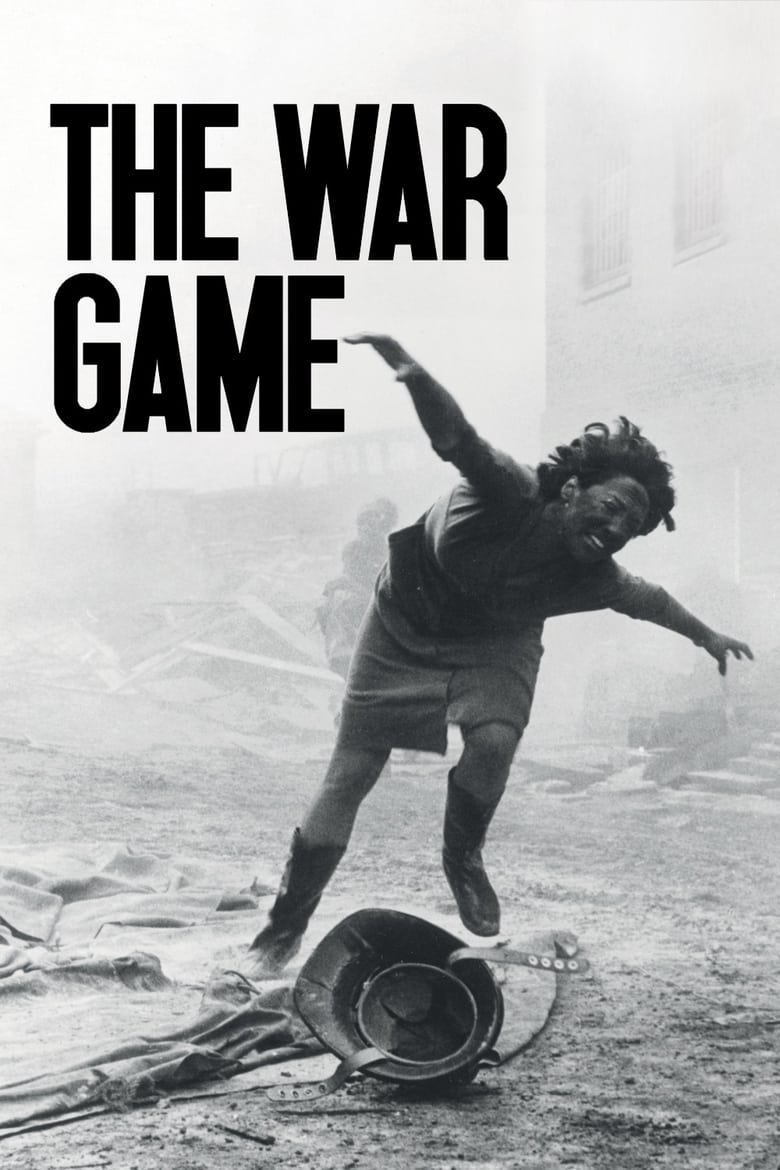
There are films that disturb you and films that genuinely shake you. The War Game belongs to a third, rarer category: films that feel like evidence. Watching it, you don't feel like an audience member. You feel like a witness to something that shouldn't exist, something dragged out of a future we weren't meant to see.
Peter Watkins made this for the BBC in 1965, presenting it as a newsreel documentary from the near future: a tactical nuclear strike on Kent, and everything that follows. Firestorms. Mass casualties. Burn wards with no medicine. A state reduced to shooting looters by firing squad and quietly admitting, through calm authoritative narration, that there is no Civil Defence. The BBC looked at what he'd made and refused to broadcast it for nearly twenty years, declaring it "too horrifying for the medium of broadcasting." That decision tells you almost everything you need to know about the film's power.
What Watkins understood, and what makes this so viscerally effective even now, is that horror doesn't need spectacle. It needs specificity. The film is shot in stark black and white, handheld, restless, with the grain and urgency of wartime footage. He layers staged sequences with faux-interviews and that steady, almost bureaucratic narration, and the combination is devastating. You're not watching actors perform suffering. You're watching something that feels disturbingly close to a training film for a catastrophe nobody wants to train for.
The details are what stay with you. A child screaming in a makeshift ward. The matter-of-fact explanation of what a pressure wave does to the human body. The quiet, terrible logic of triage when there simply aren't enough resources to save everyone. Watkins doesn't linger for effect. He shows you something unbearable and moves on, which is somehow worse than if he'd dwelt on it.
I've seen Punishment Park, Watkins' later work, which uses a similar pseudo-documentary approach to take aim at American political repression, and that's a powerful, angry film. But The War Game feels like a different order of thing altogether. Where Punishment Park burns with fury, this one is almost clinical in its horror. The anger is there, but it's buried under layers of procedural calm, which makes it more unsettling, not less.
Is it flawless? No. The narration tips into didacticism at points, spelling out arguments the images have already made more eloquently. And the unrelenting bleakness does risk a kind of numbness setting in. When every moment is harrowing, you can find yourself going slightly hollow somewhere in the second half, your defences quietly reassembling themselves. That's a real limitation, and it's worth naming.
But the moral force of the thing is simply undeniable. The BBC didn't suppress it for twenty years because it was inaccurate. They suppressed it because it was accurate, and accuracy of that kind was too uncomfortable to sit alongside the Sunday evening schedule. It eventually won the Academy Award for Best Documentary Feature, which is one of cinema history's stranger ironies: a film banned from British television collecting a Hollywood prize.
More than half a century on, it hasn't softened. If anything, it's harder to watch now than it perhaps was intended to be, because the geopolitical furniture it was built around never quite got packed away as promised. The threat it was describing didn't end. It just stopped being polite enough to dominate the headlines every day.
Four stars. This isn't entertainment, and it was never trying to be. It's a warning dressed up as a document, and it delivers that warning with a quiet, terrible grace that no amount of time seems to erode. Difficult to watch. Impossible to forget. Essential.
Rating: ★★★½ | Year: 1966 | Watched: 2026-03-18
Where to watch
Watch in the UK
Buy: Apple TV Store · Amazon Video
Physical: Amazon UK · Zavvi
Watch in the US
Buy: Fandango At Home
Physical: Amazon US
Affiliate disclosure: Movies With Macca may earn a small commission on purchases or subscriptions started via these links. It costs you nothing extra.
Related on Movies With Macca
More from Peter Watkins: Punishment Park (1971)
More from United Kingdom: Lessons of Darkness (1992) · Shinjuku Boys (1995) · The Curse of Frankenstein (1957) · Blue (1993)
More from the 1960s: Viy (1967) · Persona (1966) · Carnival of Souls (1962) · Daisies (1966)
More war: Lessons of Darkness (1992) · The General (1926) · Men Without Wings (1946) · Fires Were Started (1943)
More tv movie: Lessons of Darkness (1992) · Style Wars (1983) · Travolta and Me (1993) · Seven Up! (1964)