Men Without Wings (1946)
★★½ — Men Without Wings (1946)

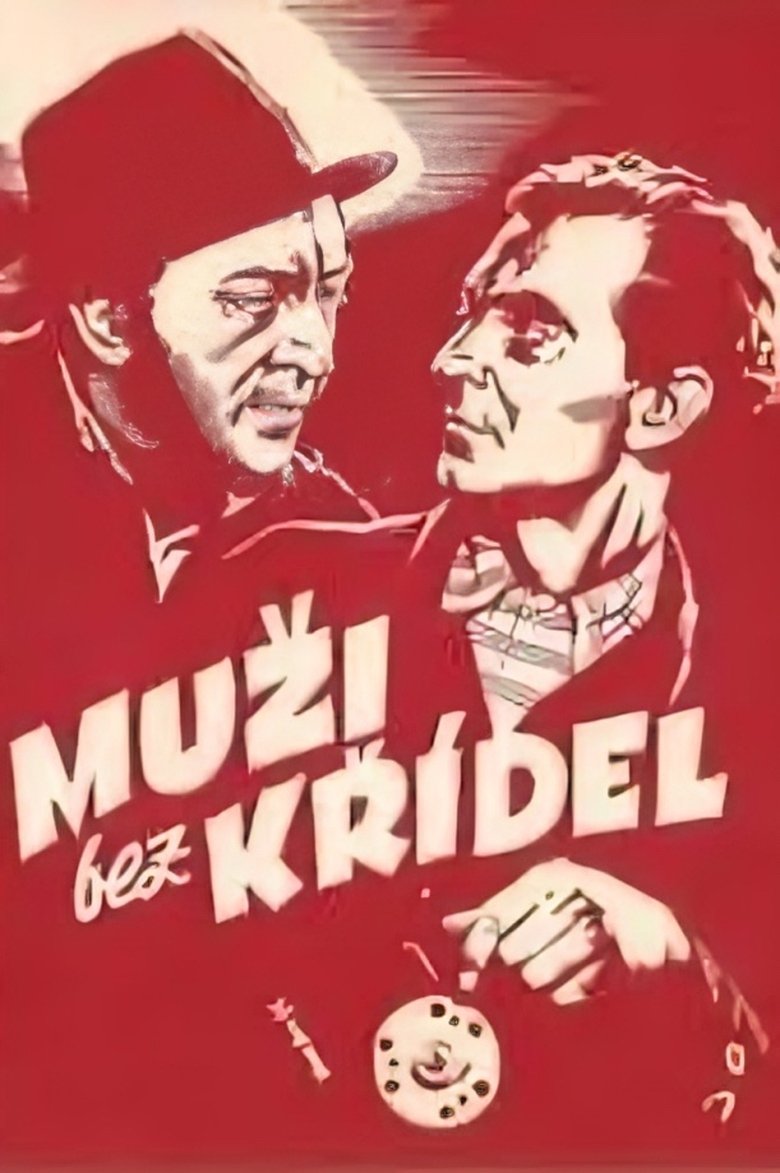
There's something that strikes you immediately about Men Without Wings: it doesn't feel like a film about the war so much as a film made from inside it. Released in 1946, just one year after the Nazi occupation of Czechoslovakia ended, this is a drama still warm from the fire. Hollywood had its victory pictures, its clean heroics and swelling scores. This is something else entirely. Something quieter, grainier, and in its own modest way, more honest.
The film follows resistance fighters, factory workers, and ordinary people trying to survive and resist under totalitarian rule. There are whispered conversations, acts of small sabotage, the daily weight of fear. Nobody here is saving the world with a speech. The heroism is in showing up, in keeping your mouth shut at the right moment, in doing your bit and hoping it amounts to something. That restraint, that refusal to mythologise, is where the film earns its keep.
Visually, it's unglamorous in a way that feels entirely right. The camerawork is grounded, the lighting natural, the locations real. There's a quasi-documentary quality to it, the kind of texture you get when a film isn't yet far enough from events to have smoothed them over. It reminded me a little of what I loved about Fires Were Started, Humphrey Jennings's wartime record of the London Fire Service, also made in the thick of it, also more concerned with collective effort than individual glory. Both films carry that same sense that the people in front of the camera know exactly what they're talking about because they've lived it.
The performances are earnest, occasionally a touch stiff. But I'm not sure that's entirely a flaw. There's an emotional restraint to the acting that suits the material. These are people who've seen too much to dramatise it. The stiffness isn't incompetence; it's reserve. A nation that has just come through occupation doesn't necessarily have the distance required to perform its own trauma with theatrical flair.
Where the film loses me, though, is in its structure. It's fairly conventional, if I'm being straight about it. The plot moves predictably, the moral lines are drawn clearly, heroes on one side, villains on the other, and there's little in the way of psychological complexity or genuine ambiguity. You won't find the kind of dark irony or formal daring that would later make Czech cinema one of the most exciting national traditions in the world. If you've seen The Firemen's Ball or Daisies, you'll know what that later generation was capable of, and Men Without Wings isn't operating anywhere near that level of invention. It's a tribute film, essentially. A memorial carved while the smoke was still clearing.
And that's fine. That's allowed. Not every film needs to reinvent the form, and judging this one by the standards of the Czech New Wave would be a bit like criticising a letter home for not reading like a novel. What matters is that it's sincere, and it is. The power here isn't in originality; it's in timing. A country telling its own story before the legend had time to harden into cliché. That's worth something.
So what's the verdict? Two and a half stars, and I mean that fairly. It's a film I'm glad exists more than I'm glad I watched it, if that makes sense. Worth your time if you're interested in the history of European cinema or the immediate post-war period, but go in expecting atmosphere and sincerity rather than stylistic daring or deep character work. A modest, heartfelt artefact from the dawn of peace.
Rating: ★★½ | Year: 1946 | Watched: 2026-04-30
Related on Movies With Macca
More from Czechoslovakia: Fantastic Planet (1973) · Daisies (1966) · The Firemen's Ball (1967) · The Pied Piper (1986)
More from the 1940s: Louisiana Story (1948) · The Ox-Bow Incident (1943) · The Bank Dick (1940) · The Seventh Victim (1943)
More war: Lessons of Darkness (1992) · The General (1926) · Fires Were Started (1943) · When the Wind Blows (1986)
More drama: Viy (1967) · Wonder (2017) · A Better Tomorrow (1986) · Beautiful Boy (2018)