Travolta and Me (1993)
★★ — Travolta and Me (1993)

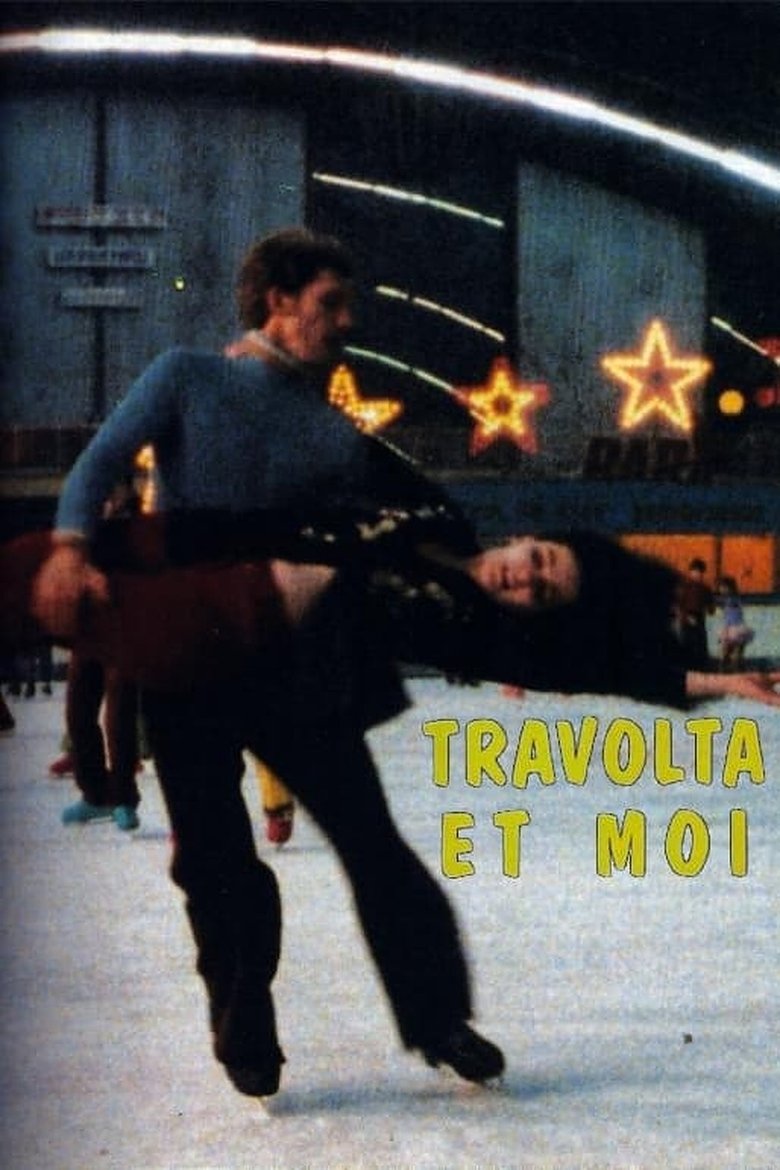
There's a certain type of film that arrives wrapped in critical garlands, especially from French cinephile circles, and then proceeds to spend ninety minutes proving that some emperors really do have no clothes. Travolta et Moi is that film. I came to it with an open mind and left with a mild headache and a strong craving for some fresh air.
The set-up has genuine promise. A young woman, adrift in Paris, falls into the orbit of an older man who fancies himself something of a philosopher-poet. He quotes verse, he muses on cinema, he delivers his monologues with the measured solemnity of someone who has confused gravitas with depth. She listens. She absorbs. She looks wide-eyed and impressionable. And the film seems, for a while, to think this is terribly romantic.
The John Travolta framing device, which threads a certain wistful, pop-cultural longing through the whole thing, is honestly the most interesting element here. There's something genuinely affecting about the idea of a young woman clinging to a pop-culture fantasy as a kind of private mythology. Those moments hint at a more honest and interesting film lurking beneath the surface. But they keep getting buried. Buried under monologues. Endless, self-congratulatory monologues from a man who is, let's be frank, talking at a woman rather than with her. What gets dressed up as intellectual seduction reads, at this distance, as emotional vampirism. He performs; she receives. The film offers this dynamic without much interrogation of it, which is where things get uncomfortable.
Critics who've championed this one reach for words like "lyrical" and "observational," and I understand the impulse. The film has a certain Parisian texture, a loose, unhurried rhythm that can feel, in its better moments, like genuine atmosphere. But atmosphere without substance is just wallpaper. And wallpaper, no matter how tasteful, is still just covering a wall.
It reminded me, oddly, of the experience of watching films like Here and Elsewhere, where the gap between a filmmaker's intentions and what actually lands on screen becomes its own kind of subject. The difference is that film earns its difficulty. Travolta et Moi mistakes verbosity for profundity and offers no real reckoning with what it's actually showing us.
The film's defenders, and there are plenty of them, will tell you I'm missing the point. That the irony is built in, that the male character is meant to read as ridiculous, that the young woman's perspective is the real centre of gravity. Maybe. But a film has to earn that reading, and this one doesn't do enough work to justify the benefit of the doubt. Intention is not the same as execution.
What I wanted, really, was something closer to what Mustang does so well: a film genuinely interested in the inner life of a young woman navigating a world that keeps trying to define her. That film trusts its subjects. This one keeps handing the microphone to the wrong person.
Two stars. Well-intentioned, occasionally charming around the edges, but ultimately, no, wait, I said I wouldn't use that word. Let me try again. A film that, by the time the credits roll, has spent far too long being the cinematic equivalent of sitting next to a man at a dinner party who won't stop explaining Taxi Driver to you. You keep hoping he'll ask you a question. He never does.
Rating: ★★ | Year: 1993 | Watched: 2026-04-03
Related on Movies With Macca
More from France: Fantastic Planet (1973) · Letter from Siberia (1957) · Lessons of Darkness (1992) · Here and Elsewhere (1976)
More from the 1990s: Lessons of Darkness (1992) · Shinjuku Boys (1995) · Blue (1993) · Cemetery Man (1994)
More comedy: The Eagle (1925) · The General (1926) · Americana (2023) · The Naked Gun: From the Files of Police Squad! (1988)
More drama: Viy (1967) · Wonder (2017) · A Better Tomorrow (1986) · Beautiful Boy (2018)