Seven Up! (1964)
Seven Up! (1964)

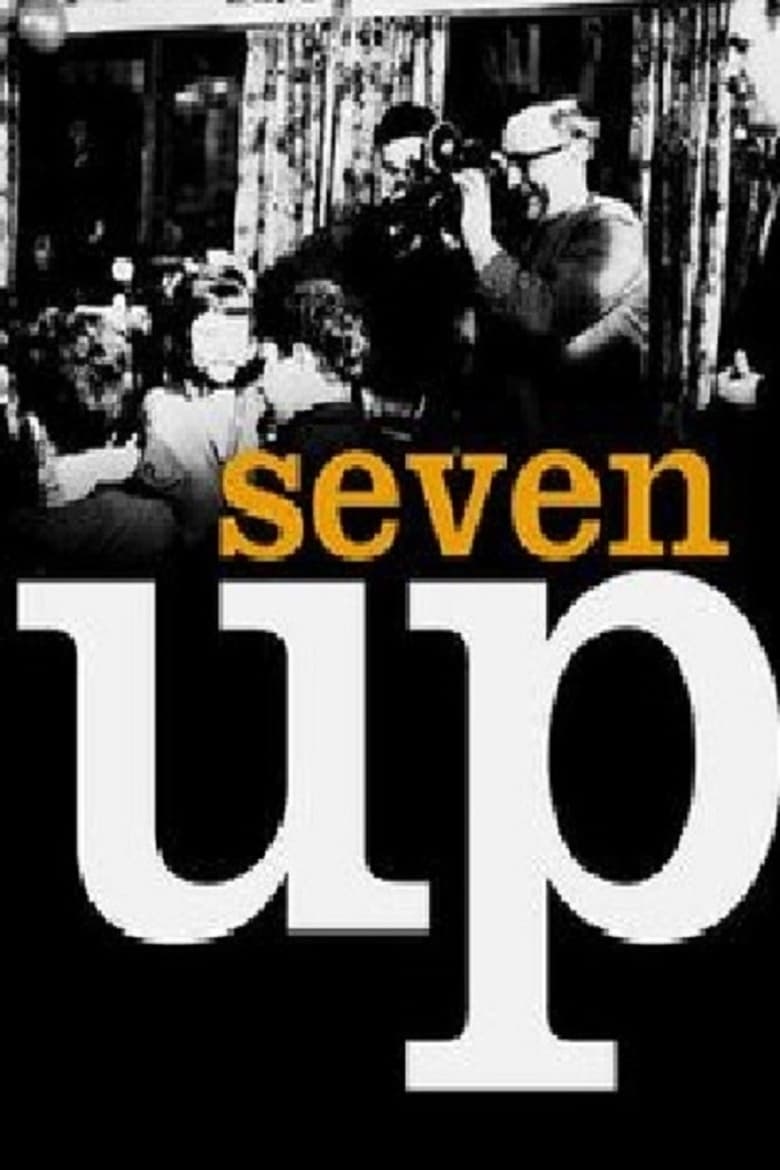
What does a seven-year-old know about their own future? Quite a lot, it turns out, and almost nothing at all. That tension sits right at the heart of Seven Up!, the 1964 documentary that began one of the most extraordinary long-form projects ever committed to film. Fourteen children from across Britain's class spectrum, all aged seven, are simply asked what they think about life, love, ambition, and tomorrow. And they answer, with all the guileless honesty that only a child can muster.
The contrast is immediate and quietly devastating. Posh boys from boarding schools talk about the newspapers they read and the universities they expect to attend, as though the path ahead is already paved and lit. Working-class kids from the East End shrug about following their parents into the factory, not with resentment exactly, just acceptance. One child wants to be a racing driver. Another has already absorbed the idea that his ceiling is fixed. These aren't dramatic revelations delivered with orchestral swells. They're just kids talking. And that's precisely what makes it so unsettling.
Paul Almond directed this first instalment, with Michael Apted stepping in to shepherd the series from 7 Plus Seven (1970) onwards. As a standalone piece, Seven Up! is deliberately spare. There's no narrator steering you towards a conclusion, no dramatic structure, no agenda beyond observation. You could call it slight. You wouldn't be wrong. But that simplicity is doing serious work.
What the film captures, almost incidentally, is a portrait of 1960s Britain that no scripted drama could replicate. The accents alone are a kind of archaeology. The clothes, the playgrounds, the frank matter-of-factness with which class is discussed by children who barely have the vocabulary for it but instinctively understand its rules. These invisible walls between privilege and poverty are already etched into their thinking at seven years old. The film doesn't editoralise about that. It doesn't need to.
Watched on its own, Seven Up! is a fascinating historical snapshot, the kind of primary document that historians dream about. But of course, it didn't stay on its own. Every seven years, these same faces return to camera. They grow up, get jobs, fall in love, have children, make peace with their disappointments or chase new ones. By the time the series reaches its later chapters, the cumulative weight of it becomes something genuinely difficult to put into words. Time, in a way you rarely feel in fiction, becomes the subject.
That's why rating this one feels a bit beside the point. It's not quite a finished thing. It's a first sentence. A remarkable one, full of latent meaning that won't fully surface until you've followed these people across decades. The class commentary lands immediately. The emotional resonance builds slowly, instalment by instalment, the way trust builds in a long friendship.
I'm glad I started here rather than jumping in mid-series. There's something right about meeting these kids at the beginning, before life has had its way with them, when anything still seems possible for most of them and the weight of expectation hasn't yet settled on their shoulders. It sets a baseline. It gives you something to carry forward.
A modest but monumental beginning. Watched as the first page of a six-decade story, it really is something closer to magic. What a seed it was.
Rating: Not rated | Year: 1964 | Watched: 2026-03-17
Where to watch
Watch in the UK
Buy: Apple TV Store
Physical: Amazon UK · Zavvi
Affiliate disclosure: Movies With Macca may earn a small commission on purchases or subscriptions started via these links. It costs you nothing extra.
Related on Movies With Macca
More with Lynn Johnson: 7 Plus Seven (1970)
More from United Kingdom: Lessons of Darkness (1992) · Shinjuku Boys (1995) · The Curse of Frankenstein (1957) · Blue (1993)
More from the 1960s: Viy (1967) · Persona (1966) · Carnival of Souls (1962) · Daisies (1966)
More documentary: Letter from Siberia (1957) · Lessons of Darkness (1992) · Style Wars (1983) · Here and Elsewhere (1976)
More tv movie: Lessons of Darkness (1992) · Style Wars (1983) · Travolta and Me (1993) · The War Game (1966)