Night and Fog (1956)
Night and Fog (1956)

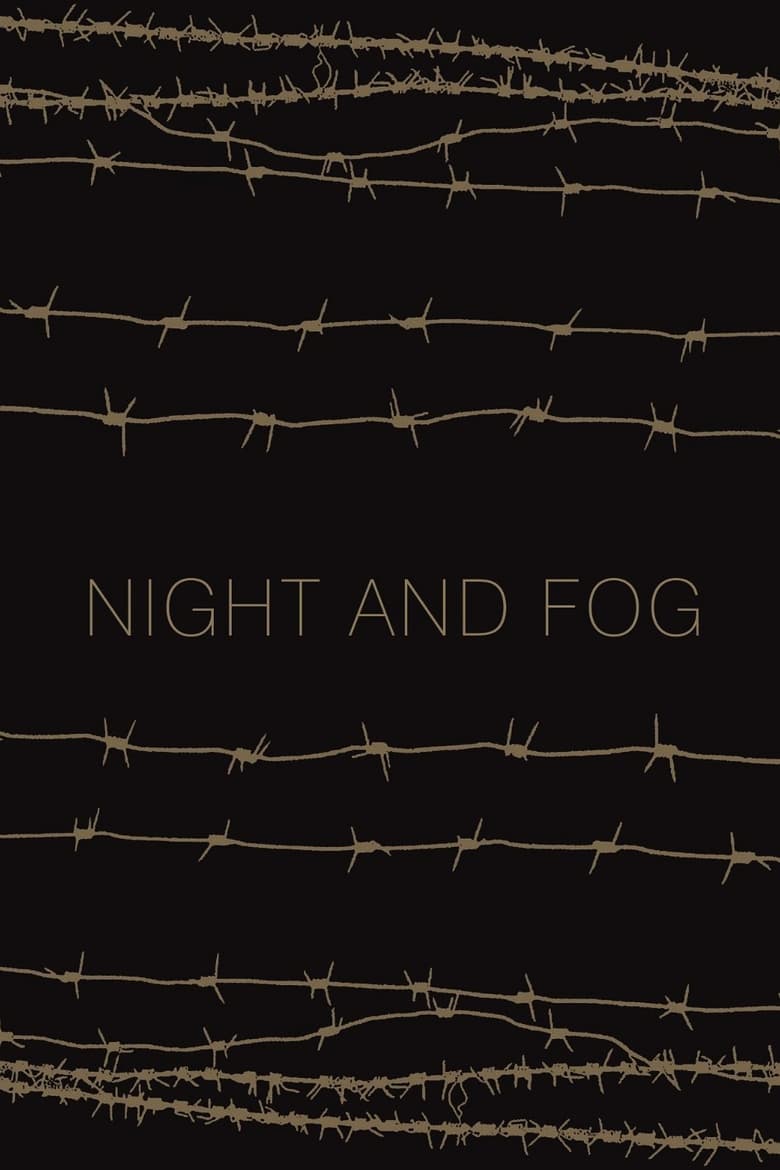
There are films you review, and then there are films you bear witness to. Night and Fog is the latter. Alain Resnais made it in 1956, just ten years after the liberation of the camps, and in thirty-two minutes he produced something that has no real comparison in the documentary form. I came to it recently, and I have to be upfront: the version I watched was, to put it charitably, a mess. Grainy transfer, colour sequences washed out to the point of near-abstraction, subtitles so cramped and faded they were practically illegible. I was catching maybe half the narration at best. And it still shook me.
That's worth sitting with for a moment. A film so damaged in transit that I couldn't fully access its language, and it still reached through the screen and grabbed me by the collar. That's not a casual kind of power.
What Resnais does, structurally, is deceptively simple and genuinely devastating. He cuts between two worlds: calm, almost pastoral colour footage of the abandoned camp sites as they looked in 1955, grass growing back, buildings going quiet, and then the black-and-white archival record of what those places actually were. Mountains of human hair. Heaps of spectacles. Skeletal figures. Bulldozers moving bodies. The contrast isn't just formal cleverness. It's a moral argument. The earth reclaims. The grass grows. And underneath it, always, is what happened. The peaceful present doesn't erase the unspeakable past. It just makes it stranger and more unbearable.
I've read enough about the film to know that Jean Cayrol's narration is integral to the experience, not decoration but meaning itself. To miss it is to catch the film through frosted glass. I'm genuinely frustrated that my first encounter with it had to be like this, and I'll return to it properly. But here's the thing: even through fractured visuals and near-illegible text, the central truth arrived with full force. This happened. Human beings organised it. Human beings carried it out. And human beings tried, almost immediately afterwards, to forget.
That last part is what Resnais is really on about. The film isn't purely an act of documentation. It's a challenge, pointed directly at the viewer. Who was responsible? The narration, from the fragments I caught, apparently refuses any comfortable answer. It doesn't let you off with the Nazis as a contained historical evil. It implicates. It looks at the bureaucrats, the architects, the ordinary men who kept the paperwork moving. That kind of refusal to offer an easy villain feels more urgent now, not less.
If you want to see what Resnais could do with documentary form, this pairs interestingly with Letter from Siberia (1957), Chris Marker's essay film from just a year later, another work that treats documentary footage as something to be interrogated rather than simply presented. Both films understand that the camera doesn't deliver truth automatically. You have to work at it, and you have to be honest about what you don't know. I also think of Lessons of Darkness (1992), Werner Herzog's harrowing look at the burning Kuwaiti oil fields, another film that uses landscape to carry the weight of atrocity, finding in scarred and smoking earth something that feels almost beyond language.
I'm not going to give Night and Fog a star rating, and I don't think I could even if I wanted to. Partly because I haven't seen it as it deserves to be seen. But partly because some films sit outside that kind of reckoning. To score it feels like the wrong gesture entirely, like marking homework on a eulogy. What I can tell you is that what I experienced, partial and degraded as it was, was enough to unsettle me for the rest of the day. I'll be back for the full version. I owe it that much.
Rating: Not rated | Year: 1956 | Watched: 2026-03-16
Where to watch
Watch in the UK
Rent: Apple TV Store
Buy: Apple TV Store
Physical: Amazon UK · Zavvi
Watch in the US
Stream: HBO Max Amazon Channel · Criterion Channel · HBO Max
Rent: Amazon Video · Apple TV Store · Fandango At Home
Buy: Amazon Video · Apple TV Store · Fandango At Home
Physical: Amazon US
Affiliate disclosure: Movies With Macca may earn a small commission on purchases or subscriptions started via these links. It costs you nothing extra.
Related on Movies With Macca
More from France: Fantastic Planet (1973) · Letter from Siberia (1957) · Lessons of Darkness (1992) · Here and Elsewhere (1976)
More from the 1950s: Invasion of the Body Snatchers (1956) · Alice in Wonderland (1951) · Letter from Siberia (1957) · Invaders from Mars (1953)
More documentary: Letter from Siberia (1957) · Lessons of Darkness (1992) · Style Wars (1983) · Here and Elsewhere (1976)
More history: Apocalypto (2006) · Rio 2096: A Story of Love and Fury (2013) · Harakiri (1962) · The Untouchables (1987)