
Apocalypto (2006)
★★★½ — Apocalypto (2006)

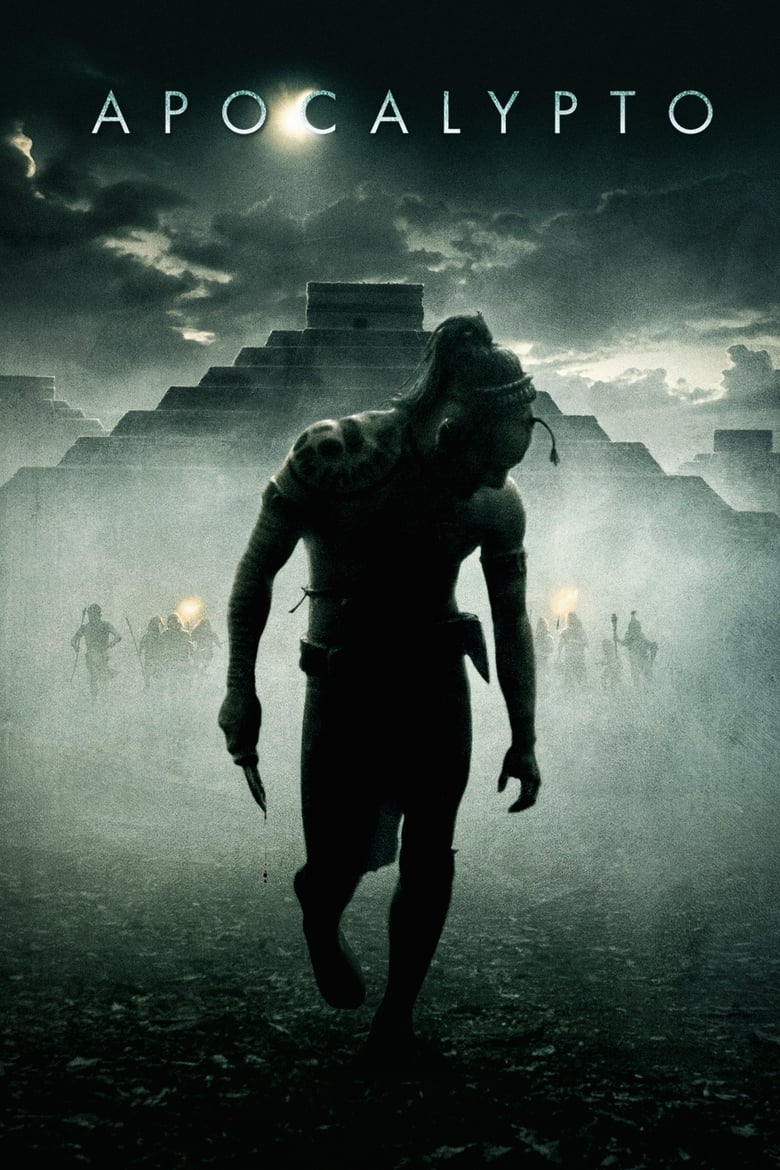
There's a moment early in Apocalypto where the world feels genuinely, completely foreign, and I mean that as the highest possible compliment. No subtitles explaining the culture to you, no friendly exposition dropping in to hold your hand, just people living a life you have to read through behaviour, ritual and expression. Mel Gibson shoots it with such confidence that you either lean in or you're lost. I leaned in, and I'm glad I did.
What Gibson has built here is less a historical drama and more a mythic chase thriller, raw and relentless, set against the collapsing twilight of Mayan civilisation. The story, at its most stripped back, is simple: a peaceful hunter's village is raided, his family taken, and he is dragged on a nightmarish journey toward ritual sacrifice at the top of a sun-bleached pyramid. What follows is one of the most sustained, physically punishing survival narratives I've seen on screen. The action is dense and dangerous-feeling, jungle pursuits that don't feel digitised or safe, but genuinely tactile and chaotic. Gibson shoots with natural light and handheld cameras in real locations, and the result has an almost documentary urgency that keeps you off-balance throughout.
The decision to film entirely in Yucatec Maya is, honestly, a remarkable act of stubbornness from a major Hollywood director, and it pays off. The absence of familiar dialogue rhythms is disorienting in the best way, and it forces you fully into the protagonist's perspective. You're not watching from a comfortable distance. You're in the jungle with him, scared and confused and running.
Beneath all that adrenaline, though, there's something genuinely moving. This is a story about fatherhood, about the animal desperation to get back to the people you love. The emotional stakes are simple and universal, and Gibson earns them. Yes, the film takes liberties with Mayan history, and the criticisms about how it portrays that society are fair and worth engaging with. But it never feels cynical or exploitative to me. It feels like a filmmaker using a historical canvas to tell something primal about fear, loss, and what people are capable of when survival is the only option left.
It's worth saying, too, that this sits in a very specific corner of Gibson's filmography. He made The Passion of the Christ just a couple of years before this, another film shot in an ancient language, another film built around prolonged, almost unbearable physical suffering, another film that trusted audiences to engage on its own terms without compromise. Whatever you think of him as a person, Gibson the director has a genuinely unusual instinct for that kind of austere, committed filmmaking. It's a specific obsession, and Apocalypto might be where it produces its most purely entertaining result.
That said, I won't pretend the film is easy going. It is grim to the point of exhaustion in places. The violence is relentless, and the worldview leans heavily toward doom. By the time the third act kicks into full gear, you've been through the wringer, and some viewers will feel the punishment more than the poetry. I get that. There were moments where I felt the film was daring me to look away. I didn't, but I understand why some might.
For sheer propulsive momentum and visual invention, it also reminded me of what I love about Mad Max: Fury Road: that commitment to keeping the audience physically off-balance, building a chase structure that doesn't let you breathe, grounding spectacle in something emotional and human. They're very different films, but they share that quality of treating action as language rather than noise.
Apocalypto is not a perfect film. It's grim, it takes liberties, and it would rather overwhelm you than reassure you. But it's one of the most audacious things a major director put out in the 2000s, and it deserves more serious conversation than it tends to get. Gripping, original, and occasionally stunning. Three and a half stars.
Rating: ★★★½ | Year: 2006 | Watched: 2026-04-27
Where to watch
Watch in the UK
Stream: ITVX Premium
Physical: Amazon UK · Zavvi
Watch in the US
Stream: Hulu · Amazon Prime Video · Peacock Premium · Amazon Prime Video with Ads
Rent: Amazon Video · Apple TV Store · Google Play Movies · YouTube
Buy: Amazon Video · Apple TV Store · Google Play Movies · YouTube
Physical: Amazon US
Affiliate disclosure: Movies With Macca may earn a small commission on purchases or subscriptions started via these links. It costs you nothing extra.
Related on Movies With Macca
More from Mel Gibson: The Passion of the Christ (2004) · Braveheart (1995)
More from United Kingdom: Lessons of Darkness (1992) · Shinjuku Boys (1995) · The Curse of Frankenstein (1957) · Blue (1993)
More from the 2000s: Kirikou and the Wild Beasts (2005) · Anchorman: The Legend of Ron Burgundy (2004) · Daredevil (2003) · Old Joy (2006)
More action: A Better Tomorrow (1986) · The General (1926) · Hand of Death (1976) · Daredevil (2003)
More drama: Viy (1967) · Wonder (2017) · A Better Tomorrow (1986) · Beautiful Boy (2018)



