7 Plus Seven (1970)
7 Plus Seven (1970)

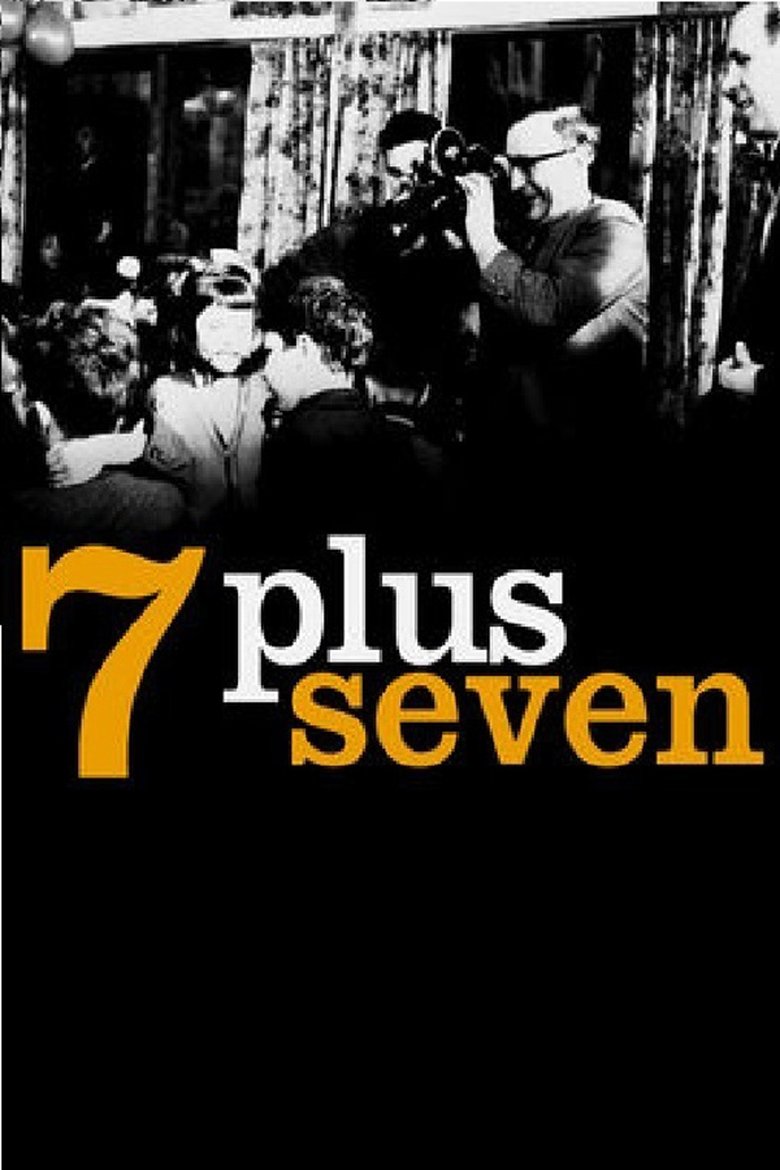
There's a specific kind of discomfort that comes with watching a fourteen-year-old try to be cool on camera. The sideways glances, the clipped answers, the performance of indifference. It's excruciating in the best way, because you've either been that teenager or you've watched one grow up in front of you, and either way it hits somewhere tender. That's the strange gift of 7 Plus Seven, the second entry in Michael Apted's long-running Up series. It's not the most comfortable watch in the sequence, and it's certainly not the most dramatic, but it captures something true and fleeting about the particular misery and muddle of being fourteen.
When I reviewed Seven Up!, I was struck by how openly those children spoke, with opinions already formed, ambitions already planted, class already doing its quiet work. Seven years on, that openness has largely gone. The confident ones are suddenly wary. The chatty ones have learned to be guarded. The ones who were already reserved have retreated further into themselves. Watching the shift between those two states is like watching a door slowly close, and you're not entirely sure what's been locked inside or outside.
As a parent of young children, I find this instalment hits differently than it might otherwise. There's something quietly mesmerising about watching these kids transform so visibly, even when, especially when, the transformation is awkward and incomplete. It mirrors something I see at home: the way a child's personality can feel fixed one week and completely unrecognisable the next. The Up series compresses that feeling into seven-year jumps, which makes it feel both accelerated and unbearably slow at the same time.
The class divides that were already sketched in at age seven begin to harden here in a way that's harder to ignore. Some of the children are already on tracks, routes laid by school, by family, by postcode, that you sense will carry them most of the way to wherever they end up. Others are still floating. At fourteen, none of them quite knows it yet. That dramatic irony is part of what makes the series so compelling, and part of what makes this particular chapter feel like it's operating on borrowed time, valuable mostly for what it sets up rather than what it delivers on its own terms.
And that's the honest assessment: as a standalone piece of documentary filmmaking, 7 Plus Seven is uneven. Some subjects are genuinely engaging at this age, funny, thoughtful, self-aware in interesting ways. Others are simply going through the motions of adolescence, which is real and valid, but not always riveting to watch. There are stretches where you're essentially waiting for the film to be over so you can find out who these people become.
But I don't think that's a failure, exactly. It's more a reflection of what the series is actually doing. The Up films aren't really individual films in the conventional sense. They're chapters in a single, decades-long work, and judging any one of them in isolation is a bit like pulling a chapter out of a novel and asking why it doesn't feel complete. The magic here isn't in any single instalment. It's in the accumulation, the weight of returned faces and changed voices, the slow revelation of a life taking shape over time.
At this stage, that weight is still relatively light. Time, as I said, feels like it's just getting started. But there's something in the awkwardness and uncertainty of these fourteen-year-olds, something in the gap between who they were and who they're becoming, that quietly sets the terms for everything that follows. Watch it as part of the whole, and it earns its place without question. Watch it on its own, and you'll spend most of it wanting to know what happens next.
Which is, I suppose, exactly the point.
Rating: Not rated | Year: 1970 | Watched: 2026-03-26
Where to watch
Watch in the US
Stream: BritBox Amazon Channel
Physical: Amazon US
Affiliate disclosure: Movies With Macca may earn a small commission on purchases or subscriptions started via these links. It costs you nothing extra.
Related on Movies With Macca
More with Lynn Johnson: Seven Up! (1964)
More from United Kingdom: Lessons of Darkness (1992) · Shinjuku Boys (1995) · The Curse of Frankenstein (1957) · Blue (1993)
More from the 1970s: Fantastic Planet (1973) · Here and Elsewhere (1976) · Italianamerican (1974) · Punishment Park (1971)
More documentary: Letter from Siberia (1957) · Lessons of Darkness (1992) · Style Wars (1983) · Here and Elsewhere (1976)