
Rebecca (1940)
★★★ — Rebecca (1940)

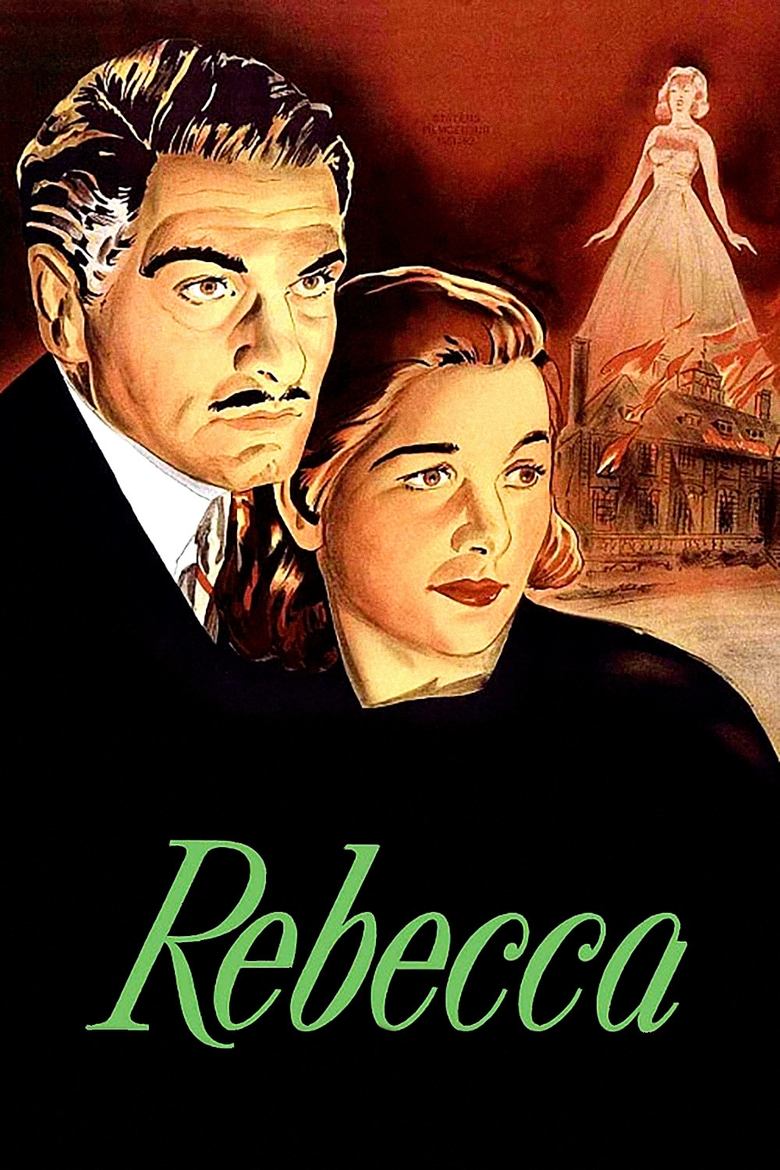
There's a moment in Rebecca where you realise the film's dead woman is more present than anyone actually on screen. She never appears. Not once. And yet she's everywhere: in the monogrammed pillowcases, in the nervous glances of the staff, in the way Judith Anderson's Mrs. Danvers speaks her name like a prayer. That's the trick Hitchcock pulls off here, and it's genuinely extraordinary. The most terrifying character in the film is an absence.
Joan Fontaine is perfectly cast as the timid young bride who arrives at Manderley and finds herself immediately outranked by a ghost. She's mousy, uncertain, forever apologising for taking up space, and you feel every inch of her slow suffocation. The house itself seems to reject her. Manderley is one of cinema's great locations, all fog-wreathed coastline and creaking grandeur, every corridor whispering that she doesn't belong. And then there's Mrs. Danvers. Anderson's performance is unsettling in a way that still holds up. Cold, devoted, faintly unhinged. She watches the new Mrs. de Winter the way a cat watches a mouse it hasn't decided to eat yet.
The atmosphere Hitchcock builds here is close to flawless. Shadow and silk and the sense that something terrible lives just beneath the surface of every polite conversation. It's less a thriller than a mood piece, a slow erosion of a young woman's confidence dressed up in elegant black and white. If you've spent any time with early Hitchcock, you'll know he had this quality long before he crossed the Atlantic. I wrote about something of it in my reviews of The 39 Steps and Sabotage, though Rebecca is a different beast entirely, slower, more suffocating, more interested in dread than momentum.
But here's where I have to be honest with myself: admiring this film and connecting with it are two different things, and for me they don't quite meet. The buildup is masterful, yes. The pacing is deliberate to the point of being almost glacial by today's standards, and I think you have to be in the right frame of mind to surrender to it rather than fidget through it. That's not necessarily a criticism. It's just a truth about watching a film eighty-odd years after it was made.
What does frustrate me is the ending. After all that careful, patient tension, the final ten minutes suddenly throw everything at the screen. Fire and confession and revelation tumbling over each other in a rush. It works dramatically, no question, the dam breaks and all that quiet unease floods out at once. But some of the character motivations that get explained in those final scenes feel like they deserved more room to breathe. The psychological richness is there in outline, but a few threads stay frustratingly vague, resolved by plot mechanics rather than genuine emotional clarity. Compare it to something like Vertigo, where Hitchcock's obsession with identity and the haunting power of an idealised woman is given full, almost uncomfortable depth, and Rebecca can feel like the earlier draft of a theme he'd later perfect.
None of that makes it a bad film. Far from it. It's a genuine classic of atmosphere and mood, and it earned its place in history. But I think there's a version of watching Rebecca where you feel it deeply, and a version where you admire it from a respectful distance. I found myself mostly in the second camp. You watch it through a veil of old Hollywood, aware of its importance, grateful for its craft, moved occasionally but never quite shaken.
Three stars. Essential viewing for anyone serious about Hitchcock or about where the thriller genre came from. Just go in knowing it asks for patience, and that the reward, while real, is more intellectual than visceral.
Rating: ★★★ | Year: 1940 | Watched: 2025-10-31
Where to watch
Watch in the UK
Stream: Brew
Physical: Amazon UK · Zavvi
Watch in the US
Stream: Philo · Brew
Physical: Amazon US
Affiliate disclosure: Movies With Macca may earn a small commission on purchases or subscriptions started via these links. It costs you nothing extra.
Related on Movies With Macca
More from Alfred Hitchcock: Sabotage (1936) · Vertigo (1958) · Dial M for Murder (1954) · Rear Window (1954)
More from the 1940s: Louisiana Story (1948) · The Ox-Bow Incident (1943) · Men Without Wings (1946) · The Bank Dick (1940)
More mystery: Mononoke the Movie: The Phantom in the Rain (2024) · Mononoke the Movie: Chapter II - The Ashes of Rage (2025) · Carnival of Souls (1962) · One Way or Another (1975)
More romance: The Eagle (1925) · The Last Picture Show (1971) · The General (1926) · The Docks of New York (1928)



