
The Last Picture Show (1971)
★★★★ — The Last Picture Show (1971)

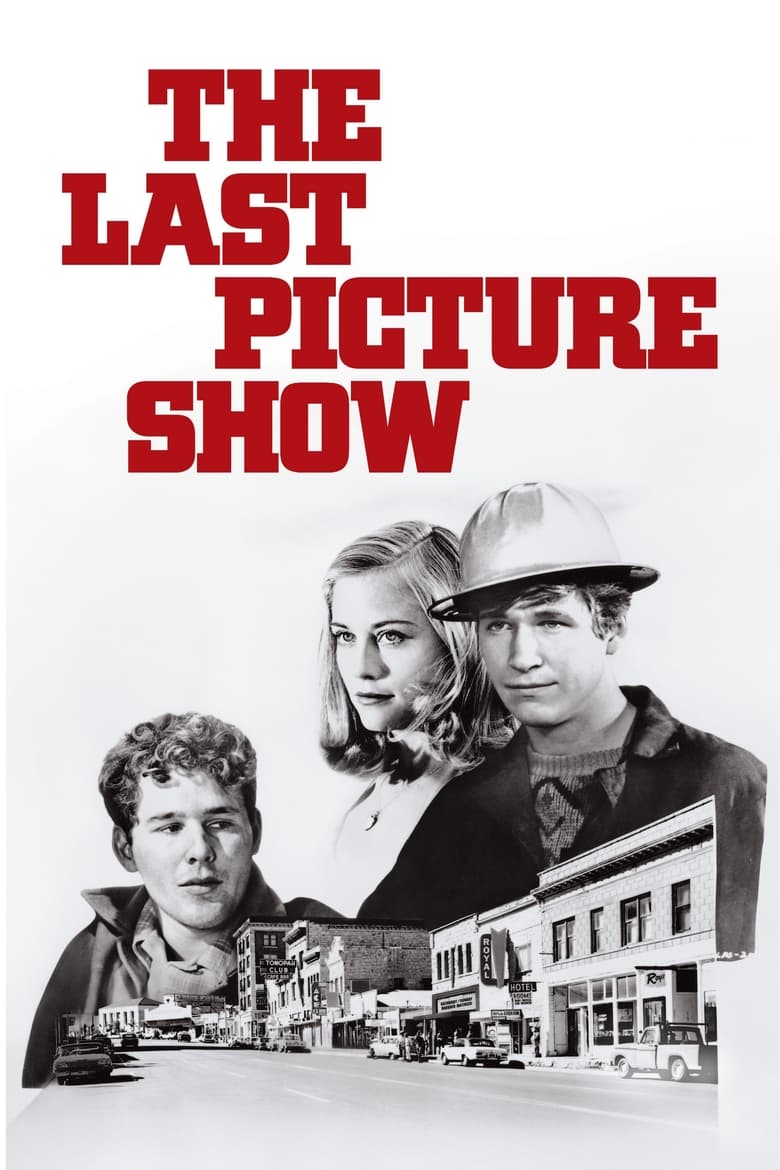
There's a scene in The Last Picture Show where two characters sit together in the kind of silence that says more than any line of dialogue could. No swelling strings, no meaningful glance held a beat too long for the audience's benefit. Just two people, the Texas wind, and the unbearable weight of a life going nowhere. That's the film in a nutshell, really. Peter Bogdanovich made something here that most directors spend entire careers reaching for and never quite touching: a film that feels genuinely, painfully human.
Set in a small, dying Texas town in the early 1950s, it follows a group of teenagers at that particular crossroads where adolescence curdles into adulthood and you realise the world you've inherited might not have much to offer. But describing the plot feels almost beside the point. This isn't a film driven by incident. It's driven by atmosphere, by longing, by the slow suffocation of stagnation. Bogdanovich shoots it all in stark black and white, and the choice is inspired. There's a quality to the image that hovers somewhere between nostalgia and desolation, like a photograph of somewhere you never quite loved but can't stop thinking about.
The ensemble is extraordinary, full stop. Jeff Bridges, Cybill Shepherd, Randy Quaid, Ellen Burstyn: all of them doing career-defining work, all of them making their characters feel entirely lived-in rather than written. But it's Timothy Bottoms and Cloris Leachman who I keep coming back to. Leachman in particular. She plays a woman trapped in quiet devastation, and she does it with such restraint and grace that her handful of scenes linger long after the credits roll. There's no showboating, no moment designed for applause. Just a person, breaking apart in the most ordinary, heartbreaking way imaginable. It's compassion rendered on screen rather than caricature, and that's a rarer thing than it ought to be.
The soundtrack deserves its own mention. Bogdanovich fills the film with early rock 'n' roll and honky-tonk ballads, a curated selection that doesn't just establish the era but deepens the emotional texture of every scene it accompanies. Hank Williams' mournful twang feels like the town itself finding a voice. And the closing sequence, I won't say more than that it earns every bit of its reputation as one of the most elegiac endings in American cinema. It's a farewell to innocence and community and a way of life already disappearing at the edges, and it lands like a slow punch to the chest.
What strikes me most, watching it now, is how completely it avoids sentimentality while still being deeply, almost unbearably moving. There are no grand speeches. Nobody learns a tidy lesson. The film trusts its audience to sit with uncomfortable feelings rather than packaging them neatly. In that sense it reminds me of Yi Yi, another film content to observe life at close range without tidying it up, letting the mundane and the devastating exist side by side without comment. That kind of filmmaking takes real nerve.
I'd also point anyone who responds to the film's portrait of a community slowly collapsing in on itself towards A River Called Titas, which takes a similarly unhurried, heartbroken look at a world disappearing. Different setting, different culture, same ache.
Four stars. The Last Picture Show is touching without being manipulative, tragic without tipping into melodrama. It captures something true about growing up in a place that can't quite hold you, and about the specific grief of leaving behind people who'll never leave at all. Decades on, it hasn't dimmed. A genuine American classic, and one I'd press into the hands of anyone who'll take it.
Rating: ★★★★ | Year: 1971 | Watched: 2026-05-09
Where to watch
Watch in the UK
Rent: Apple TV Store · Amazon Video · Google Play Movies · Sky Store
Buy: Apple TV Store · Amazon Video · Google Play Movies · Sky Store
Physical: Amazon UK · Zavvi
Watch in the US
Rent: Amazon Video · Apple TV Store · Google Play Movies · YouTube
Buy: Amazon Video · Apple TV Store · Google Play Movies · YouTube
Physical: Amazon US
Affiliate disclosure: Movies With Macca may earn a small commission on purchases or subscriptions started via these links. It costs you nothing extra.
Related on Movies With Macca
More from the 1970s: Fantastic Planet (1973) · Here and Elsewhere (1976) · Italianamerican (1974) · Punishment Park (1971)
More drama: Viy (1967) · Wonder (2017) · A Better Tomorrow (1986) · Beautiful Boy (2018)
More romance: The Eagle (1925) · The General (1926) · The Docks of New York (1928) · A Throw of Dice (1929)



