Vertigo (1958)
★★★½ — Vertigo (1958)

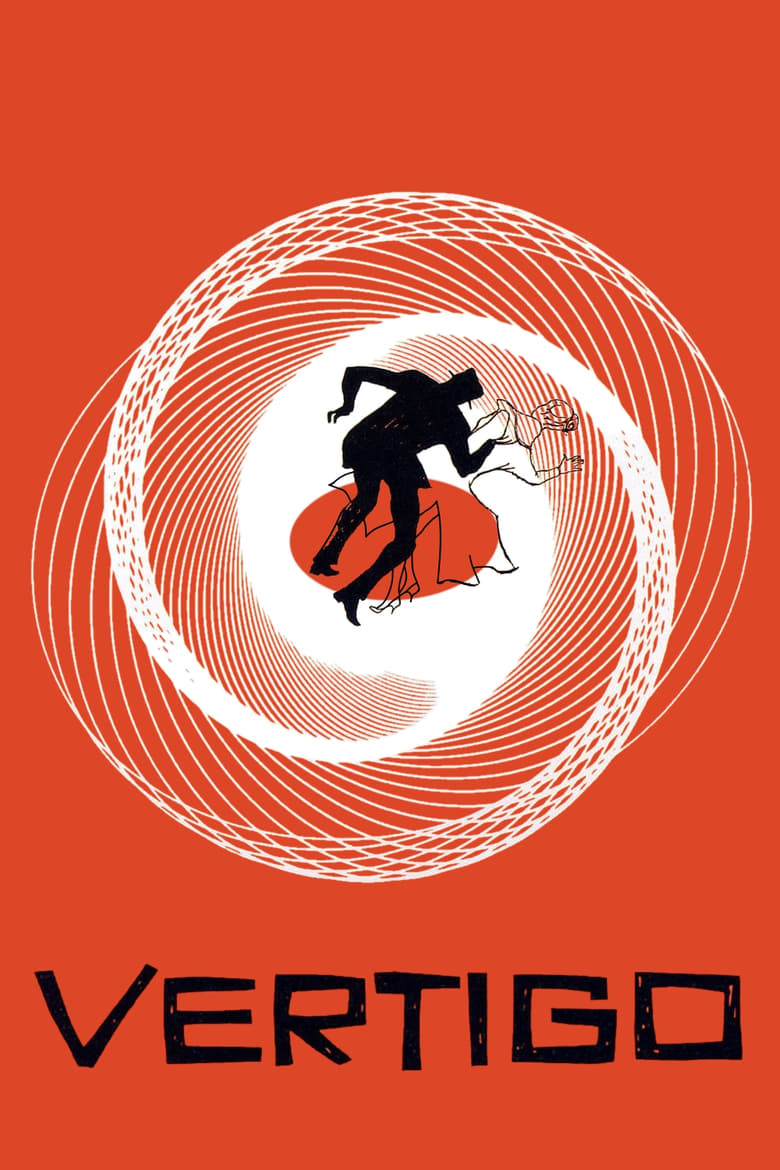
Let me be honest with you straight away: I don't think Vertigo is Hitchcock's best film. There, I've said it. I know that puts me at odds with the Sight and Sound poll, with most film schools, and probably with a good chunk of the people reading this. But I sat with it, I thought about it, and I just can't get there. Three and a half stars feels right, and I'm not embarrassed about that.
What's interesting, though, is that the film's sainthood wasn't always guaranteed. When it came out, critics found it slow and strange, even a little sordid. Box office was modest. It took decades of critical re-evaluation, particularly from the 1980s onward, for Vertigo to climb to the very top of the canon. That history matters, I think, because it's a reminder that "masterpiece" is never a fixed fact handed down from on high. It's a consensus that shifts, and sometimes it shifts in directions worth questioning.
And I want to be clear: I do understand the love. I genuinely do. The cinematography is stunning in a way that's hard to overstate. Every frame feels like a lush, dreamlike oil painting, the deep greens and hypnotic reds bleeding through San Francisco's hazy fog to create a mood so thick you could cut it with a knife. The famous dolly-zoom is as disorienting and effective as advertised. Bernard Herrmann's spiralling score wraps itself around your brain and refuses to let go. The surreal dream sequences are genuinely arresting. Technically, visually, this is Hitchcock operating at an extraordinary level, and I'd never argue otherwise.
But here's where I start to pull back. James Stewart's character, and the film's treatment of his obsession, makes for deeply uncomfortable viewing, and not in the productive, morally interrogating way a great thriller manages. The film seems to present his controlling, fantasy-driven behaviour towards Kim Novak with a kind of romantic gravity it hasn't quite earned the right to. It never fully reckons with how troubling that behaviour actually is. That's not a puritanical complaint, it's a structural one. The discomfort never resolves into anything, and for a film this studied and precise in other respects, that feels like a real problem.
The pacing drags, too. There are stretches where I found myself checking in rather than leaning forward, which is not something I'd say about Hitchcock at his sharpest. And the plot twists, so often cited as ingenious, landed for me as more predictable than thrilling. Kim Novak's dual role is technically impressive work, and I don't want to dismiss it, but emotionally it never quite clicked for me the way I wanted it to.
Compare it to Rear Window, which hums with tension and wit from start to finish, or to Dial M for Murder, which is so elegantly constructed it almost feels like a game, and Vertigo starts to look a little messy by contrast. Those films are tighter, sharper, and for my money, more gripping as thrillers. They don't leave me as cold.
None of this means Vertigo is bad. It isn't. It's a film I admire enormously in places, and I'd recommend anyone serious about cinema watch it. The craft is extraordinary. But admiring a film and loving it are two different things, and I've never been comfortable pretending otherwise just because the consensus says I should feel differently. Vertigo is a film I respect more than I enjoyed. Its legacy is undeniable, but my heart stays with the tighter, sharper Hitchcock. Three and a half stars.
Rating: ★★★½ | Year: 1958 | Watched: 2025-09-13
Where to watch
Watch in the UK
Rent: Apple TV Store · Rakuten TV · Amazon Video · Google Play Movies
Buy: Apple TV Store · Rakuten TV · Amazon Video · Google Play Movies
Physical: Amazon UK · Zavvi
Watch in the US
Stream: YouTube TV · TCM
Rent: Amazon Video · Apple TV Store · Google Play Movies · YouTube
Buy: Amazon Video · Apple TV Store · Google Play Movies · YouTube
Physical: Amazon US
Affiliate disclosure: Movies With Macca may earn a small commission on purchases or subscriptions started via these links. It costs you nothing extra.
Related on Movies With Macca
More from Alfred Hitchcock: Sabotage (1936) · Rebecca (1940) · Dial M for Murder (1954) · Rear Window (1954)
More with James Stewart: Rear Window (1954)
More from the 1950s: Invasion of the Body Snatchers (1956) · Alice in Wonderland (1951) · Letter from Siberia (1957) · Invaders from Mars (1953)
More mystery: Mononoke the Movie: The Phantom in the Rain (2024) · Mononoke the Movie: Chapter II - The Ashes of Rage (2025) · Carnival of Souls (1962) · One Way or Another (1975)
More romance: The Eagle (1925) · The Last Picture Show (1971) · The General (1926) · The Docks of New York (1928)