The Eagle (1925)
★★½ — The Eagle (1925)

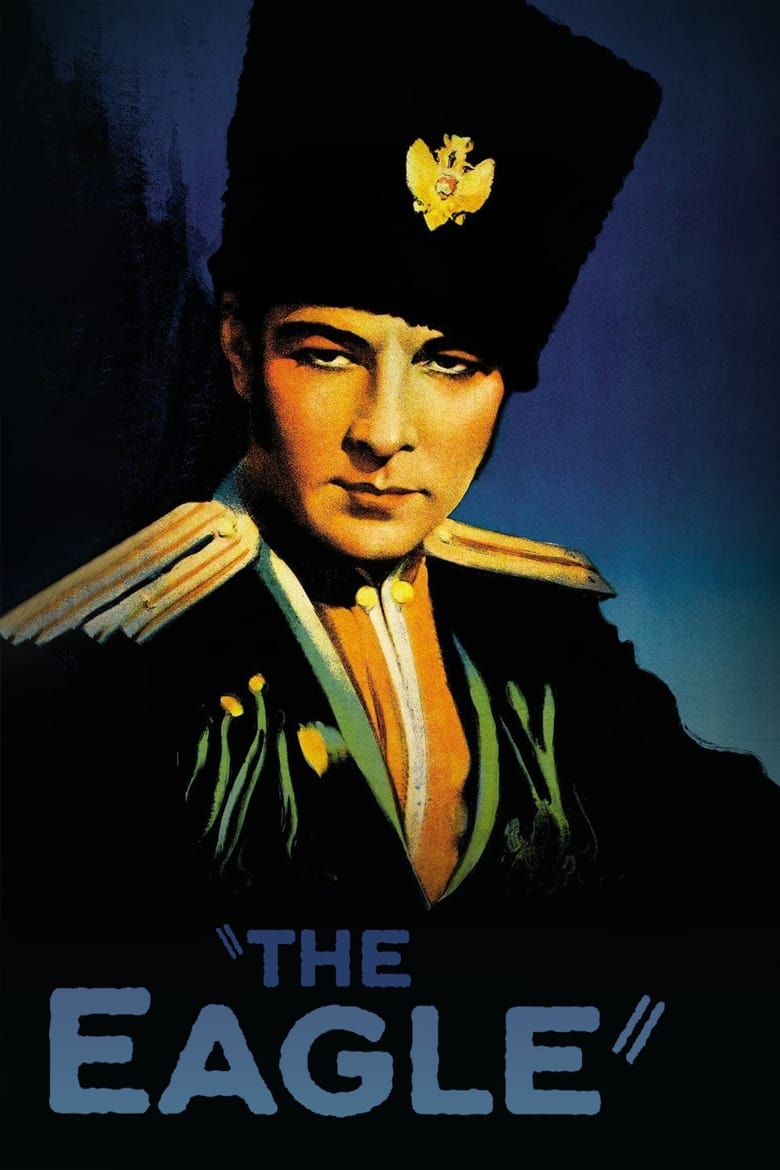
Rudolph Valentino in a cape and mask, sword in hand, galloping across a theatrical vision of 19th-century Russia. It sounds like an absolute riot. And for about twenty minutes, it is. Then The Eagle settles into something far more comfortable than exciting, and comfort, for a swashbuckling adventure, is a bit of a death knell.
The setup has genuine charm. A noble Russian officer, wronged and on the run, reinvents himself as the "Black Eagle," a masked outlaw dispensing justice and causing headaches for the corrupt. It's Zorro with a Slavic accent, essentially, and there's nothing wrong with that as a premise. Valentino was one of the biggest stars in the world at this point, and he carries the whole thing on sheer magnetism alone. The man knew how to wear a costume. He cuts a genuinely striking figure, and even through the broad, exaggerated gestures that silent-era performance demanded, there's something undeniably watchable about him. Star power is a hard thing to fake, and he had it in abundance.
Director Clarence Brown handles the action sequences with a fair bit of energy. The sword fights and rooftop chases are competently staged, and the costuming and set design do a decent job of evoking imperial Russia with theatrical flair, if not any particular historical precision. The film looks the part, and there are individual moments where it genuinely crackles.
But here's the problem: The Eagle never gets out of second gear. The plot is utterly predictable from the first reel, the emotional stakes feel paper-thin, and the romantic chemistry between Valentino and his leading lady is more dutiful than sparkling. You want to feel the pull between them. Instead, you're watching two people go through the motions of a love story that the script hasn't really earned.
The middle act drags badly, and when the climax finally arrives, it lands with a dull thud rather than a flourish. Part of that is the limitation of the form. Without spoken dialogue, storytelling in this period leaned heavily on title cards and pantomime, and when a film's emotional writing isn't strong enough, those tools feel crude rather than expressive. The best silent films, the ones that really stick with you, find ways to transcend that. I think of the physical poetry in Safety Last! (1923), where the filmmaking itself does the talking. Or the brooding atmosphere of The Docks of New York (1928), which wrings genuine feeling out of every frame. The Eagle doesn't reach those heights. It settles for broad strokes and hopes Valentino's presence fills the gaps. Mostly, he does. But not entirely.
What you're left with is a film that's perfectly watchable and historically interesting, particularly as a document of what made Valentino such a phenomenon, but also one that evaporates from the memory almost immediately after the credits roll. It's handsomely mounted, professionally executed, and almost entirely forgettable. A matinee entertainment, and a fairly average one at that.
If you're a Valentino completist or simply working your way through the silent era, it's worth an afternoon of your time. For everyone else, I'd manage expectations. There are richer, stranger, more alive films from this period just waiting to be discovered, and this one, for all its surface gloss, isn't quite among them.
Two and a half stars.
Rating: ★★½ | Year: 1925 | Watched: 2026-05-11
Where to watch
Watch in the UK
Rent: Amazon Video
Buy: Amazon Video
Physical: Amazon UK · Zavvi
Watch in the US
Stream: Amazon Prime Video · MGM+ Amazon Channel · MGM Plus Roku Premium Channel · MGM Plus
Rent: Amazon Video · FlixFling
Buy: Amazon Video · FlixFling
Physical: Amazon US
Affiliate disclosure: Movies With Macca may earn a small commission on purchases or subscriptions started via these links. It costs you nothing extra.
Related on Movies With Macca
More from the 1920s: The General (1926) · The Docks of New York (1928) · A Throw of Dice (1929) · Safety Last! (1923)
More adventure: Alice in Wonderland (1951) · Louisiana Story (1948) · The General (1926) · Kirikou and the Wild Beasts (2005)
More romance: The Last Picture Show (1971) · The General (1926) · The Docks of New York (1928) · A Throw of Dice (1929)