
One Way or Another (1975)
★★½ — One Way or Another (1975)

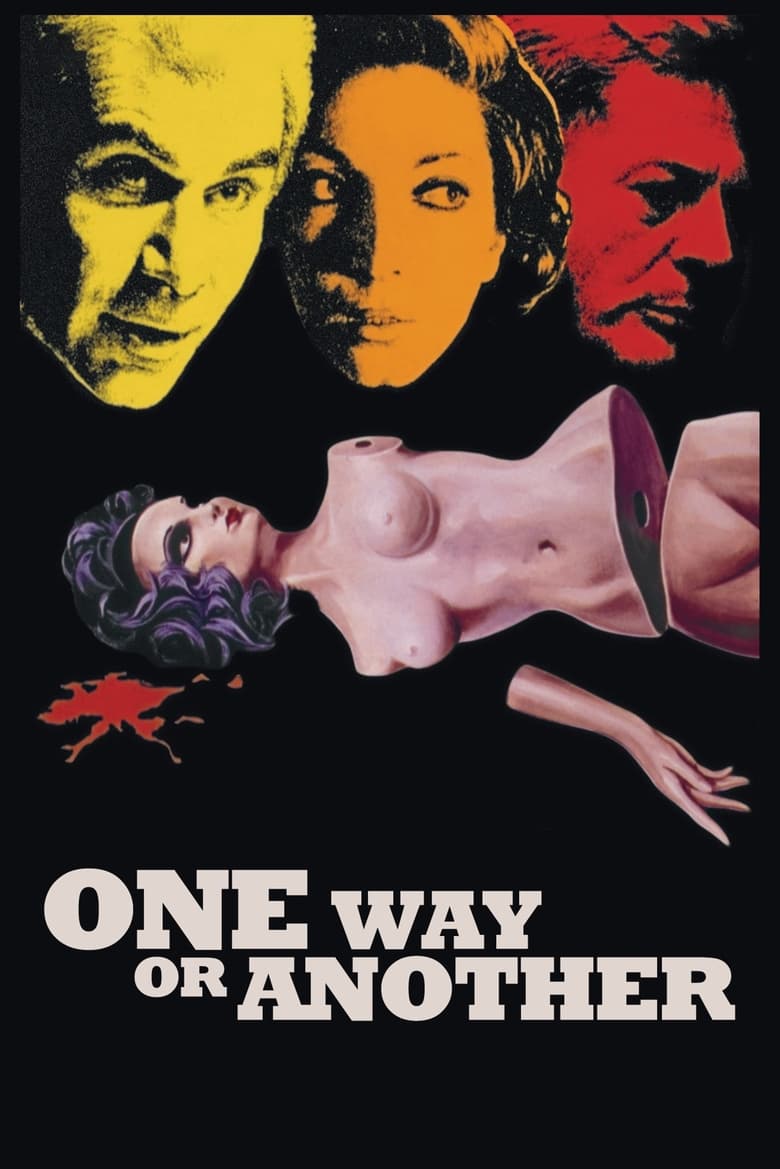
There's a moment in One Way or Another where a community meeting spills into genuine argument, neighbours talking over each other, frustrations bubbling up that no revolutionary slogan could quite contain. It's the kind of moment that makes you sit forward. And then the film moves on, back to its more measured pace, and you settle back again. That push and pull pretty much sums up my experience of this one.
Sara Gómez made history as Cuba's first female feature filmmaker, and even knowing that going in, the film still surprises you with how confident it is. This isn't a director feeling her way around. Gómez weaves fiction and documentary together with a real sense of purpose, following a schoolteacher caught between her own ideals and the messy realities of love and class, while cutting away to real Havana streets, real community sessions, real people talking about machismo and inequality and what the revolution actually means in their daily lives. It's an ambitious structure, and it often works beautifully. The contradictions are allowed to breathe. Nobody's a villain or a saint. The system is changing, but the people inside it are slower to shift, and Gómez is honest about that tension in a way that steers well clear of propaganda.
Some of the non-professional performers are quietly remarkable, particularly in the looser, more unscripted-feeling scenes where you forget anyone's acting at all. There's a lived-in authenticity to those moments that a more polished production might have scrubbed away. The grainy 16mm footage and uneven sound design, the cramped tenements and sun-soaked streets, all of it contributes to a texture that feels genuinely documentary rather than dressed up to look that way. In its best passages, the imperfections are the point. There's real poetry in those earnest faces staring into the camera.
But I'd be lying if I said it didn't test my patience at points. The pacing is slow, sometimes deliberately so, and the didactic dialogue has a way of stating what the images are already showing you. I understand the educational intent, and in context it makes sense, but by modern standards it can feel repetitive and a touch airless. The emotional momentum never quite builds the way you want it to. Just when the drama starts to pull you in, it steps back into observation mode, and the connection resets.
It reminded me, in a loose way, of the discomfort I felt watching Here and Elsewhere (1976), that same sense of a film wrestling seriously with political reality in a way that demands something from you as a viewer rather than just entertaining you. Both films reward patience, but both ask quite a lot of it.
Look, One Way or Another is genuinely historically significant. As a document of post-revolutionary Cuba at street level, it's invaluable. As a piece of socially perceptive filmmaking, it earns real respect. Gómez was doing something rare and radical here, and the film's vision is clear even when its storytelling feels diffuse. But significance and engagement aren't the same thing, and I'd be doing you a disservice if I pretended this is an easy watch or that it fully delivers on its considerable ambitions.
Worth your time if you're interested in the politics, the history, or the formal experiment of mixing modes like this. Go in with realistic expectations rather than waiting for dramatic fireworks, and there's something genuinely rewarding here. Just don't expect a smooth ride, because you won't get one.
Two and a half stars.
Rating: ★★½ | Year: 1975 | Watched: 2026-04-29
Related on Movies With Macca
More with Gian Maria Volonté: A Fistful of Dollars (1964) · For a Few Dollars More (1965)
More from Italy: Nightmare City (1980) · Cemetery Man (1994) · Chicken for Linda! (2023) · The Firemen's Ball (1967)
More from the 1970s: Fantastic Planet (1973) · Here and Elsewhere (1976) · Italianamerican (1974) · Punishment Park (1971)
More drama: Viy (1967) · Wonder (2017) · A Better Tomorrow (1986) · Beautiful Boy (2018)
More thriller: Invasion of the Body Snatchers (1956) · Angst (1983) · The Long Walk (2025) · Punishment Park (1971)



