Dial M for Murder (1954)
★★★★ — Dial M for Murder (1954)

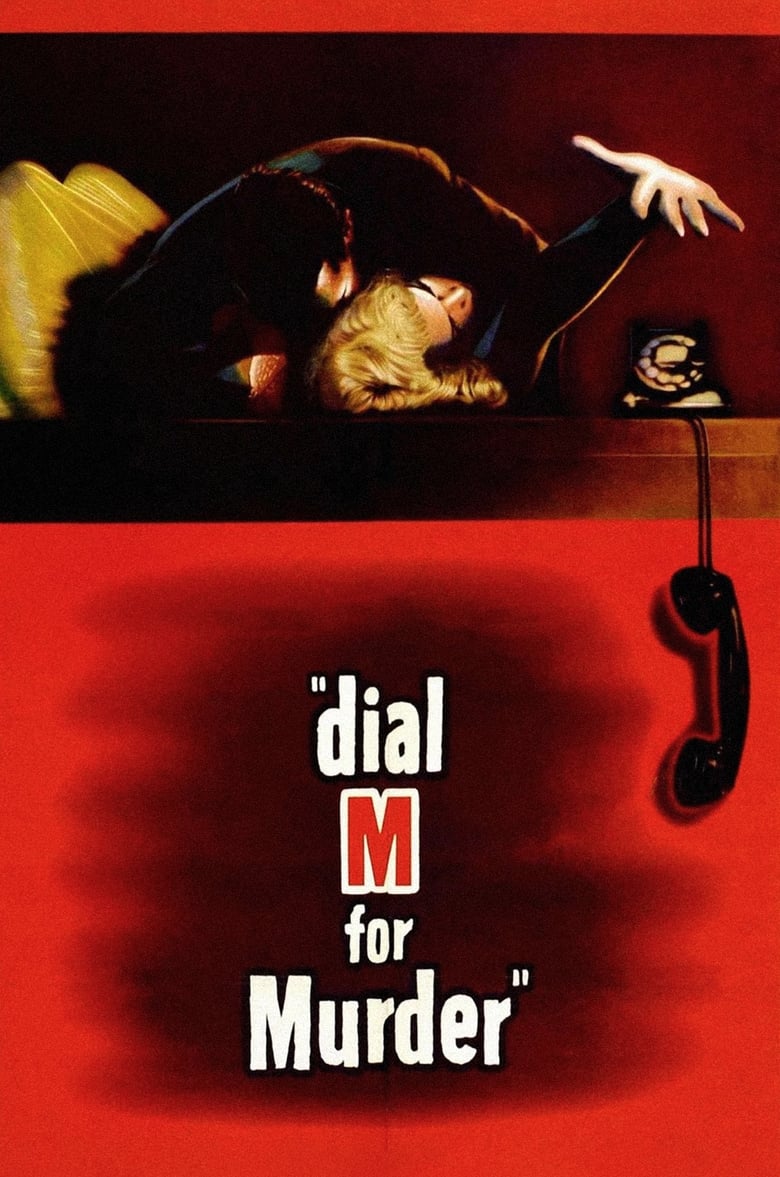
There's a moment in Dial M for Murder where the whole horrible plan begins to unravel, and you realise that Hitchcock has been playing you the entire time. You thought you were watching a villain succeed. What you were actually watching was a trap being built wrong. The pleasure of this film isn't just in the suspense, though there's plenty of that. It's in watching something diabolically clever run up against something even cleverer. And doing all of that in a London flat, with a pair of scissors and a latchkey, is frankly extraordinary.
The setup is as clean as a knife edge. Tony, played with silky, reptilian charm by Ray Milland, wants his wife dead and her money in his pocket. He has a plan. It is, on paper, airtight. But Hitchcock knows that no plan survives contact with reality, and the slow, careful process by which things go wrong is where the film earns every second of its running time. The script is razor-sharp, full of that clipped, polite British dialogue that hides genuine venom underneath. People say the most dreadful things in the most civilised voices, and that contrast is half the fun.
Grace Kelly is luminous as Margot, and I want to push back on anyone who dismisses her as merely decorative. She's elegant, yes, but there's steel in there. The film asks her to carry some of its most harrowing scenes and she does it with real conviction. Robert Cummings brings an earnest, slightly bumbling energy as the American lover caught in the middle, and it works well as a counterpoint to Milland's icy control. And then there's the inspector, all quiet deduction and mild manners, who turns out to be the most dangerous person in the room. It's melodramatic, absolutely, but that's not a flaw. This is a drawing-room puzzle with murder on the menu. Gritty realism was never the point.
What makes it sing is Hitchcock's use of the camera in what is, essentially, a single location. He uses close-ups like weapons, shadows like accusations. A key becomes the most terrifying object in cinema. The geometry of the flat, who's standing where, who can see what, starts to feel like a chess board, and by the final act you're leaning forward trying to work out who has which piece left. I've felt something similar watching Rear Window (1954), made the same year, where Hitchcock again proves that confinement isn't a limitation but a pressure cooker.
Some people find the stage origins a little stiff, and I understand that. The film was adapted from a West End play and there are moments where it feels it. But I'd argue that's actually part of the appeal. The theatricality gives it a quality that feels deliberate rather than dated, like you're watching a very dangerous game being performed for your benefit. Hitchcock built his reputation on this kind of thing long before he had Hollywood's full resources, as anyone who's seen The 39 Steps will know, and he never lost the instinct for wringing maximum tension out of minimum space.
Is it Hitchcock's greatest film? No. Vertigo exists, after all. But greatness isn't really the measure I'd reach for here anyway. Dial M for Murder is something perhaps more satisfying: a near-perfect thriller that does exactly what it sets out to do, without a single wasted scene or a line out of place. It's smart, it's cold, it's enormously entertaining, and it holds up beautifully more than seventy years on. Diabolical, in the very best sense of the word.
Four stars.
Rating: ★★★★ | Year: 1954 | Watched: 2025-09-05
Where to watch
Watch in the UK
Rent: Apple TV Store · Rakuten TV · Amazon Video · Google Play Movies
Buy: Apple TV Store · Rakuten TV · Amazon Video · Google Play Movies
Physical: Amazon UK · Zavvi
Watch in the US
Stream: IndieFlix Shorts Amazon Channel
Rent: Amazon Video · Apple TV Store · Google Play Movies · YouTube
Buy: Amazon Video · Apple TV Store · Google Play Movies · YouTube
Physical: Amazon US
Affiliate disclosure: Movies With Macca may earn a small commission on purchases or subscriptions started via these links. It costs you nothing extra.
Related on Movies With Macca
More from Alfred Hitchcock: Sabotage (1936) · Rebecca (1940) · Vertigo (1958) · Rear Window (1954)
More from the 1950s: Invasion of the Body Snatchers (1956) · Alice in Wonderland (1951) · Letter from Siberia (1957) · Invaders from Mars (1953)
More thriller: Invasion of the Body Snatchers (1956) · Angst (1983) · The Long Walk (2025) · Punishment Park (1971)
More crime: A Better Tomorrow (1986) · Angst (1983) · Stolen Face (1952) · Cairo Station (1958)