Mothra vs. Godzilla (1964)
★★ — Mothra vs. Godzilla (1964)

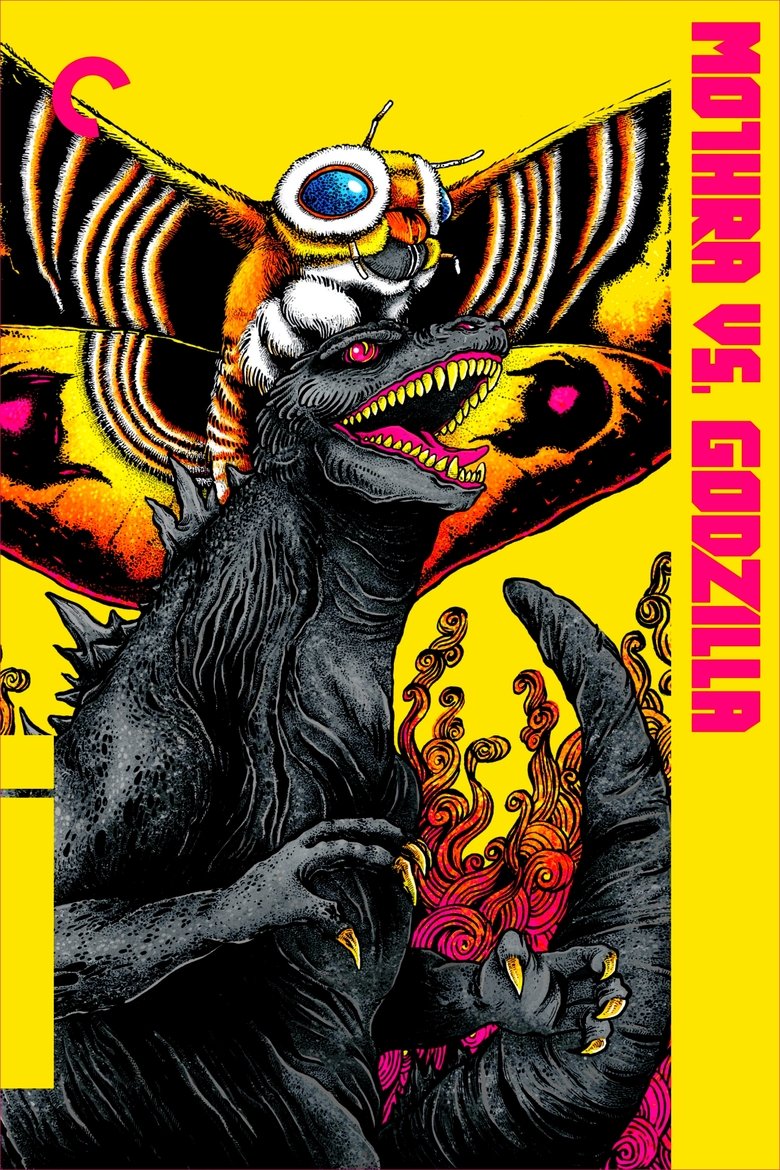
Let me be upfront about something: I get why kaiju fans hold this one in such high regard, and I can see what they're responding to. Mothra vs. Godzilla is genuinely trying to be more than monster-bashing entertainment. There's a moral seriousness here that the franchise would more or less abandon as the sixties wore on, and for stretches of it, that ambition actually pays off. But two stars is two stars, and I can't pretend it fully earns the reputation that precedes it.
What works, and I want to be fair about this, is the atmosphere. The coastal towns feel genuinely bleak, battered and grey in a way that roots the destruction in something more than spectacle. The corporate greed angle, businessmen squabbling over profit while an island's sacred protector sits abandoned and exploited, gives the film a moral spine that most of these sequels lack. And Mothra herself is a genuinely compelling presence. There's something almost mournful about her, this ancient, divine creature dragged into a conflict not of her making, defending a world that doesn't particularly deserve her. The score leans into that beautifully. When it's working, the film feels like it's actually about something.
Godzilla, meanwhile, is back to being a threat rather than a mascot. Leaner, more animalistic, less open to interpretation. The idea of pitting mindless, nuclear-born destruction against sacred guardianship is a strong one, and the final confrontation between the two tries to carry some of that ideological weight.
But here's the thing: trying and succeeding are different things. The human side of the story drags badly. There's a journalist, a photographer, bureaucrats, more bureaucrats, meetings, debates, more meetings. I understand that these films need human characters to anchor the scale, but when they're this inert, they don't anchor anything. They just eat screen time. By the time we get back to the monsters, I'd lost whatever momentum the film had built.
The suitmation is what it is. I'm not going to hammer a 1964 film for rubber suits and cardboard cities. That's the deal, and part of the charm, honestly. But the fight choreography here is more symbolic gesture than actual combat, which might be intentional given the film's themes, but it doesn't make for particularly gripping viewing. And I spotted the reused footage. You always spot the reused footage.
What really deflates the ending, though, is how passive it feels. Godzilla isn't beaten. He's just sort of... contained. Trapped. Problem deferred rather than resolved. I understand the franchise logic at work, you can't actually kill the golden goose, but it robs the whole final act of the impact it's been building toward. Mothra sacrifices enormously, and the payoff is a shrug. That's a structural problem no amount of moody cinematography can paper over.
If you want early Toho that's doing something genuinely odd and visually distinctive, I'd point you toward The Mysterians (1957), which has its own peculiar energy and ambition. And Ebirah, Horror of the Deep is worth a look as a comparison point for where the series would head just a couple of years after this one: looser, more playful, less interested in moral weight entirely.
Mothra vs. Godzilla is a film I respect more than I enjoy. It's clearly one of the more thoughtful entries in the early Showa run, and fans who love it aren't wrong to love it. But for me, the repetitive structure, the sluggish human drama, and that curiously anticlimactic finish add up to something that promises more than it delivers. Worth a watch for the legacy, for Mothra, for those bleak coastal visuals. But I'd be lying if I said it fully landed.
Two stars.
Rating: ★★ | Year: 1964 | Watched: 2025-10-29
Where to watch
Watch in the UK
Rent: Apple TV Store
Buy: Apple TV Store
Physical: Amazon UK · Zavvi
Watch in the US
Stream: HBO Max Amazon Channel · Criterion Channel · Cinemax Amazon Channel · HBO Max
Rent: Apple TV Store · Fandango At Home
Buy: Apple TV Store · Fandango At Home
Physical: Amazon US
Affiliate disclosure: Movies With Macca may earn a small commission on purchases or subscriptions started via these links. It costs you nothing extra.
Related on Movies With Macca
More from Ishirō Honda: Space Amoeba (1970) · Varan (1958) · Beast Man Snow Man (1955) · The Mysterians (1957)
More with Akira Takarada: Ebirah, Horror of the Deep (1966) · Beast Man Snow Man (1955)
More from Japan: Mononoke the Movie: The Phantom in the Rain (2024) · Mononoke the Movie: Chapter II - The Ashes of Rage (2025) · Blue (1993) · The Ghost of Yotsuya (1959)
More from the 1960s: Viy (1967) · Persona (1966) · Carnival of Souls (1962) · Daisies (1966)
More drama: Viy (1967) · Wonder (2017) · A Better Tomorrow (1986) · Beautiful Boy (2018)
More action: A Better Tomorrow (1986) · The General (1926) · Hand of Death (1976) · Daredevil (2003)