The Mysterians (1957)
★★ — The Mysterians (1957)

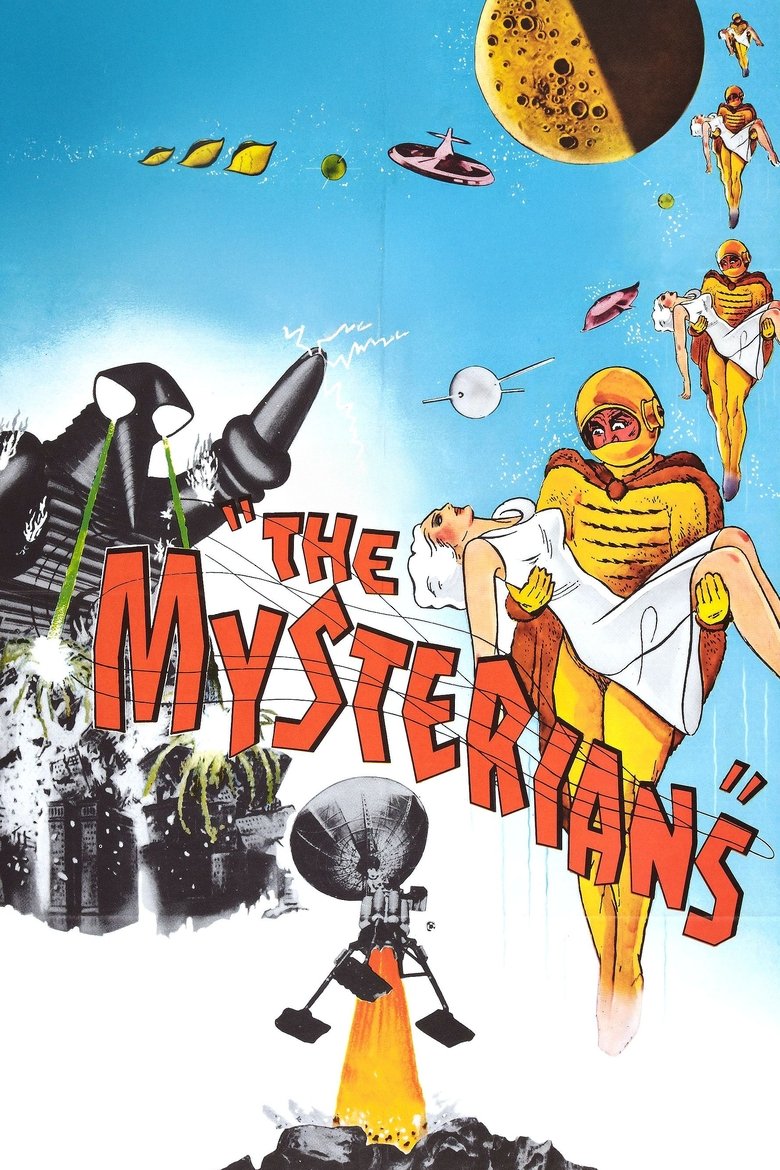
There's a moment in The Mysterians where a grave, serious Japanese scientist delivers the news that an alien race from Mars has arrived on Earth, they want territory, and oh yes, they'd quite like some of our women for breeding purposes, thank you very much. And the assembled crowd treats this information with the kind of solemn gravity you'd reserve for a death in the family. That contrast, totally straight faces set against material that is absolutely bananas, is both the film's greatest charm and the reason it only half works.
This is Ishirō Honda directing and Eiji Tsuburaya handling the effects, the exact same duo who gave us Godzilla just three years earlier. You can feel the ambition. Toho clearly threw real money at this one, and there are moments where the scale genuinely impresses. Laser blasts, force fields, a hulking robot stomping through miniature countryside. It wants to be Japan's answer to the Hollywood sci-fi spectacle of the era, something to sit alongside Invasion of the Body Snatchers in the Cold War anxiety cannon. And thematically, it's reaching for that same unease about the unknown, about what might be out there, about the fragility of the world we think we control.
Whether it gets there is another matter entirely.
The special effects are, to put it charitably, of their time. Miniature towns crumble like soggy biscuits. Spaceships hang on wires with the sort of confidence that suggests nobody thought audiences would notice. The Mysterian costumes look like someone raided a fancy dress shop that specialised in rejected jazz aerobics gear. There's a giant robot in there too, lumbering through a forest, and it's the kind of thing that inspires genuine affection precisely because it's so earnestly daft. You don't laugh at it so much as you grin alongside it.
And the performances, genuinely, are better than they have any right to be. The cast plays it completely straight throughout, bringing real weight to lines that, written down, read like parody. That sincerity is what separates this from outright camp. Honda isn't winking at you. He believes in the material, or at least he's committing to it fully, and that commitment is oddly infectious for a while.
The problem is the pacing. Once the initial setup is established, the film basically settles into a rhythm of military attack, alien defence, repeat. There's only so many times you can watch a force field absorb a missile barrage before the novelty wears thin. It's a film that front-loads its imagination and then coasts on spectacle for too long. I found my attention drifting in the back half in a way I rarely do with Honda's better work. Mothra vs. Godzilla, for instance, keeps finding new things to throw at you. This one finds its groove early and then just sits in it.
That said, as a cultural document it's genuinely fascinating. This is postwar Japan processing a whole set of anxieties through pop spectacle. The fear of invasion, of annihilation, of forces beyond human comprehension or control. It's all there, dressed up in dome helmets and delivered with straight faces. If you've spent any time with vintage tokusatsu, or if you're working your way through the Toho back catalogue the way I've been doing with films like Varan, then The Mysterians is an essential stop. It's a milestone. It's where Honda and Tsuburaya stretched beyond the creature feature into something more overtly science-fictional, and that leap matters historically even when the film itself sags.
So where does that leave me? Two stars. It's watchable, it's charming in its absurdity, and I don't regret spending the time with it. But I can't pretend it's more than a curiosity. Not good by any honest measure, not junk either. A must-see mess for the right audience, and a bit of a slog for everyone else.
Rating: ★★ | Year: 1957 | Watched: 2025-10-18
Where to watch
Watch in the US
Stream: Criterion Channel · FlixFling
Rent: FlixFling
Buy: FlixFling
Physical: Amazon US
Affiliate disclosure: Movies With Macca may earn a small commission on purchases or subscriptions started via these links. It costs you nothing extra.
Related on Movies With Macca
More from Ishirō Honda: Space Amoeba (1970) · Varan (1958) · Mothra vs. Godzilla (1964) · Beast Man Snow Man (1955)
More from Japan: Mononoke the Movie: The Phantom in the Rain (2024) · Mononoke the Movie: Chapter II - The Ashes of Rage (2025) · Blue (1993) · The Ghost of Yotsuya (1959)
More from the 1950s: Invasion of the Body Snatchers (1956) · Alice in Wonderland (1951) · Letter from Siberia (1957) · Invaders from Mars (1953)
More science fiction: Invasion of the Body Snatchers (1956) · Fantastic Planet (1973) · Nightmare City (1980) · The Long Walk (2025)
More action: A Better Tomorrow (1986) · The General (1926) · Hand of Death (1976) · Daredevil (2003)