Ebirah, Horror of the Deep (1966)
★½ — Ebirah, Horror of the Deep (1966)

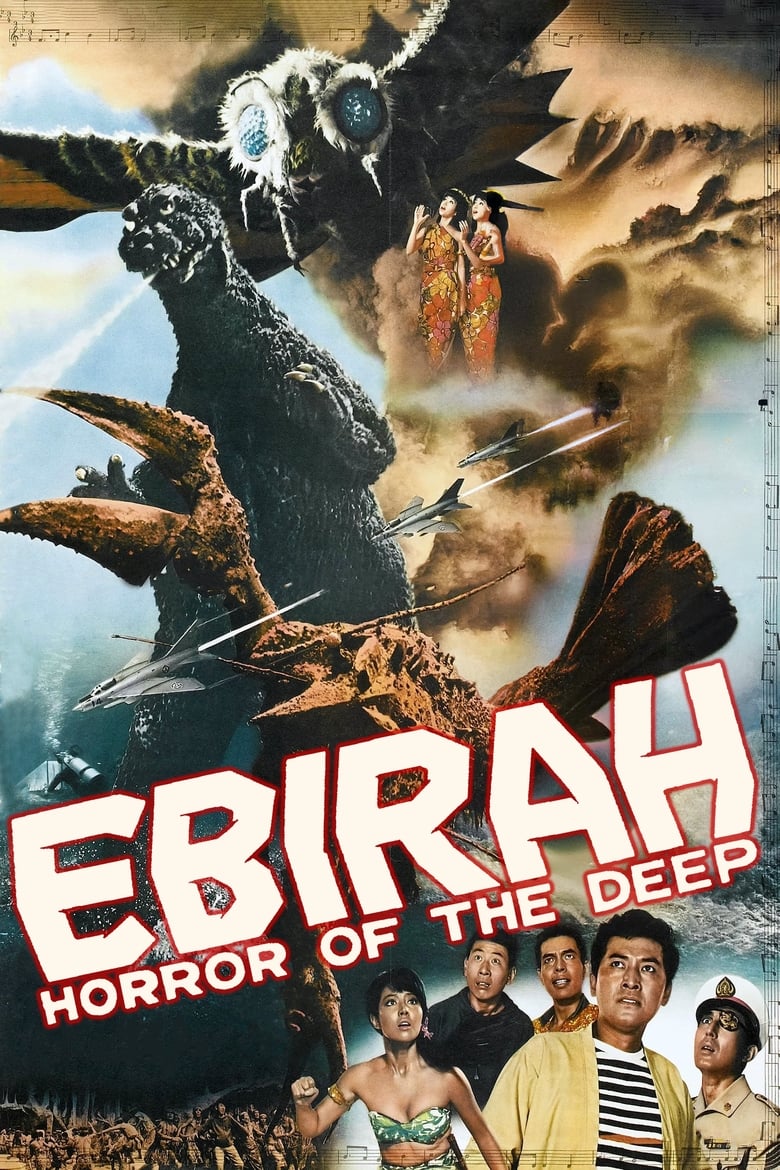
Why do I keep doing this to myself? Genuinely, I ask that question every time I sit down with one of these mid-period Showa Godzilla entries, and every time I get roughly the same answer: a giant rubber monster punches another giant rubber monster into the sea, I crack a smile, and I forget I ever asked. Ebirah, Horror of the Deep is peak "what even is this?" kaiju cinema, and I mean that in the most affectionate, despairing way possible.
The setup, such as it is, drops Godzilla onto a tropical island run by what I can only describe as a Bond villain knockoff cult. Think secret organisation, vague world domination ambitions, and henchmen who couldn't menace a parish council. And lurking in the waters around this island is Ebirah, a massive red lobster with pincers the size of double-decker buses and the personality of a confused waiter. Its entire dramatic function is to wave those pincers at things. That's it. That's the monster. Oh, and the moth turns up again too, because of course it does. I covered the dynamic between Godzilla and his winged companion back when I watched Mothra vs. Godzilla (1964), a film that at least had some ambition behind the silliness. Here, Mothra's cameo feels like a contractual obligation.
The plot barely holds together. There are people on the island, a handful of protagonists who whisper, get captured, escape, get recaptured, and escape again in a cycle so repetitive it starts to feel like performance art. The pacing drags through these sequences with a patience that borders on cruel. And the horror promised by the title? Laughable is the generous word. The cardboard buildings crumble on cue, the smoke machines work overtime, and the men in rubber suits flail at each other with the conviction of a school play staged on a Wednesday afternoon with half the cast absent.
Even Godzilla himself looks bored. There's a particular shot where he's just sort of standing there while Ebirah waves its claws in his general direction, and the expression on the suit, if you can call it that, reads as the weary resignation of someone waiting for a bus that is running very, very late. It's not threatening. It's barely even entertaining in any traditional sense.
And yet. And yet.
I'd be lying if I said I had a miserable time. There's something about these films, something I can't quite defend intellectually but feel very strongly in practice, that makes them work as a specific kind of comfort viewing. Not because they're good. They're not. One and a half stars is the honest verdict and I'm standing by it. But sometimes the last thing you want is symbolism or subtext or the effort of media literacy. Sometimes you want to switch off completely, crack open a beer, and watch a radioactive lizard karate chop a giant crustacean into the Pacific Ocean. No thinking required. No emotional investment demanded. Just chaos in a lagoon.
It's awful as a film. Cheap, silly, samey, and slack in a way that even its most devoted defenders would struggle to spin into virtue. But as brain-dead comfort food, wrapped in spandex and smoke machines and scored with that wonderfully daft brass-heavy music, it delivers exactly what it promises on the tin. A guilty pleasure in the most literal sense. I feel guilty. And I was pleased.
I keep telling myself I'll stop watching these. I won't, though. There are several more to go, and somewhere in the back of my mind I'm already making room on the calendar. Send help.
One and a half stars.
Rating: ★½ | Year: 1966 | Watched: 2025-10-31
Where to watch
Watch in the UK
Rent: Apple TV Store
Buy: Apple TV Store
Physical: Amazon UK · Zavvi
Watch in the US
Stream: HBO Max Amazon Channel · Criterion Channel · HBO Max
Rent: Apple TV Store · Fandango At Home
Buy: Apple TV Store · Fandango At Home
Physical: Amazon US
Affiliate disclosure: Movies With Macca may earn a small commission on purchases or subscriptions started via these links. It costs you nothing extra.
Related on Movies With Macca
More with Akira Takarada: Mothra vs. Godzilla (1964) · Beast Man Snow Man (1955)
More from Japan: Mononoke the Movie: The Phantom in the Rain (2024) · Mononoke the Movie: Chapter II - The Ashes of Rage (2025) · Blue (1993) · The Ghost of Yotsuya (1959)
More from the 1960s: Viy (1967) · Persona (1966) · Carnival of Souls (1962) · Daisies (1966)
More science fiction: Invasion of the Body Snatchers (1956) · Fantastic Planet (1973) · Nightmare City (1980) · The Long Walk (2025)
More action: A Better Tomorrow (1986) · The General (1926) · Hand of Death (1976) · Daredevil (2003)