L'Âge d'or (1930)
★½ — L'Âge d'or (1930)

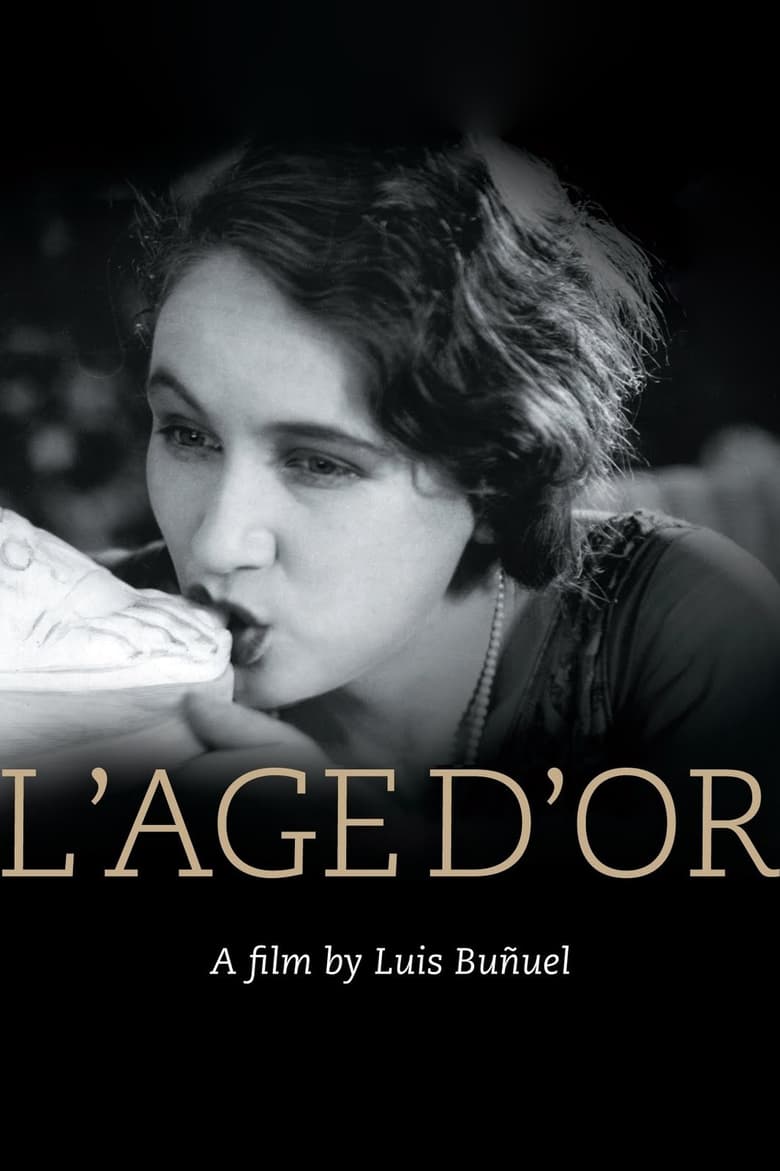
I'll be honest with you: I found L'Âge d'or a bore. Not provocative, not challenging, not bracingly strange. Just tedious. And I say that knowing full well I'm supposed to tip my hat to it, to acknowledge its place in film history, to recognise that Luis Buñuel and Salvador Dalí were doing something genuinely radical when they unleashed this thing on Paris in 1930. I can acknowledge all of that and still tell you that sitting through it felt like waiting for a bus that never arrives.
The film is a series of disconnected vignettes, dream logic without the dream, shock imagery without the charge. A cow on a bed. A man kicking a dog. Bishops dissolving into skeletons on a rocky coastline. Images pile up, one after another, and the film dares you to find the thread. I looked. I didn't find one that held my interest for long. What's pitched as surrealist critique of bourgeois society reads, a century on, as a long series of non-sequiturs held together by little more than attitude.
Now, I've spent time with Buñuel before. I thought The Discreet Charm of the Bourgeoisie was genuinely funny and sharp, a film that uses absurdist repetition to land real satirical punches. And Un Chien Andalou, the short he made with Dalí the year before this, at least has the virtue of brevity, its images arriving with a jolt before the whole thing is over. L'Âge d'or stretches the same sensibility to feature length, and I'm not convinced there's enough there to sustain it.
The argument in its favour, and I've heard it plenty, is that you have to understand the context. In 1930, this film caused riots. It was banned. It scandalised polite society and spat in the face of the Church, the aristocracy, romantic love as a bourgeois construct. Fair enough. I don't doubt for a second that it landed like a grenade. But I can only watch it from where I'm sitting, not from where Paris was ninety-odd years ago. Stripped of that detonation, what's left is a film that feels like it's relying on the idea of provocation rather than delivering it.
The visuals don't help. Grainy, flat, low-fidelity even by early sound-era standards, there's a roughness to the image that I suspect some viewers read as punk energy. I just found it hard to engage with. And the pacing drags in a way that feels less like deliberate alienation and more like a film that doesn't know when it's made its point and keeps going anyway.
I'll own that avant-garde cinema isn't really my corner of the room. I can admire it intellectually from a safe distance. But admiring something's importance isn't the same as enjoying it, or even finding it meaningfully challenging. When a film's symbolism feels opaque rather than illuminating, when the weirdness swallows whatever message it's trying to make, you're left outside in the cold, peering through the window at something you suspect might be brilliant but can't quite see clearly enough to say so.
Buñuel went on to make films I love. This one, for me, is mainly a footnote. One for the film studies course rather than the Friday night sofa. One and a half stars.
Rating: ★½ | Year: 1930 | Watched: 2026-03-08
Where to watch
Watch in the UK
Stream: Amazon Prime Video · Amazon Prime Video with Ads
Rent: Amazon Video
Buy: Amazon Video
Physical: Amazon UK · Zavvi
Watch in the US
Stream: FlixFling · IndieFlix · Kino Film Collection · IndieFlix Shorts Amazon Channel
Rent: Amazon Video · FlixFling
Buy: Amazon Video · FlixFling
Physical: Amazon US
Affiliate disclosure: Movies With Macca may earn a small commission on purchases or subscriptions started via these links. It costs you nothing extra.
Related on Movies With Macca
More from Luis Buñuel: Land Without Bread (1933) · Simon of the Desert (1965) · The Discreet Charm of the Bourgeoisie (1972) · Un Chien Andalou (1929)
More from France: Fantastic Planet (1973) · Letter from Siberia (1957) · Lessons of Darkness (1992) · Here and Elsewhere (1976)
More from the 1930s: Earth (1930) · Monkey Business (1931) · Sabotage (1936) · People on Sunday (1930)
More romance: The Eagle (1925) · The Last Picture Show (1971) · The General (1926) · The Docks of New York (1928)
More comedy: The Eagle (1925) · The General (1926) · Americana (2023) · The Naked Gun: From the Files of Police Squad! (1988)