Earth (1930)
★½ — Earth (1930)

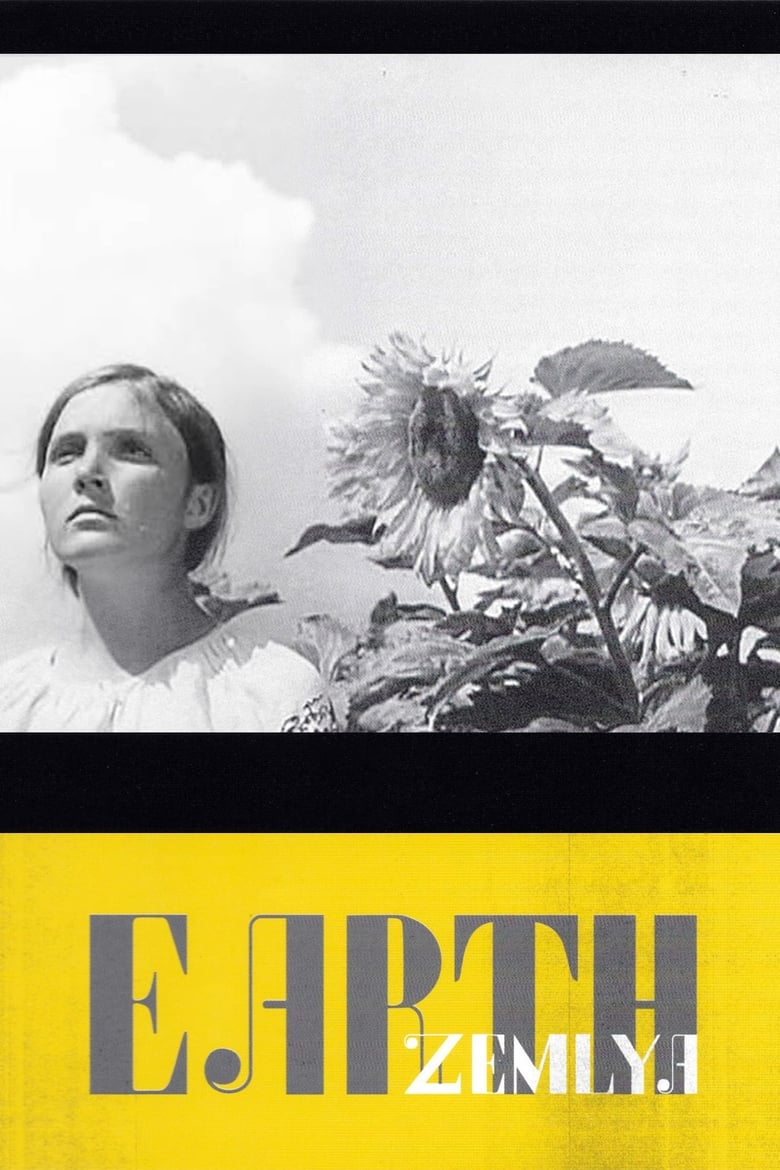
Here's the honest truth: I spent a good portion of Earth wondering whether I was watching a film or attending a very long church service for a religion I don't belong to. And I say that not to be glib, but because it gets at something real about what Oleksandr Dovzhenko made here. This is a film that operates entirely on its own frequency, one tuned to Soviet agrarian mysticism, and if you're not already on that wavelength, the signal barely comes through.
On paper, Earth is about collective farming and the arrival of mechanised agriculture in the Ukrainian countryside. Tractors replace horses. The old order gives way to the new. That's roughly the shape of it. But calling it a story feels generous. There's no narrative engine here, no dramatic tension built and released, no characters you follow in any meaningful sense. What you get instead is image after image: wheat swaying, sunflowers catching light, a tractor crawling across a flat horizon, villagers arranged like figures in a painting. It's a tone poem, a visual ritual. And Dovzhenko clearly intended that. He wasn't trying to tell a tale so much as conjure a feeling, a reverence for the land and for socialist progress as twin, almost sacred forces.
And I'll give him this: the film is composed beautifully. The geometric framing is bold, the symbolic imagery is dense, and there are individual shots that genuinely stop you. A close-up of grain. A newborn calf. A man dancing alone in a moonlit road before he dies. These moments land. Dovzhenko had a real eye, and the reverence he brings to the Ukrainian countryside is palpable, occasionally even moving.
But here's where I have to be straight with you. Beauty in fragments doesn't add up to a satisfying experience when the whole thing is this slow and this remote. Scenes stretch well past the point at which they've made their point. Characters function as archetypes rather than people, which means there's nobody to care about, nobody whose fate pulls you forward. When the film gestures at grief or joy or struggle, it does so at such an abstract remove that the emotion evaporates before it reaches you.
The deeper issue is that Earth assumes its imagery will carry meaning on its own, that if you put enough shots of grain and sunlight together, significance will emerge organically. And maybe, for certain viewers, with the right historical grounding in Soviet montage theory or early 20th-century agrarian politics, it does. I watched Man with a Movie Camera, made just a year before this, and found it electrifying, because Dziga Vertov's formal games have an energy and wit to them that constantly rewards attention. Earth lacks that. It's solemn where Man with a Movie Camera is alive. If you want to see Soviet silent cinema push into genuinely strange, image-led territory, I'd also point you toward The Color of Pomegranates, which is later and different in kind, but shares that quality of pure visual language, and actually makes you feel it.
I'm not bored by old films. I'm not bored by slow films. I'm not even particularly bothered by films without much plot. But I am bored when a film mistakes its own seriousness of purpose for dramatic substance, when it trusts that because the intentions are grand, the experience will be too. Earth makes that mistake repeatedly. The pacing isn't contemplative, it's exhausting. The silences don't accumulate meaning, they just accumulate.
As a historical document, there's something here worth noting. As a piece of cinematic experimentation from a filmmaker who clearly had convictions and visual intelligence, it earns a certain academic respect. But as a viewing experience in the present day, without a specialist's knowledge to plug the gap between what's on screen and what it's supposed to mean? It's a tough, largely unrewarding sit. One and a half stars.
Rating: ★½ | Year: 1930 | Watched: 2026-05-12
Where to watch
Watch in the UK
Stream: Amazon Prime Video · Klassiki · Amazon Prime Video with Ads
Rent: Amazon Video
Buy: Amazon Video · Takflix
Physical: Amazon UK · Zavvi
Watch in the US
Stream: Klassiki
Rent: Amazon Video
Buy: Amazon Video · Takflix
Physical: Amazon US
Affiliate disclosure: Movies With Macca may earn a small commission on purchases or subscriptions started via these links. It costs you nothing extra.
Related on Movies With Macca
More from Soviet Union: Viy (1967) · By the Bluest of Seas (1936) · The Color of Pomegranates (1969) · Man with a Movie Camera (1929)
More from the 1930s: Monkey Business (1931) · Sabotage (1936) · People on Sunday (1930) · You Only Live Once (1937)
More drama: Viy (1967) · Wonder (2017) · A Better Tomorrow (1986) · Beautiful Boy (2018)