
Un Chien Andalou (1929)
★½ — Un Chien Andalou (1929)

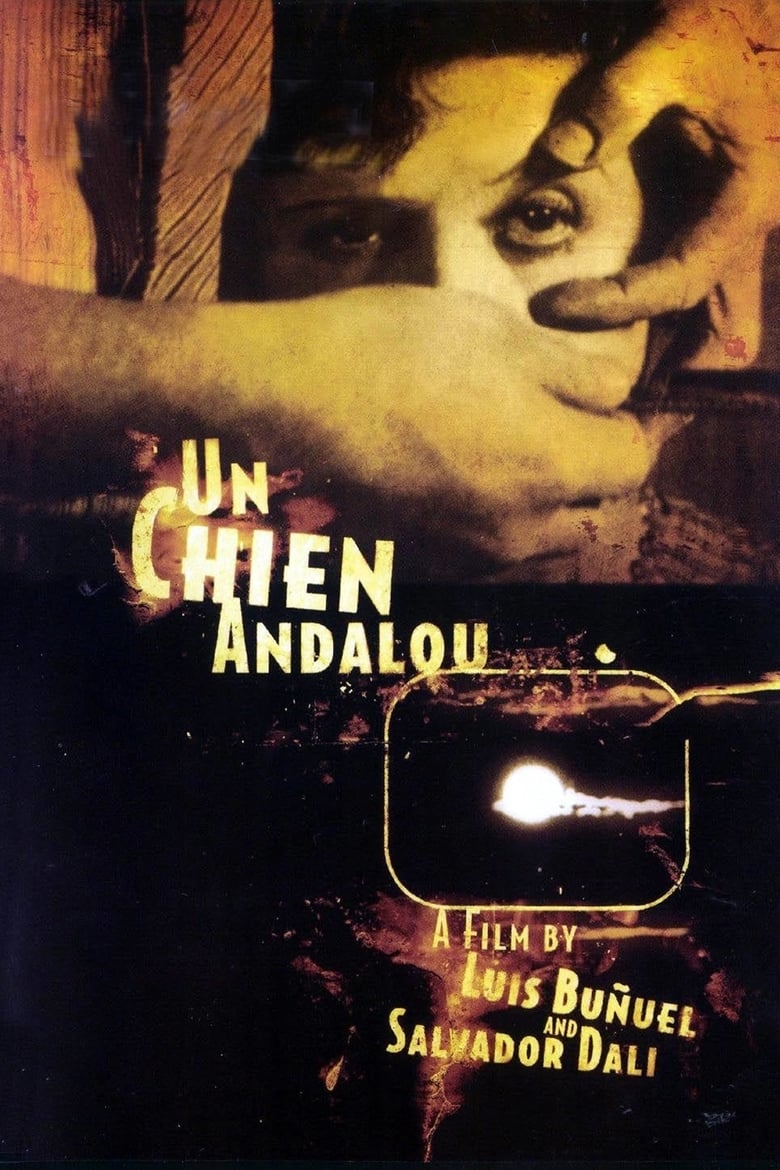
That eyeball. You know the one. Within the first two minutes of Un Chien Andalou, Luis Buñuel and Salvador Dalí have already done something to you that you can't undo. A razor blade, a close-up, and then, well, if you've seen it, you don't need me to spell it out. If you haven't, just know that it's one of the most viscerally arresting images in the history of moving pictures, and it lodges itself somewhere behind your own eyes and stays there.
The trouble is, that's more or less the highlight reel.
I want to be fair here, because I think this film deserves honesty more than it deserves reverence. As a 16-minute provocation from 1929, it's genuinely impressive on a technical level. The editing has a dreamlike fluidity that was years ahead of its time, the imagery is striking and committed, and the sheer confidence of two young artists deciding to throw every convention out the window and film whatever disturbing tableau came to mind, that confidence is undeniable. There's craft here. Real craft.
But craft in service of what, exactly? That's where I lose the thread. The film is designed, by Buñuel and Dalí's own admission, to resist interpretation, to torpedo logic and narrative expectation entirely. Fair enough. That's the surrealist manifesto. What I struggle with is that "resisting interpretation" and "being genuinely interesting to watch" aren't the same thing, and Un Chien Andalou doesn't always seem to know the difference. After the eyeball, it's largely a procession of disconnected images: rotting donkeys, a bloke dragging a piano, armpit hair getting an inexplicable amount of screen time. You can wrap it in Freudian theory, talk about repressed desire and religious decay until the cows come home, but it often feels less like deep symbolism and more like two lads daring each other to be as random and unsettling as possible.
And look, I've spent time with Buñuel. I find him genuinely fascinating as a filmmaker. The Discreet Charm of the Bourgeoisie is a film I find endlessly rewatchable, and what makes it work is that the surrealism is anchored to something: a satirical target, a comic rhythm, a cast of characters worth spending time with. Even the follow-up to this one, L'Âge d'or (1930), feels like it's going somewhere with its chaos, like there's a genuine fury underneath it. Here, it's all surface. Deliberately so, yes. But that doesn't make it less cold.
There's no character to follow, no emotional current to ride. Things just happen, and then other things happen, and then it's over. You can admire it the way you admire something behind glass in a gallery: acknowledge its place in history, nod respectfully, and move on. As a landmark in experimental film, as a document of a particular moment when a pair of provocateurs decided to light narrative cinema on fire just to see what it looked like, sure, it earns its place in the history books. But judged purely as a viewing experience, as something to actually sit with and feel something during, it left me cold.
That's not me being philistine about it. I can sit happily with difficult, abstract, plotless work when it has some kind of emotional or intellectual pulse. This doesn't, for me. It's more interested in the act of shocking than in the aftermath of the shock. The eyeball scene is unforgettable. The remaining fourteen-odd minutes mostly just sort of happen around it.
A museum piece dressed as art. Impressive as a statement, exhausting as a film. One and a half stars.
Rating: ★½ | Year: 1929 | Watched: 2025-09-22
Where to watch
Watch in the UK
Stream: BFI Player · BFI Player Amazon Channel · BFI Player Apple TV Channel · Bloodstream
Rent: Amazon Video
Buy: Amazon Video
Physical: Amazon UK · Zavvi
Watch in the US
Stream: Philo · Brew · FlixFling · Eternal Family
Rent: FlixFling
Buy: FlixFling
Physical: Amazon US
Affiliate disclosure: Movies With Macca may earn a small commission on purchases or subscriptions started via these links. It costs you nothing extra.
Related on Movies With Macca
More from Luis Buñuel: Land Without Bread (1933) · Simon of the Desert (1965) · L'Âge d'or (1930) · The Discreet Charm of the Bourgeoisie (1972)
More from France: Fantastic Planet (1973) · Letter from Siberia (1957) · Lessons of Darkness (1992) · Here and Elsewhere (1976)
More from the 1920s: The Eagle (1925) · The General (1926) · The Docks of New York (1928) · A Throw of Dice (1929)
More fantasy: Viy (1967) · Alice in Wonderland (1951) · Mononoke the Movie: The Phantom in the Rain (2024) · Mononoke the Movie: Chapter II - The Ashes of Rage (2025)



