People on Sunday (1930)
★½ — People on Sunday (1930)

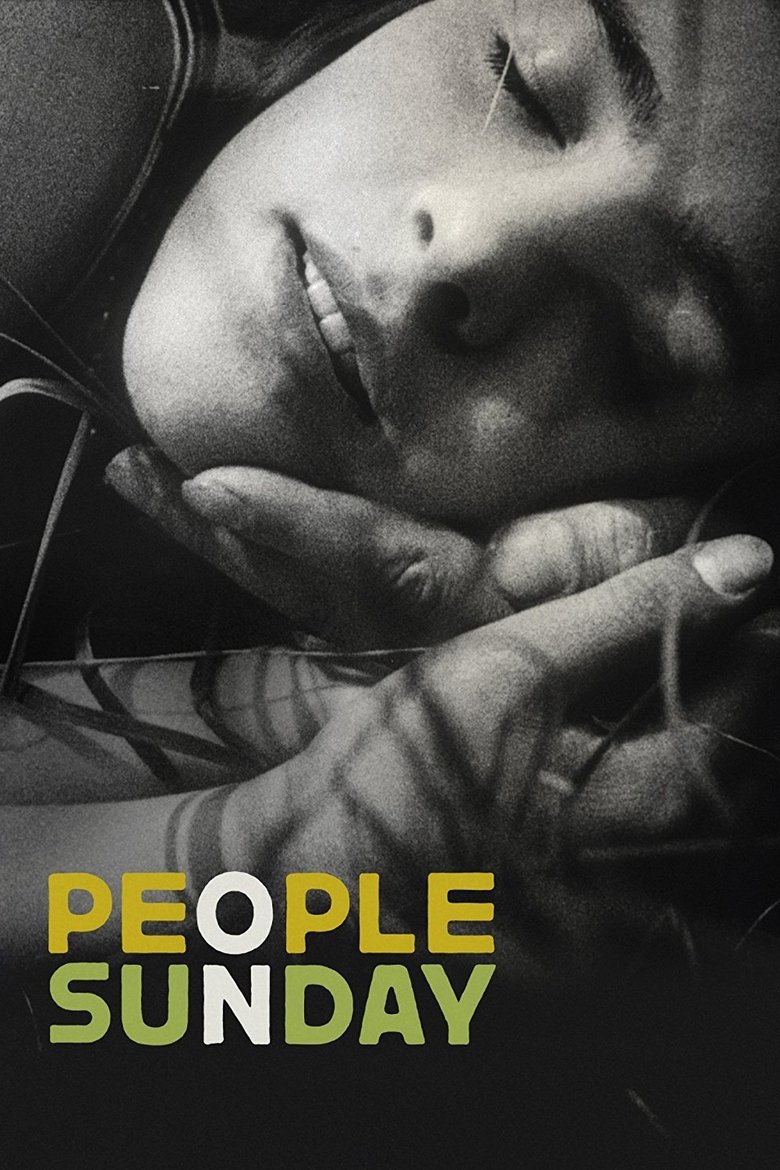
Let me be honest with you: I sat through People on Sunday largely on the strength of its reputation, and came out the other side wondering what all the fuss is about. Yes, I know. Sacrilege. Film historians love this thing. It's on lists. It gets breathless writeups about its place in the lineage of European cinema. And fine, I'll grant all of that in a moment. But as an actual viewing experience in the here and now? It's a slog.
The pitch is straightforward enough. A loose collective of working-class Berliners spend their Sunday off by a lake, swimming, flirting, lounging about, doing absolutely nothing of consequence. That's it. That's the film. No plot to speak of, no real conflict, no character arcs. Just a series of loosely staged vignettes that feel less like a crafted piece of cinema and more like someone's uncle has handed you a box of old home movies and told you to sit through the lot.
The non-professional cast don't help matters. There's a naturalism that was clearly the intention, but what lands on screen is stiffness. Awkward glances at the camera, performances that hover somewhere between staged and accidental, none of it giving you a reason to care about any of these people. I kept waiting for something, anything, to hook me in. It never came. The pacing is so languid it edges towards soporific, and at around seventy minutes it outstays its welcome by a fair stretch.
Visually, I'd call it functional on a generous day. The footage of late 1920s Berlin has genuine archival charm, I won't pretend otherwise. There's something quietly eerie about watching ordinary people go about their lives in a city and a world that was about to be torn apart. That's real. But grainy images and rudimentary compositions aren't enough to carry a feature, and compared to what Murnau or Lang were doing with the camera at roughly the same moment, the photography here reads as amateurish rather than revolutionary. I reviewed Earth (1930) from the same year, and that film shows what genuine visual ambition looks like at the tail end of the silent era. This isn't that.
Now, the historical footnote stuff. It's real, and I don't want to be entirely dismissive of it. The fact that Billy Wilder and Robert Siodmak were among the young filmmakers involved is genuinely interesting. Wilder would go on to be one of the wittiest directors Hollywood ever produced, and Siodmak became a key figure in noir. If you want to trace those careers back to their very beginnings, here's your chance. And yes, the film sits at an interesting bridge point between silent-era realism and the coming sound revolution, capturing a Berlin that would vanish within a few years. As a time capsule, it has value. As a piece of drama, or even as art with something to say, it comes up short.
There's a version of this kind of observational, plotless filmmaking that genuinely works. I think Yi Yi (2000) is a perfect example of how you can build profound emotional weight from everyday life without forcing conventional narrative structure. People on Sunday doesn't come close to that. It mistakes inertia for honesty, and looseness for freedom.
Watch it once if you're curious, if you're working through early cinema, or if you want to tick a box in the Wilder or Siodmak filmographies. I get that. But go in with your expectations appropriately managed. You won't be moved. You probably won't even be mildly entertained. You'll be watching a curio, a footnote that got promoted to landmark status largely because of who made it rather than what it actually is.
One and a half stars.
Rating: ★½ | Year: 1930 | Watched: 2026-04-21
Where to watch
Watch in the UK
Physical: Amazon UK · Zavvi
Watch in the US
Stream: HBO Max Amazon Channel · Criterion Channel · HBO Max
Physical: Amazon US
Affiliate disclosure: Movies With Macca may earn a small commission on purchases or subscriptions started via these links. It costs you nothing extra.
Related on Movies With Macca
More from Edgar G. Ulmer: The Black Cat (1934) · Detour (1945) · Bluebeard (1944)
More from Germany: Lessons of Darkness (1992) · Cemetery Man (1994) · The Grand Budapest Hotel (2014) · Resident Evil: Retribution (2012)
More from the 1930s: Earth (1930) · Monkey Business (1931) · Sabotage (1936) · You Only Live Once (1937)
More drama: Viy (1967) · Wonder (2017) · A Better Tomorrow (1986) · Beautiful Boy (2018)