Land Without Bread (1933)
★½ — Land Without Bread (1933)

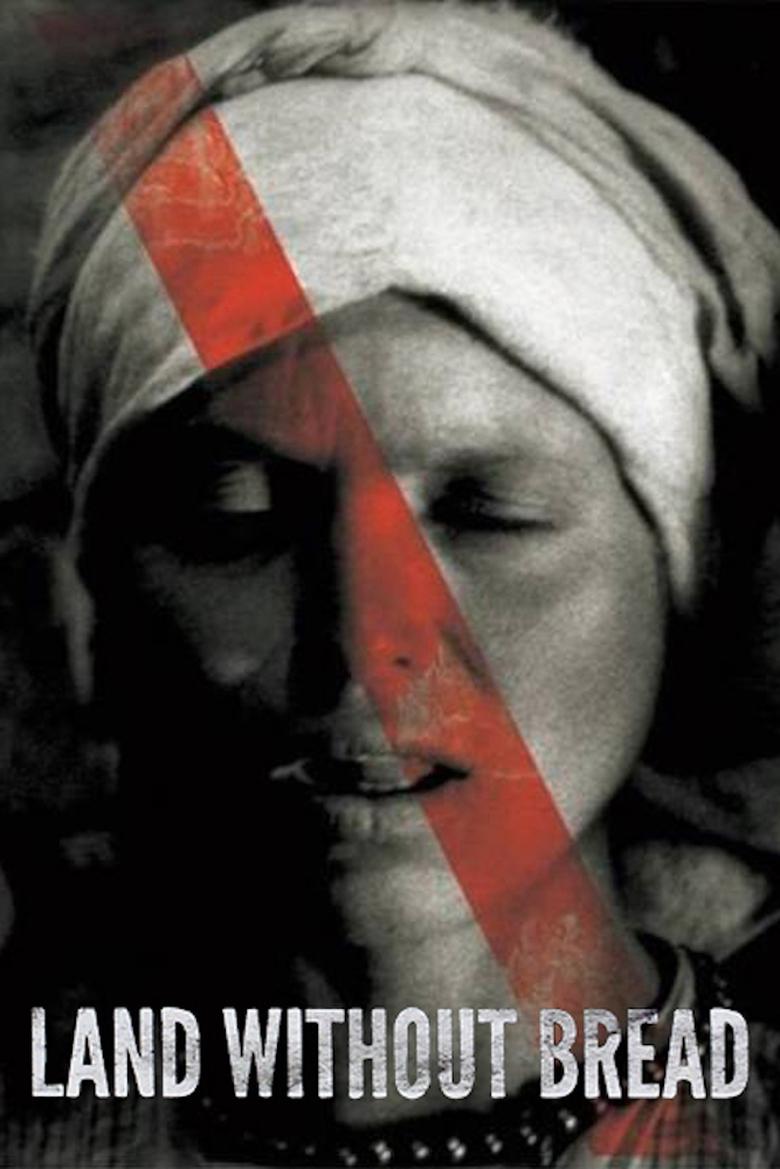
Some films make you squirm in the best possible way. This isn't one of them. Luis Buñuel's Land Without Bread has a reputation that precedes it, and I'll admit I came in curious, even cautious, expecting something genuinely challenging. What I got was twenty-seven minutes of grinding misery that left me feeling grubby and vaguely cheated.
The film presents itself as an ethnographic documentary about the Las Hurdes region of Spain, one of the most impoverished areas in the country. A narrator delivers grim observation after grim observation in a tone so detached it borders on contemptuous. Malnourished children. Diseased goats. Crumbling huts. All laid out with a clinical solemnity that's clearly meant to do something, to expose the voyeurism of bourgeois audiences, to satirise poverty tourism, to indict the act of watching itself. That, at least, is Buñuel's claim.
I've spent time with Buñuel's surrealist work and found real pleasure in it. Un Chien Andalou (1929) and L'Âge d'or (1930) are films where the provocation has genuine charge, where the imagery burrows under your skin because there's something alive and dangerous behind it. With Land Without Bread, I kept waiting for that current to kick in. It never does.
The ethical problems are hard to set aside, and I don't think you're supposed to set them aside entirely, but the trouble is that sitting with the discomfort doesn't actually lead anywhere. When you learn that scenes were staged or manipulated, including a goat apparently forced off a cliff, the queasiness doesn't sharpen into insight. It just festers. There's a difference between a film that makes you uncomfortable because it's telling a hard truth and a film that makes you uncomfortable because it's exploiting real poverty for a directorial point that never quite lands. Land Without Bread keeps straying into the second category.
The cinematography doesn't help. It's flat and functional, nothing more. The narration, delivered with that plummy, mock-academic detachment, becomes repetitive fast. And without any narrative momentum or emotional foothold for the audience, the whole thing collapses into a monotonous parade. Scene after scene of suffering, each undercut by the knowledge that Buñuel is pulling strings behind the camera, and each failing to cohere into something that justifies the manipulation.
I can see why film scholars keep it on the syllabus. As a historical document of early documentary ethics, or rather the lack of them, it's genuinely interesting to think about. As a piece of Buñuel's larger body of work, it's worth knowing. His later films, particularly The Discreet Charm of the Bourgeoisie (1972), show how brilliantly he could skewer bourgeois complacency when he really had control of his material. Here, the skewering just doesn't connect.
The argument that the film is deliberately hollow, that its failure to deliver catharsis or meaning is the point, is one I've heard, and I find it too convenient. It's the kind of defence that can excuse anything. Some provocations provoke nothing but regret, and sitting through Land Without Bread mostly provokes the feeling that Buñuel's satirical instincts outran his compassion here, leaving real people instrumentalised in service of a thesis the film can't be bothered to articulate clearly.
A morally murky artefact, and not in the productive sense. Important to certain conversations about documentary history, perhaps, but as a film to actually watch, it's a slog. One and a half stars.
Rating: ★½ | Year: 1933 | Watched: 2026-03-16
Related on Movies With Macca
More from Luis Buñuel: Simon of the Desert (1965) · L'Âge d'or (1930) · The Discreet Charm of the Bourgeoisie (1972) · Un Chien Andalou (1929)
More from Spain: Nightmare City (1980) · Birdboy: The Forgotten Children (2015) · The Others (2001) · [REC] (2007)
More from the 1930s: Earth (1930) · Monkey Business (1931) · Sabotage (1936) · People on Sunday (1930)
More documentary: Letter from Siberia (1957) · Lessons of Darkness (1992) · Style Wars (1983) · Here and Elsewhere (1976)