Waiting for the Sea (2012)

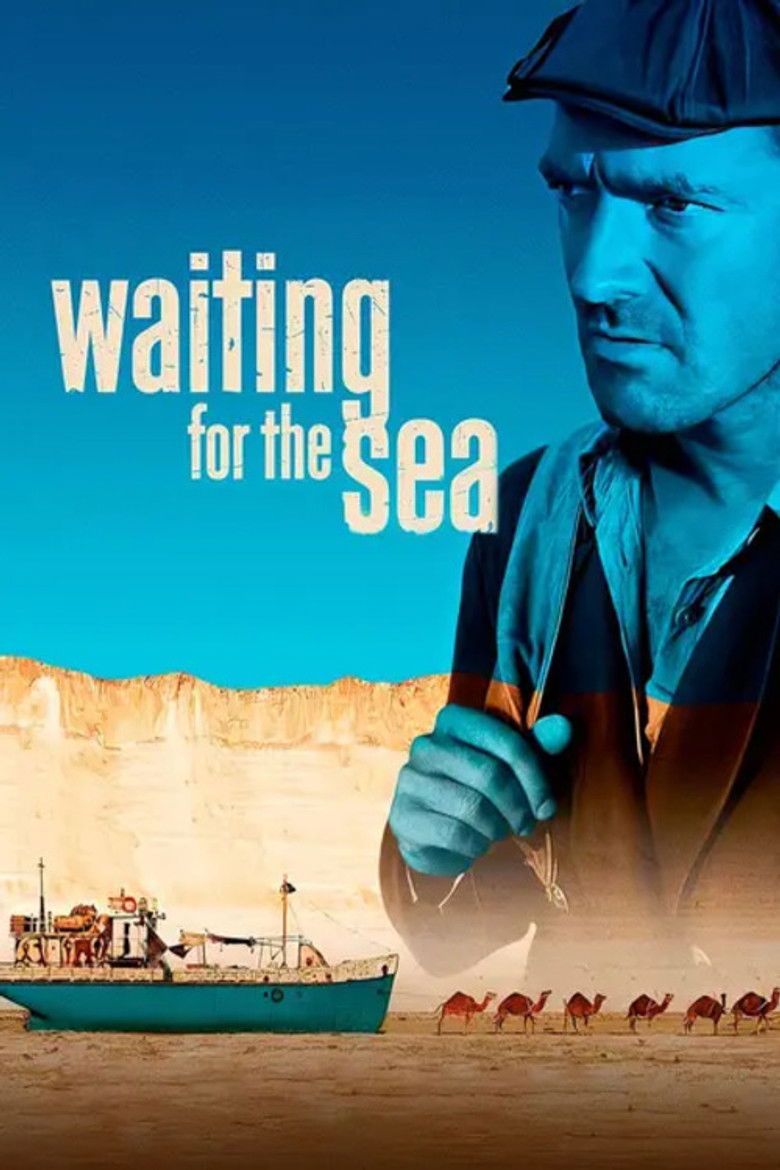
That opening sequence is something special. We're dropped into a quaint fishing village, Marat heading out to sea with his wife while her younger sister watches from the docks. Then, without warning, a colossal sandstorm rolls in across the horizon, swallowing everything in its path. It's atmospheric, unsettling and immediately distinctive. From those first few minutes, I was genuinely hooked, convinced I was in the hands of a filmmaker with a clear and confident vision.
Then comes the time skip, and the film does something I wasn't expecting at all: the sea has simply vanished. Gone. Marat's wife gone with it, dragged down into the dry abyss, and his boat left stranded on the cracked, barren lakebed. From here, the story shifts into something that carries echoes of Werner Herzog's Fitzcarraldo, with Marat becoming fixated on rebuilding his vessel, aided by his late wife's sister, a woman carrying an unrequited love for him that she can never quite put into words. Mad Max-style road warriors roam the desolate sands. The world-building is genuinely strange and intriguing. I was leaning forward in my seat, hoping the film would fully commit to this surreal, post-apocalyptic strand of magical realism it had stumbled onto.
It doesn't commit. That's the frustration at the heart of Waiting for the Sea, and it's a frustration that builds slowly and then all at once. The middle section grinds to a near-standstill as the film buries itself in the repetitive, mundane logistics of boat reconstruction. Scene after scene of carpentry and sawdust where there should be momentum, tension, strangeness. The premise demands a film that accelerates into its own weirdness. Instead, it hits the brakes and parks.
The technical side doesn't help matters. Some of the CGI looks jarringly fake against the otherwise gritty, dusty backdrop. There are moments that look closer to an early digital experiment than a considered visual choice, and it works against the film badly. When your central conceit is a vanished sea and a world reshaped by that absence, you need the effects to sell the unreality. Here, they undercut it.
All of that sluggish boat-building leads, inevitably, to a finale that can't deliver the payoff the first act was promising. I sat waiting for the surreal, epic conclusion that felt like it was owed. It never arrived. There's a lingering sense of missed potential that stayed with me long after the credits rolled, which is perhaps the most damning thing I can say: the disappointment only lands as hard as it does because the setup was genuinely good.
Director Bakhtyar Khudojnazarov deserves credit for the sheer ambition of it. The vanished sea concept is wonderful, and the world he sketches around it has real character. This is the kind of film that makes you wish a different cut existed, one that trusted its own strangeness and kept pace with the wild promise of its opening act. I think about how Flow uses a drastically altered natural world as the engine for its entire narrative without ever losing momentum, and the contrast is instructive. Waiting for the Sea has the concept, but loses the thread.
Two and a half stars. A cracking premise and a brilliant introduction, let down by pacing that kills the film's own momentum and a finale that sinks where it should soar. Worth seeing if you're curious about world cinema off the beaten track, but go in with tempered expectations.
Rating: ★★½ | Year: 2012 | Watched: 2026-07-09
Where to watch
Watch in the UK
Stream: Amazon Prime Video · Amazon Prime Video with Ads
Rent: Amazon Video
Buy: Amazon Video
Physical: Amazon UK · Zavvi
Watch in the US
Stream: Amazon Prime Video · Amazon Prime Video with Ads
Rent: Amazon Video
Buy: Amazon Video
Physical: Amazon US
Affiliate disclosure: Movies With Macca may earn a small commission on purchases or subscriptions started via these links. It costs you nothing extra.