
Lady Snowblood (1973)
★★★★½ — Lady Snowblood (1973)

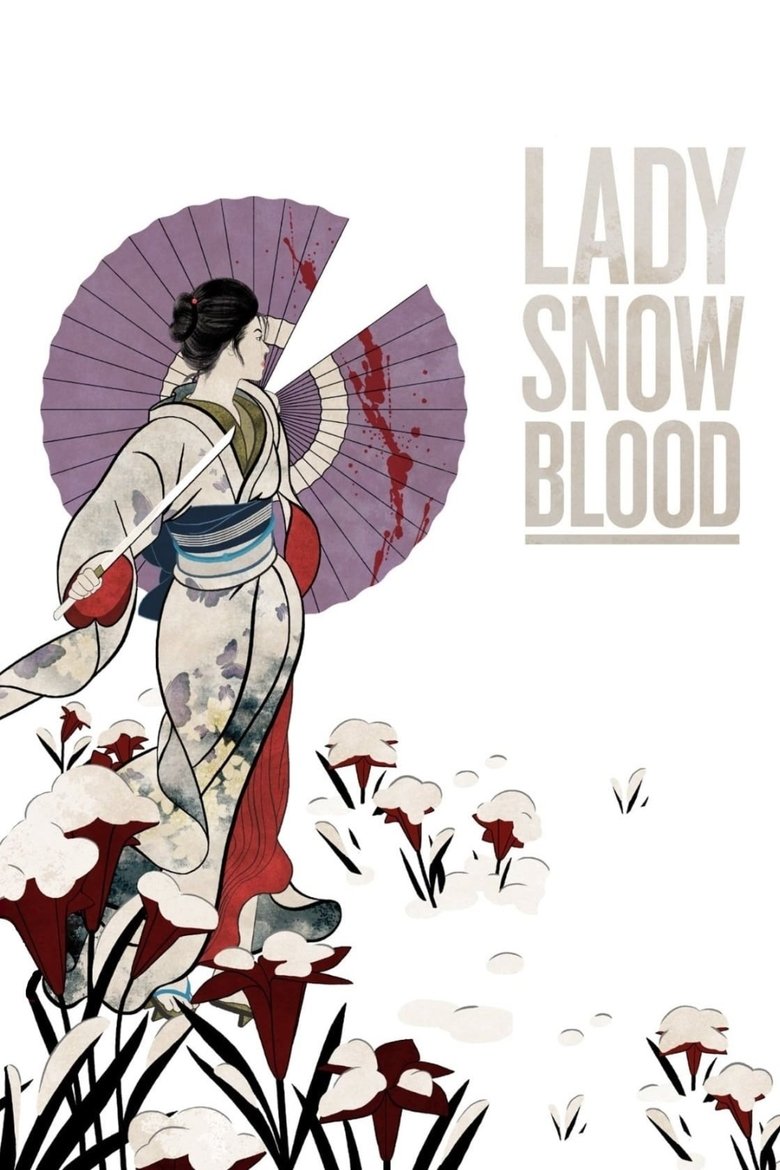
There's a shot early in Lady Snowblood where Meiko Kaji walks through a snow-dusted village, white kimono pressed against the grey winter air, and she doesn't say a word. She doesn't need to. You already know exactly what she is, what she's for, and what's coming to anyone who gets in her way. That image alone tells you everything about what kind of film this is: a blood-soaked ballet of vengeance that feels less like a product of its era and more like a timeless artefact of pure, uncut style.
Kaji plays Yuki, a woman born in prison with a single purpose handed to her before she could even walk. Her mother, wronged and broken by four bandits who destroyed their family, conceived her as an instrument of revenge. Raised and trained as an assassin, Yuki moves through Meiji-era Japan with lethal grace, hunting her targets one by one. The premise is blunt and mythic in equal measure, and the film commits to both registers completely. This isn't just a revenge picture. It's revenge as art.
Every frame is composed with painterly precision. Snow-dusted villages, rain-slicked alleyways, intimate interiors draped in shadow and candlelight. Director Toshiya Fujita shoots the action sequences with a savage beauty that makes the violence feel almost ritualistic. When the blood flies, and it flies in spectacular quantities, it doesn't feel gratuitous. It feels inevitable, like watching a natural force complete its work. The white kimono becoming a canvas for crimson is an image so perfectly constructed it burns itself into your memory.
Then there's the soundtrack, which I'd place among the finest I've ever heard in any film, full stop. It's a hypnotic fusion of traditional shamisen and psychedelic lounge that pulses beneath every scene like a second heartbeat. The main theme, "Shura no Hana" ("Flower of Carnage"), is one of cinema's great earworms: haunting, propulsive, and completely unforgettable. It doesn't sit in the background doing polite atmospheric work. It's a character in its own right, giving every kill, every quiet glance, every moment of cold resolve a mythic weight that lifts the whole film into another dimension. It's a shame the composer's wider catalogue isn't better known outside of enthusiast circles, because the talent on display here is extraordinary.
And Kaji herself. Ice-cold perfection is about the only phrase that fits. She speaks sparingly, emotes minimally, and yet commands every single second she occupies the screen. Her stillness is more threatening than any scream could be. Her smile is more chilling than any snarl. It's a performance built almost entirely on presence and restraint, and it works because Kaji understands exactly what the film needs from her. Yuki isn't a character you fully know. She's a force you fully feel.
The film's structure, told in episodic chapters complete with on-screen title cards and layered flashbacks, feels novelistic and deliberate. It's a choice that could have fragmented the momentum, but instead it gives the story a kind of literary weight, like you're reading a dark fable one chapter at a time. It was ahead of its time in 1973, and it still feels distinctive now. You can see exactly why it lodged itself so deeply in Quentin Tarantino's imagination when he made Kill Bill. He didn't just borrow from Lady Snowblood, he absorbed its DNA. And yet the original still stands tall above most of what it inspired.
If you've been working your way through Japanese genre cinema of this period, as I have with films like Yakuza Graveyard (1976), Lady Snowblood is essential context. And if the atmospheric Meiji-era visuals and the supernatural edge of films like The Ghost of Yotsuya (1959) appeal to you, this fits neatly into that lineage, though it's far more visceral and propulsive.
Bloody, beautiful, and utterly essential. Lady Snowblood doesn't just deserve its cult status. It demands it.
Four and a half stars.
Rating: ★★★★½ | Year: 1973 | Watched: 2026-03-25
Where to watch
Watch in the US
Stream: HBO Max Amazon Channel · Criterion Channel · HBO Max
Rent: Amazon Video · Apple TV Store · Google Play Movies · YouTube
Buy: Amazon Video · Apple TV Store · Google Play Movies · YouTube
Physical: Amazon US
Affiliate disclosure: Movies With Macca may earn a small commission on purchases or subscriptions started via these links. It costs you nothing extra.
Related on Movies With Macca
More with Meiko Kaji: Yakuza Graveyard (1976)
More from Japan: Mononoke the Movie: The Phantom in the Rain (2024) · Mononoke the Movie: Chapter II - The Ashes of Rage (2025) · Blue (1993) · The Ghost of Yotsuya (1959)
More from the 1970s: Fantastic Planet (1973) · Here and Elsewhere (1976) · Italianamerican (1974) · Punishment Park (1971)
More action: A Better Tomorrow (1986) · The General (1926) · Hand of Death (1976) · Daredevil (2003)
More crime: A Better Tomorrow (1986) · Angst (1983) · Stolen Face (1952) · Cairo Station (1958)



