Italianamerican (1974)
★★½ — Italianamerican (1974)

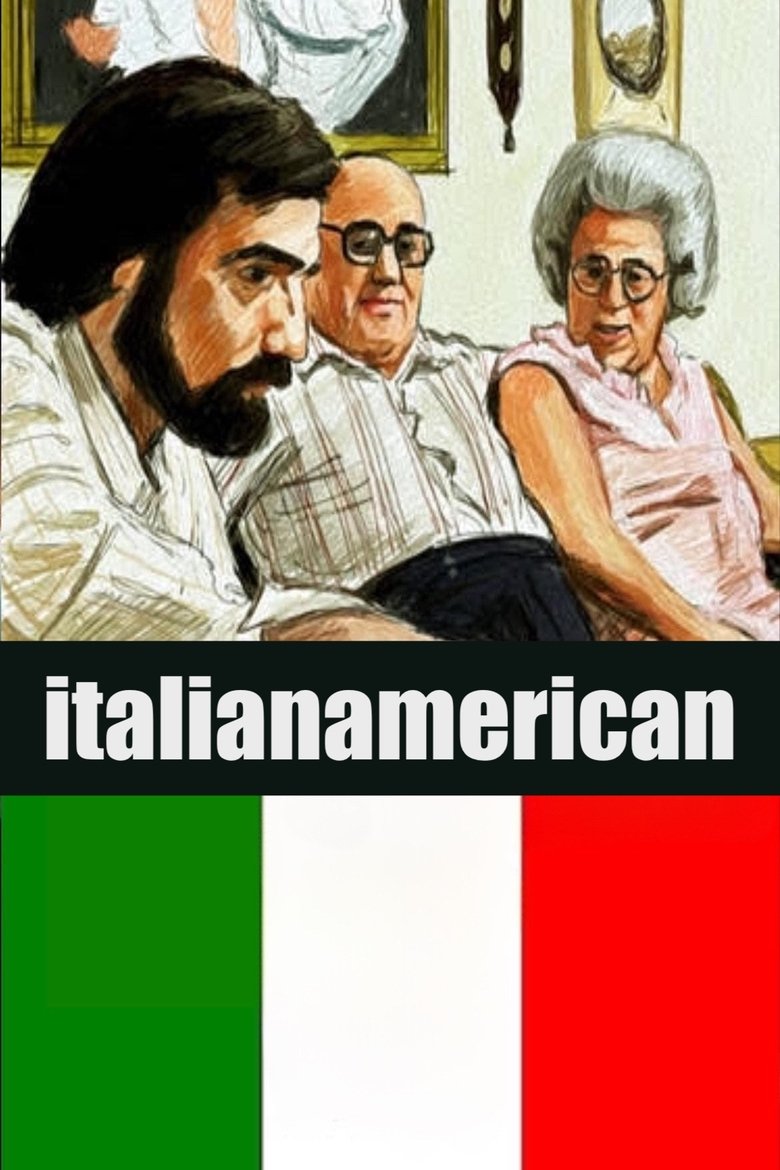
There's a moment in Italianamerican where Catherine Scorsese is mid-sentence about tomato sauce, and she just takes over. Not because anyone lets her. Because that's simply what she does. She fills the room, she fills the frame, and she fills the fifty minutes of this modest little film with more personality than most polished documentaries manage in two hours. That moment tells you everything about what this film is and what it isn't.
What it is: a warm, unvarnished home movie that Martin Scorsese made with his parents, Catherine and Charles, in their modest New York apartment. There's no narration, no archival footage, no grand thesis to wrap things up neatly. Just two elderly Italian-American immigrants talking over coffee and pasta, with all the digressions, gentle bickering, and well-worn family stories that entails. Scorsese sits mostly off-camera, nudging them along, and what emerges feels less like a documentary commission and more like a son pressing record before it's too late.
What it isn't: a piece of cinema in any rigorous sense. The craft is basic. The framing is functional. There's no real structure to speak of, and the film makes no apology for that. If you come looking for the director of Taxi Driver, you won't find him here. This is Scorsese with his guard completely down, doing something private in public.
Catherine is, without question, the main event. Anyone who's seen her cameos in The King of Comedy or Goodfellas will clock her instantly, and not because she's performing. Those roles worked precisely because they weren't really performances at all. They were just Catherine. Sharp, expressive, candid, and utterly herself. She recounts childhood hardships in the same breath as debating the correct way to prepare a sauce, and both carry equal weight to her. That's not comedy. That's a worldview.
Charles is quieter, more measured, and he provides a grounded counterbalance to his wife's exuberance. Together they sketch out something that feels genuinely endangered: a working-class immigrant ethos built on pride, pragmatism, and a fierce sense of family. It's a portrait of a particular New York that was already beginning to fade in 1974, and that makes it all the more valuable as a historical snapshot.
But valuable as a document and satisfying as a film are two different things, and I think it's worth being honest about that. Italianamerican doesn't push for depth or critique. It doesn't try to contextualise its subjects within any broader social picture. It's comfortable staying small and personal, and occasionally that cosiness tips into insularity. If you don't already have some affection for Scorsese or his world, there's a real chance this washes over you pleasantly without leaving much behind.
For Scorsese devotees, though, it functions as something like a key. You can see, quite plainly, where so much of his work comes from. The love of ritual, the reverence for food as language, the complicated loyalty of family, the particular rhythms of how Italian-American men and women talk to each other. Gangs of New York is in here somewhere, buried under Catherine's saucepan. So is nearly everything else he's ever made.
So I find myself in an odd position with this one. I can't call it a great film. The fifty-minute runtime breezes by precisely because it doesn't ask much of you, and that same lightness stops it from being truly essential viewing outside of its context. But I also can't pretend I didn't enjoy sitting with these two people for the length of a lunch. There's real love in it, and real laughter, and a recipe for tomato sauce in the end credits that I've been meaning to try ever since.
Not everything needs to be more than it is. Italianamerican knows exactly what it is: a tender, unpretentious memento. Make of that what you will.
Rating: ★★½ | Year: 1974 | Watched: 2026-05-12
Where to watch
Watch in the US
Stream: HBO Max Amazon Channel · Criterion Channel · HBO Max
Physical: Amazon US
Affiliate disclosure: Movies With Macca may earn a small commission on purchases or subscriptions started via these links. It costs you nothing extra.
Related on Movies With Macca
More from Martin Scorsese: The King of Comedy (1982) · Gangs of New York (2002) · Cape Fear (1991) · Taxi Driver (1976)
More from the 1970s: Fantastic Planet (1973) · Here and Elsewhere (1976) · Punishment Park (1971) · The Last Picture Show (1971)
More documentary: Letter from Siberia (1957) · Lessons of Darkness (1992) · Style Wars (1983) · Here and Elsewhere (1976)