Cruising (1980)
★★½ — Cruising (1980)

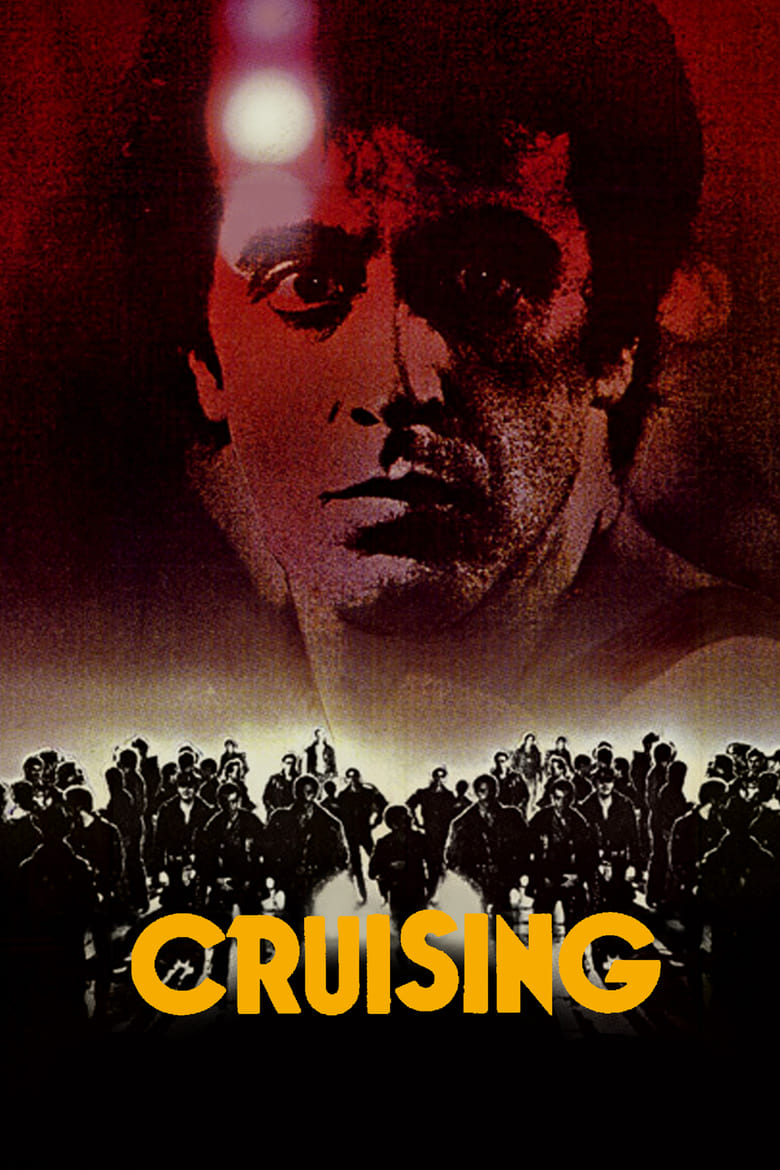
There's a version of Cruising that could have been one of the great American thrillers. You can almost see it, flickering behind the one that actually exists. William Friedkin, at the peak of his powers, dropping Al Pacino into the leather bars and backrooms of late-1970s New York, chasing a killer through a subculture most of mainstream cinema had never dared touch. The ingredients are there. The film that results, though, is something stranger and considerably messier: a fascinating misfire rather than a forgotten masterpiece.
Pacino plays Steve Burns, an undercover cop sent to infiltrate the S&M bar scene in search of a serial killer targeting gay men. He's intense, twitchy, increasingly unhinged in that way only Pacino can pull off, and he gives the role everything he's got. But even he can't hold together a story that keeps slipping through his fingers. Character arcs appear and then simply vanish. Scenes end on a cut that feels less like a deliberate choice and more like a page that went missing. The killer's identity, when it arrives, lands with a thud rather than a revelation. The investigation has no real momentum, no sense of a net drawing tighter. It just sort of... drifts.
What Friedkin does brilliantly, as he almost always does, is atmosphere. The moody photography, the throbbing electronic score, the handheld urgency that made The French Connection (1971) feel like you were being dragged through the streets by the collar. Those instincts are all present here. The world of the film is genuinely immersive, and I won't pretend it isn't striking to look at. But atmosphere without structure is just mood, and mood alone can't carry a thriller for nearly two hours.
The bigger issue, and the one that made Cruising genuinely controversial at the time, is the film's relationship with the world it's depicting. Gay and LGBTQ+ communities protested the production before it even reached cinemas, and watching it now, it's not hard to understand why. The film is clearly fascinated by the subculture it's plunged into, but it's also visibly frightened of it, and it never resolves that tension into anything approaching empathy or understanding. Instead, it lingers in shadowy backrooms with a voyeuristic quality that tips uncomfortably toward the exploitative. The film seems to want the transgression without the responsibility that comes with it.
That said, I don't think Cruising is hateful. It's confused. There's a real attempt buried in here to examine what happens to a man's sense of identity when he's asked to become someone else entirely, when the line between performance and self starts to blur. The final act gestures toward something genuinely unsettling on that front. But the gesture is all we get. The ambiguity at the end feels less like artistic courage and more like the film not knowing how to close the argument it started.
Friedkin would return to similarly dark, morally uncomfortable territory later in his career. I've written about Killer Joe (2011), which lands those gut-punches with far more precision and intent. Cruising is what happens when a genuinely talented director is working with material he hasn't fully got a grip on, circling something he finds compelling but can't quite articulate.
Historically significant, yes. Visually striking, absolutely. Worth watching if you're interested in Friedkin's career or in the complicated way Hollywood has handled LGBTQ+ subject matter over the decades. But satisfying as a crime film or a character study? No. The story beneath the atmosphere never fully ignites, and you leave the cinema feeling vaguely unsettled in a way the film doesn't seem to have earned.
Two and a half stars.
Rating: ★★½ | Year: 1980 | Watched: 2026-02-15
Where to watch
Watch in the UK
Rent: Apple TV Store · Amazon Video · Google Play Movies · Sky Store
Buy: Apple TV Store · Amazon Video · Google Play Movies · YouTube
Physical: Amazon UK · Zavvi
Watch in the US
Rent: Amazon Video · Apple TV Store · Google Play Movies · YouTube
Buy: Amazon Video · Apple TV Store · Google Play Movies · YouTube
Physical: Amazon US
Affiliate disclosure: Movies With Macca may earn a small commission on purchases or subscriptions started via these links. It costs you nothing extra.
Related on Movies With Macca
More from William Friedkin: To Live and Die in L.A. (1985) · The French Connection (1971) · Killer Joe (2011) · The Exorcist (1973)
More with Al Pacino: Scent of a Woman (1992) · Insomnia (2002) · Scarecrow (1973) · Hangman (2017)
More from Germany: Lessons of Darkness (1992) · Cemetery Man (1994) · The Grand Budapest Hotel (2014) · Resident Evil: Retribution (2012)
More from the 1980s: Nightmare City (1980) · A Better Tomorrow (1986) · Style Wars (1983) · Garlic Is as Good as Ten Mothers (1980)
More crime: A Better Tomorrow (1986) · Angst (1983) · Stolen Face (1952) · Cairo Station (1958)
More mystery: Mononoke the Movie: The Phantom in the Rain (2024) · Mononoke the Movie: Chapter II - The Ashes of Rage (2025) · Carnival of Souls (1962) · One Way or Another (1975)