The Grand Budapest Hotel (2014)
★★★★ — The Grand Budapest Hotel (2014)

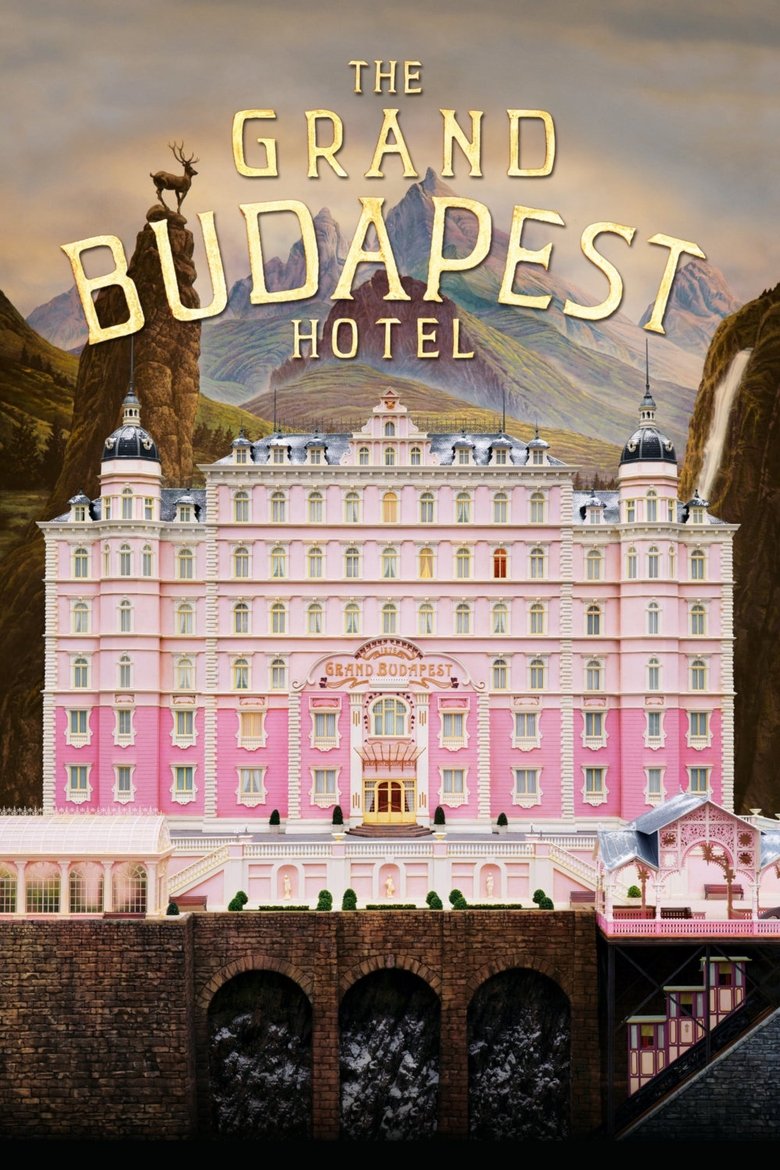
Ralph Fiennes is not an actor I've always clicked with. There's a coldness to a lot of his work that keeps me at arm's length, even when I can see the craft in it. So when I tell you he's the best thing about The Grand Budapest Hotel, and that he might just be giving one of the finest comedic performances I've seen in years, I want you to understand that I don't say that lightly. As M. Gustave, the immaculate, poetry-reciting, cologne-soaked concierge of the titular hotel, he's charming, vain, absurdly noble, and completely magnetic. The film is built around him like a jewellery box, and he fills it perfectly.
Wes Anderson is a director who divides people, and fairly so. His style is so specific, so relentlessly controlled, that it can tip from enchanting into suffocating if you're not on his wavelength. Here, though, I think he gets the balance right. Set in the fictional Republic of Zubrowka somewhere in a crumbling, pre-war Central Europe, the film follows Gustave and his young lobby boy Zero through a plot involving stolen artwork, a murdered elderly patron, a very menacing henchman, and a great deal of running through corridors and over snowy mountains. It's a caper, a farce, and a surprisingly moving elegy all at once, and Anderson keeps the pace so brisk you barely notice when the emotion sneaks up on you.
The supporting cast is something else. Anderson clearly has the pull to call in favours from everyone he's ever worked with, and the result is a procession of brilliant, eccentric faces, each getting exactly as much screen time as they need and not a second more. Tilda Swinton, Willem Dafoe, Jeff Goldblum, Saoirse Ronan, Tony Revolori as Zero himself. None of them outstay their welcome. All of them land. These aren't cameos in the winking, self-congratulatory sense. They're gifts, little perfectly wrapped packages that pop up and delight you before the story moves on.
And visually, good lord. Cinematographer Robert Yeoman treats every frame like a page from an illustrated storybook. The candy-pink hotel interiors, the crisp alpine whites, the miniature trains rattling through mountain passes. It's gorgeous without being self-indulgent, because the visual language is actually doing work. The way Anderson shifts aspect ratios across different time periods isn't just a neat trick, it's the film quietly reminding you that you're hearing a story within a story within a story, each layer slightly more faded and distant than the last. The style is the substance, if you give it the chance to be. It reminds me of what I love about Fantastic Mr. Fox, that sense of a fully realised world constructed with absolute conviction, where the artificiality is the point.
What I wasn't expecting, on first watch or since, is how genuinely tender the film is underneath all the archness and wit. There's a real sense of grief running through it, for old-world elegance, for civility, for a particular kind of human grace that history simply grinds up and discards. Gustave himself is a man who has dedicated his life to maintaining standards that the world around him is abandoning. The humour never lets you forget that, but it never lets it become maudlin either. That's a difficult needle to thread and Anderson pulls it off.
The script crackles throughout. The dialogue is literate, peculiar, and often very funny in that way where you're laughing before you've quite worked out why. Gustave's monologues in particular are a delight, swinging between high poetry and very low profanity with complete sincerity. It's the kind of writing that rewards repeat viewing because there's always another joke or piece of business you missed the first time around.
Four stars from me. It's not quite perfect. The nested storytelling structure can feel a touch mechanical at times, and there are moments where Anderson's precision tips just slightly into fussiness. But these are minor complaints about a film that genuinely earns its place among the best comedies of the last decade. Witty, gorgeous, and quietly heartbroken. Sometimes the most affecting things really do come wrapped in pink.
Rating: ★★★★ | Year: 2014 | Watched: 2026-04-28
Where to watch
Watch in the UK
Stream: Disney Plus
Rent: Apple TV Store · Rakuten TV · Amazon Video · Google Play Movies
Buy: Apple TV Store · Rakuten TV · Amazon Video · Google Play Movies
Physical: Amazon UK · Zavvi
Watch in the US
Rent: Amazon Video · Apple TV Store · Google Play Movies · YouTube
Buy: Amazon Video · Apple TV Store · Google Play Movies · YouTube
Physical: Amazon US
Affiliate disclosure: Movies With Macca may earn a small commission on purchases or subscriptions started via these links. It costs you nothing extra.
Related on Movies With Macca
More from Wes Anderson: Fantastic Mr. Fox (2009)
More with Ralph Fiennes: Wallace & Gromit: The Curse of the Were-Rabbit (2005) · 28 Years Later: The Bone Temple (2026) · The Prince of Egypt (1998) · Coriolanus (2011)
More from Germany: Lessons of Darkness (1992) · Cemetery Man (1994) · Resident Evil: Retribution (2012) · Resident Evil: The Final Chapter (2016)
More from the 2010s: Wonder (2017) · Beautiful Boy (2018) · The Witch (2015) · What We Do in the Shadows (2014)
More comedy: The Eagle (1925) · The General (1926) · Americana (2023) · The Naked Gun: From the Files of Police Squad! (1988)
More drama: Viy (1967) · Wonder (2017) · A Better Tomorrow (1986) · Beautiful Boy (2018)