To Live and Die in L.A. (1985)
★★★½ — To Live and Die in L.A. (1985)

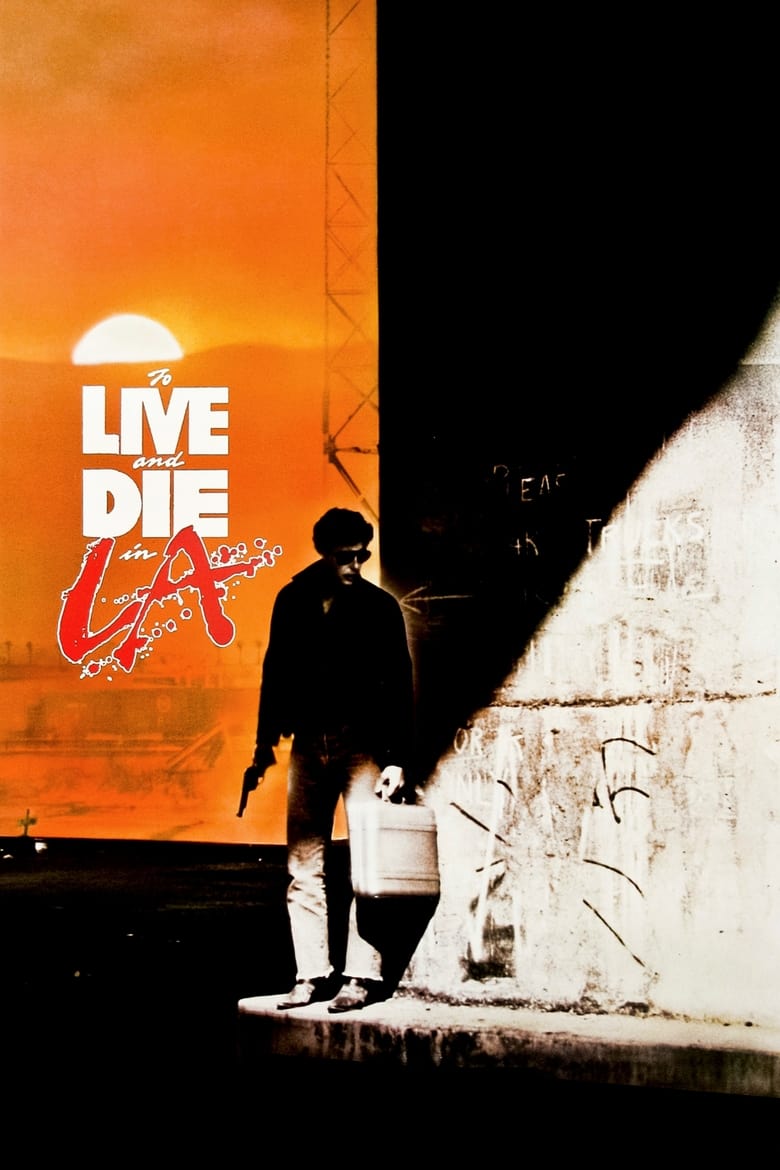
There's a car chase in the middle of To Live and Die in L.A. that I keep coming back to. Not because it's flashy, though it absolutely is. But because it captures exactly what William Friedkin is doing with this entire film: hurtling the wrong way down a one-way street, terrifying, thrilling, and completely without moral brakes. By the time the dust settles you're not cheering. You're just gripping your seat wondering what the hell you just watched.
That chase is the film in miniature. Richard Chance, played by William Petersen with a kind of manic, sweaty intensity, is not your man. He is not trying to do the right thing through difficult circumstances. He is reckless, vain, self-destructive, and willing to drag everyone around him into the wreckage of his obsession. The target of that obsession is a counterfeiter played by Willem Dafoe, all cool detachment and quiet menace, and the awful irony the film keeps pressing on is that Dafoe's criminal is, in some respects, more self-possessed and principled than the agent hunting him. Friedkin doesn't moralize about that. He just observes it, implicates you in it, and leaves you to sit with the discomfort.
If you know Friedkin from The French Connection, you'll recognise some of the same DNA: the procedural rhythms, the morally compromised cop, the refusal to offer clean resolution. But To Live and Die in L.A. pushes further into the abyss. Popeye Doyle was a bruiser with a badge. Chance is something closer to a sociopath wearing one. The city suits him perfectly.
And what a city it is. Robby Müller's cinematography is genuinely jaw-dropping. Every frame looks sun-bleached and slightly unreal, palm trees burning against pastel skies, freeways shimmering in golden-hour haze, downtown L.A. rendered as a labyrinth of glass and shadow. There's an influence of pop-art somewhere in there, the kind of gorgeous, soulless image that makes you feel both seduced and vaguely unclean. It's stylised without tipping into artifice. The city isn't decoration. It's complicit. L.A. here is beautiful the way a trap is beautiful: something draws you in before you notice the mechanism closing around you.
Wang Chung's synth-rock score wraps around all of it like neon round a wet kerb. It shouldn't work as well as it does. It should feel dated. Instead it creates this pulsing, nervous atmosphere that keeps the film permanently on edge. Diegetic or atmospheric, it barely matters; the whole thing bleeds together into one immersive, slightly feverish sensory experience.
The cast is brilliant down the line. John Pankow brings genuine warmth and grounding as Chance's partner, which matters because without someone more human at the centre, the film risks becoming as cold as its villain. The contrast between the two agents is where a lot of the real tension lives, the slow horror of watching Pankow's character dragged into something he didn't sign up for by a man who never asked his permission.
It pairs naturally in my mind with Manhunter, another mid-80s American crime film with a visual style that absolutely refuses to behave and a protagonist whose methods raise uncomfortable questions. Both films treat obsession not as heroism but as a kind of illness. Both are criminally underrated. If you loved one, you owe yourself the other.
To Live and Die in L.A. is one of those films that I think gets quietly buried under the decade that produced it. People remember the surface stuff, the neon, the synths, the shoulder pads, and they file it under "very 80s" as a polite way of saying "of its time." That's a disservice. Friedkin isn't trading in nostalgia or period atmosphere. He's making a genuinely unsettling argument about corruption, vanity, and the thin line between law enforcement and criminality, and he's doing it with some of the best photography you'll see in an American film from that era.
Gritty, gorgeous, and gloriously amoral. Four stars, and honestly it might climb higher on a rewatch. Fall into its glittering trap. You'll love every second of it.
Rating: ★★★½ | Year: 1985 | Watched: 2026-02-15
Where to watch
Watch in the UK
Stream: MGM Plus Amazon Channel
Rent: Apple TV Store · Amazon Video
Buy: Apple TV Store · Amazon Video
Physical: Amazon UK · Zavvi
Watch in the US
Stream: fuboTV · MGM+ Amazon Channel · Philo · MGM Plus Roku Premium Channel
Rent: Amazon Video · Apple TV Store · Google Play Movies · YouTube
Buy: Amazon Video · Apple TV Store · Google Play Movies · YouTube
Physical: Amazon US
Affiliate disclosure: Movies With Macca may earn a small commission on purchases or subscriptions started via these links. It costs you nothing extra.
Related on Movies With Macca
More from William Friedkin: Cruising (1980) · The French Connection (1971) · Killer Joe (2011) · The Exorcist (1973)
More with William L. Petersen: Manhunter (1986)
More from the 1980s: Nightmare City (1980) · A Better Tomorrow (1986) · Style Wars (1983) · Garlic Is as Good as Ten Mothers (1980)
More crime: A Better Tomorrow (1986) · Angst (1983) · Stolen Face (1952) · Cairo Station (1958)
More thriller: Invasion of the Body Snatchers (1956) · Angst (1983) · The Long Walk (2025) · Punishment Park (1971)