Children of Shatila (1998)
★★½ — Children of Shatila (1998)

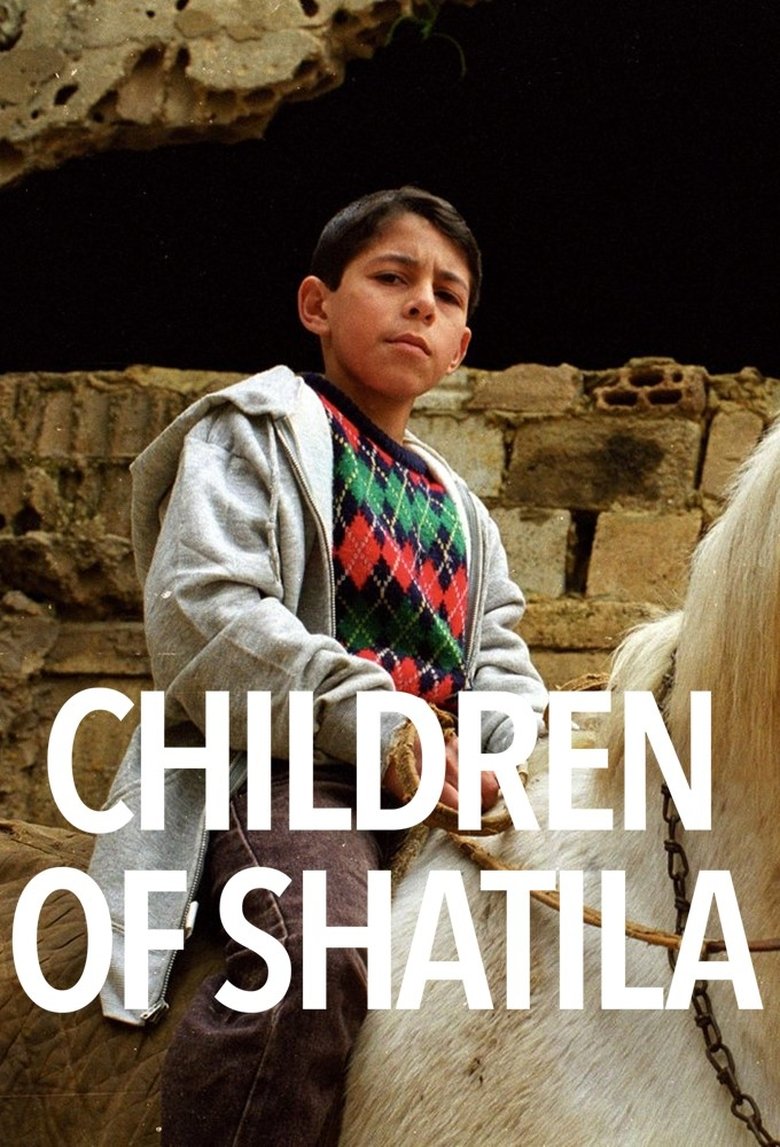
There's a moment in Children of Shatila where a young kid describes, with complete matter-of-factness, what it means to grow up without a country. No tears, no drama. Just a child explaining something that should be unthinkable as though it's simply the weather. That moment, more than anything else in the film, broke me a little. And it never really let go.
This 1998 documentary drops you into the Shatila refugee camp in Lebanon, home to generations of Palestinians who were displaced by conflict and who have been waiting, and waiting, and waiting, for a return that never comes. The film trains its attention almost entirely on the children: playing football among rubble, crammed into overcrowded classrooms, sitting with elders and absorbing stories of loss they're too young to fully process but old enough to carry. Their voices are the whole point. Innocent, resilient, and shaped by a trauma that predates their own births.
It's a hard watch. Not because of anything graphic, there's no sensationalism here, but because of the emotional weight that accumulates quietly over the runtime. The injustice just builds and builds. You're watching kids dream of futures that politics and borders have already conspired to deny them, and the film doesn't wring its hands about it or spell out a thesis. It observes. It sits with these families and lets the reality speak for itself.
That restraint is both the film's greatest strength and, honestly, its most significant limitation. As documentary filmmaking goes, it's more impressionistic than investigative. There's very little in the way of historical context, no real narrative architecture to hang the experience on. If you come in without much prior knowledge of the Palestinian displacement, of the camp itself and the horrors it witnessed in 1982, the film won't fill in those gaps for you. It assumes a certain engagement from the viewer, or perhaps it simply doesn't care to editorialize, which I respect, even if it means the film occasionally feels like it's floating rather than landing. It reminded me, in some ways, of the approach in The Hour of Liberation Has Arrived (1974), another film that puts you inside a political struggle without stopping to explain itself, though that one feels more formally confident.
What saves Children of Shatila, what makes it genuinely essential despite its structural looseness, is its intimacy. You feel like you know these kids by the end. Their faces stay with you. And the power of that is something no amount of talking-head exposition could replicate. The film earns its emotional impact through proximity, through simply being present and paying attention.
Watching it now, in 2025, is a strange and sorrowful experience. Many of those children have lived out the entirety of their adult lives still stateless, still in the camp or scattered further by subsequent upheaval. The film was made nearly thirty years ago and what it depicts doesn't feel like history. It feels like a wound that's been left open. That's not a criticism of the film. It's an indictment of everyone who looked away.
I can't call it perfect filmmaking. It meanders, it lacks the rigour that might have made it devastating in a different, more lasting way. But "perfect" feels beside the point when you're sitting with something this raw and this human. It's a quiet cry for remembrance, and the tragedy is how little the world has listened.
Two and a half stars.
Rating: ★★½ | Year: 1998 | Watched: 2025-11-26
Related on Movies With Macca
More from Lebanon: The Hour of Liberation Has Arrived (1974) · Beirut, My City (1983)
More from the 1990s: Lessons of Darkness (1992) · Shinjuku Boys (1995) · Blue (1993) · Cemetery Man (1994)
More documentary: Letter from Siberia (1957) · Lessons of Darkness (1992) · Style Wars (1983) · Here and Elsewhere (1976)
More history: Apocalypto (2006) · Rio 2096: A Story of Love and Fury (2013) · Harakiri (1962) · Night and Fog (1956)