Beirut, My City (1983)
★★★ — Beirut, My City (1983)

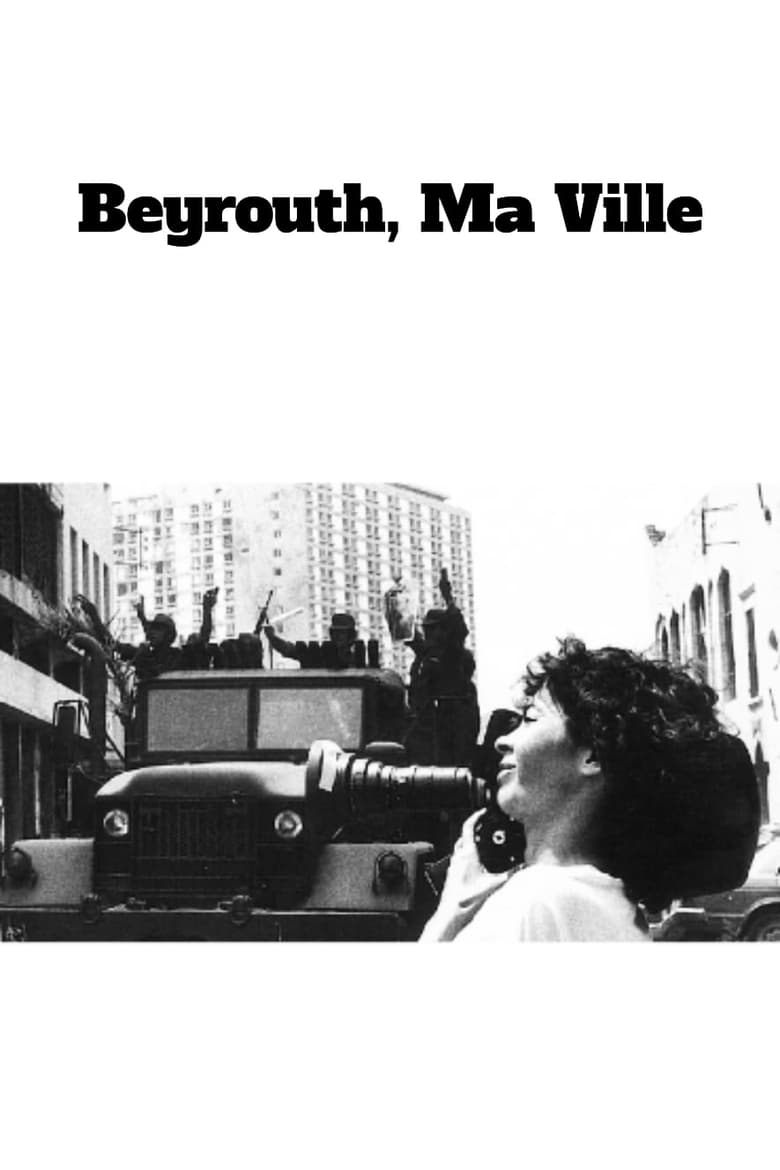
There are images in Beirut, My City that I genuinely couldn't keep my eyes on. A man bent over his son's bloodied body, sobbing in a way that doesn't look like grief so much as collapse. A woman tearing at rubble with her bare hands, screaming for a daughter who may not be there. Footage of injuries so severe I had to look away. I'm not squeamish, but this film found the limit. And I think that's precisely the point.
Made in 1982, right in the thick of the Lebanese Civil War, this is less a documentary in any traditional sense and more a desperate act of witnessing. There's no clean narration guiding you through events, no carefully composed interview setups, no soothing contextual captions. What you get instead is a collage, sometimes chaotic, sometimes agonisingly still, of a city eating itself alive. Rubble-strewn streets. Children playing barefoot among the ruins. Families pressed into basements, waiting. The kind of footage that the news cycle swallows and forgets within a week, but which this film insists you sit with.
And that insistence is what gives it its power. It's not asking you to analyse the conflict or take a side. It's asking you to look. To remember. To understand that behind every geopolitical headline there are people who have nowhere to go and nothing left to lose.
The lack of structure will frustrate some viewers, and I'd be lying if I said it never frustrated me. Certain sequences drag, others feel incomplete, and the grainy, shaky camerawork takes some adjustment. But here's the thing: I came to feel that the disjointed quality wasn't a weakness. How do you impose order on this kind of grief? How do you narrate chaos without betraying it? The fragmentary approach ends up feeling honest in a way that a more polished documentary might not. The roughness is the truth of it.
What keeps nagging at me, days later, is how little has changed. The scenes of bombed-out buildings and displaced families don't feel like history. They feel like this morning's news. That's a sobering and deeply uncomfortable thing to sit with, and the film clearly knows it. There's a rawness to the footage that carries an implicit accusation: you've seen this before, and you'll see it again, and what have you done about it?
It reminded me, in spirit if not in form, of Here and Elsewhere (1976), which I found similarly unnerving in the way it implicates the viewer in the act of watching conflict from a safe distance. And if you want to see what happens when a filmmaker of extraordinary craft turns a war-ravaged landscape into something almost unwatchably beautiful, Lessons of Darkness (1992) is the companion piece I'd point you towards, though the two couldn't be more different in approach.
This is not an easy watch, and I won't pretend otherwise. Three stars feels right to me, not because the film is average but because its roughness and incompleteness hold it back from the heights it occasionally threatens to reach. But the moments that work, really work, are burned into me. A plea for memory in a world that keeps forgetting. That's not nothing. That's quite a lot, actually.
Rating: ★★★ | Year: 1983 | Watched: 2025-07-08
Related on Movies With Macca
More from France: Fantastic Planet (1973) · Letter from Siberia (1957) · Lessons of Darkness (1992) · Here and Elsewhere (1976)
More from the 1980s: Nightmare City (1980) · A Better Tomorrow (1986) · Style Wars (1983) · Garlic Is as Good as Ten Mothers (1980)
More documentary: Letter from Siberia (1957) · Lessons of Darkness (1992) · Style Wars (1983) · Here and Elsewhere (1976)