
The Hour of Liberation Has Arrived (1974)
The Hour of Liberation Has Arrived (1974)

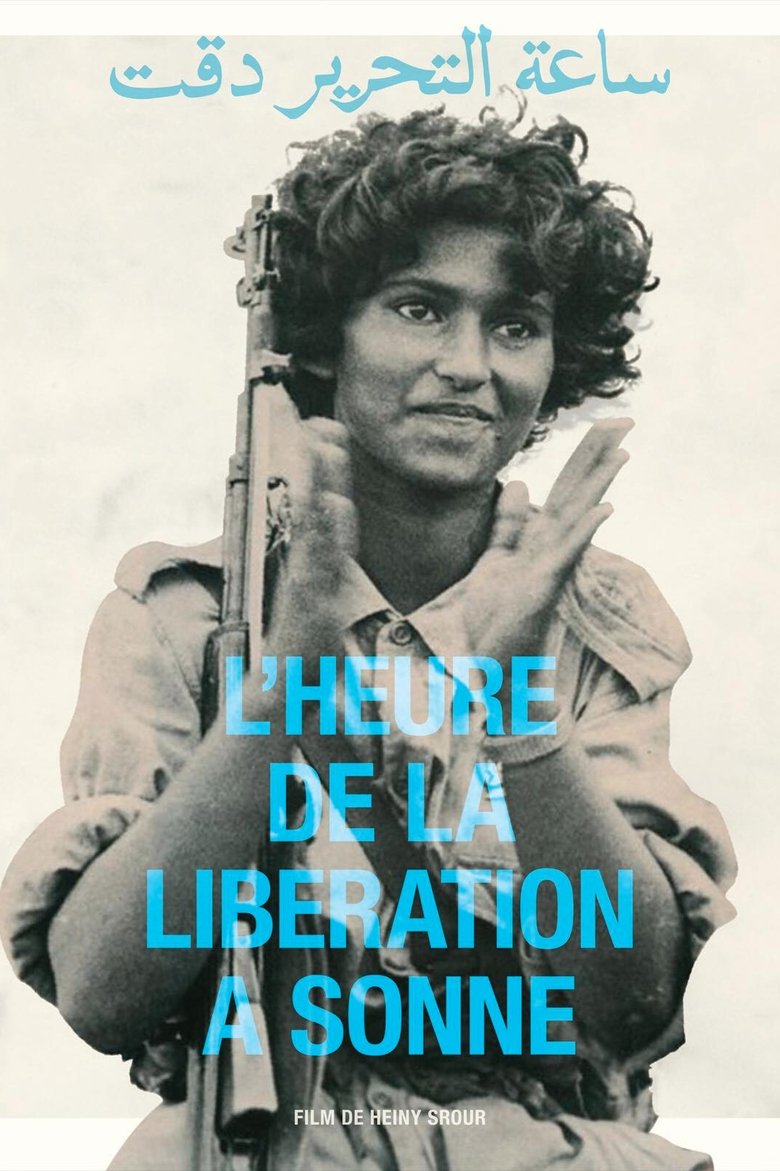
There's a moment in The Hour of Liberation Has Arrived where a group of women sit under a desert sky and debate Marxist ideology with the kind of focused, unhurried conviction that most political films only ever gesture towards. It stopped me cold. These are fighters, medics, educators, women who have picked up arms and redefined everything their society told them they were supposed to be, and Heiny Srour's camera just sits with them, patient and respectful, and lets them speak. That, in a nutshell, is what makes this 1974 documentary so remarkable.
Srour, a Lebanese filmmaker and often the only woman on the front lines, embedded herself with the Popular Front for the Liberation of the Occupied Arabian Gulf, known as PFLOAG, as they waged their guerrilla campaign in Dhofar, Oman, against the British and American-backed monarchy. The conflict was almost entirely ignored by Western media at the time, and that invisibility is part of what the film is pushing back against. This isn't a war you'll have read about in school. That's precisely why it matters that someone went and filmed it.
The footage is 16mm, grainy, sometimes shaky, shot in conditions that were genuinely dangerous. And that rawness is exactly right. There's no sanitised framing here, no comfortable distance between the viewer and what's on screen. You see soldiers tending crops between engagements, children learning to read in mountain caves, communities being built under the constant threat of bombardment. The texture of the image matches the texture of the lives being documented. It would feel dishonest any other way.
What the film does that I find genuinely extraordinary is place women at the absolute centre of that story. Not as background figures or symbols, but as combatants, organisers, and ideological thinkers in their own right. Female fighters speak directly to camera about freedom and dignity and the right to determine their own futures, and they do it with a clarity and force that's almost startling when you remember this is 1974, in one of the most conservative regions in the world, decades before these kinds of narratives found any mainstream traction. If you want to understand the deep roots of feminist resistance in the Arab world, this film is as important a document as you're likely to find. It pairs naturally in my mind with Here and Elsewhere (1976), another film that grapples with the human reality of revolutionary struggle in the Arab world and refuses to make it comfortable or abstract.
I'll be honest about the film's limitations, because they're real. The pacing is uneven in places, and the historical and political context is presented with the assumption that you're already somewhat across the background of the conflict. If you're coming in cold, certain passages can feel dense or difficult to orient yourself within. That's a genuine barrier, and it's worth acknowledging rather than waving away.
But then a shot will land, or a voice will cut through, and you're reminded that you're watching something that shouldn't exist by any conventional measure of what was possible. Srour got access that no one else was getting. She went to places other filmmakers weren't going. She brought back footage of a revolution that the wider world was actively uninterested in, and she centred the people within it who were most likely to be erased from the historical record entirely. That's not a small thing. The documentary tradition has room for films like Letter from Siberia (1957), which uses wit and irony and formal invention to interrogate how we construct political narratives, but it also needs films like this one, which simply go and bear witness, as directly and honestly as the conditions allow.
I'm leaving this unrated, not because I'm uncertain about its value but because slapping a star count on it feels like the wrong relationship to have with the thing. The Hour of Liberation Has Arrived is a document before it's a film, and an act of solidarity before it's a document. It belongs in conversation with the most vital political cinema of its era. It should be seen. If decolonial history, feminist struggle, or the untold stories of twentieth-century revolution mean anything to you, it should be at the top of your list.
Rating: Not rated | Year: 1974 | Watched: 2026-03-09
Where to watch
Watch in the US
Stream: OVID
Physical: Amazon US
Affiliate disclosure: Movies With Macca may earn a small commission on purchases or subscriptions started via these links. It costs you nothing extra.
Related on Movies With Macca
More from France: Fantastic Planet (1973) · Letter from Siberia (1957) · Lessons of Darkness (1992) · Here and Elsewhere (1976)
More from the 1970s: Fantastic Planet (1973) · Here and Elsewhere (1976) · Italianamerican (1974) · Punishment Park (1971)
More documentary: Letter from Siberia (1957) · Lessons of Darkness (1992) · Style Wars (1983) · Here and Elsewhere (1976)



