Battle Royale II: Requiem (2003)
★½ — Battle Royale II: Requiem (2003)

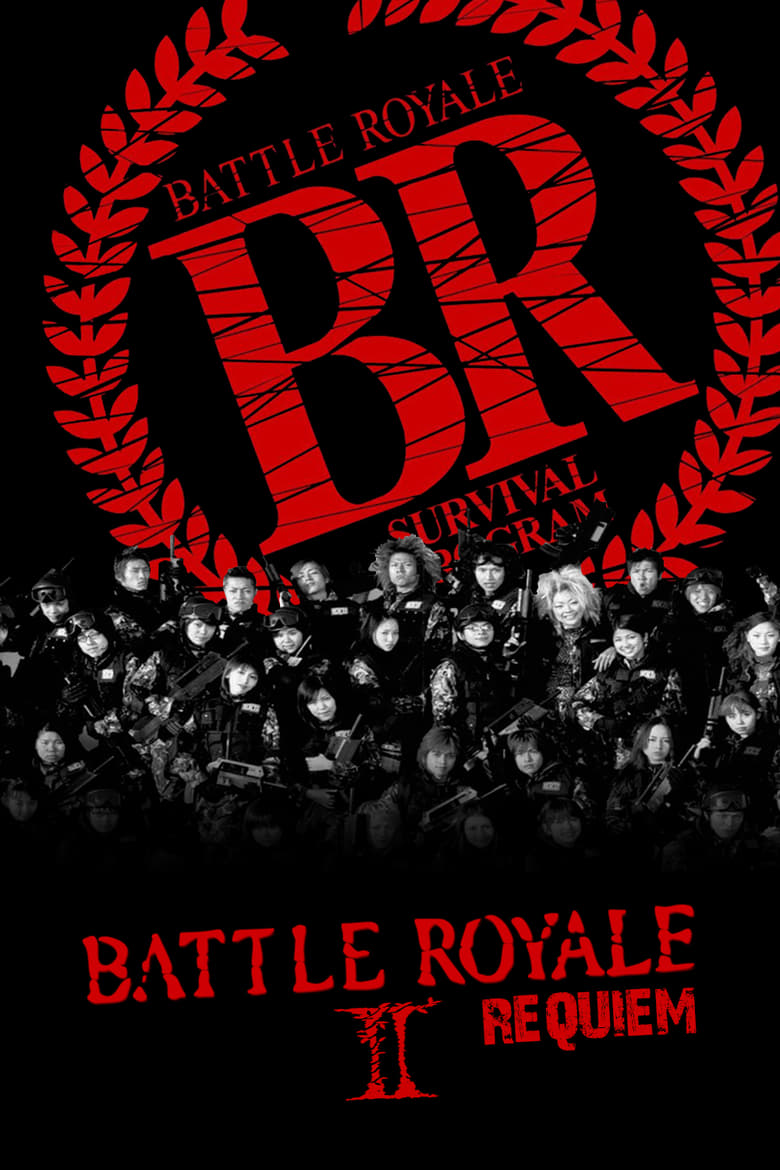
Let me tell you the exact moment I knew this was going to be a disaster. Not a rough-around-the-edges, give-it-time disaster. A proper, irredeemable, what-were-they-thinking disaster. It came early, it came loud, and it never let up. Battle Royale II: Requiem is one of the most baffling sequels I have ever sat through, and I mean that with no affection whatsoever.
The original is something special. I wrote about Battle Royale (2000) and came away genuinely rattled by it. Chaotic, yes. Pulpy, absolutely. But underneath all the blood and carnage there was something beating, a real pulse of dark satire, teenage anxiety, and tragic momentum. It earned its madness. It made you feel something even when it was being outrageous. That's a difficult trick to pull off and the first film pulled it off brilliantly.
This one pulls off nothing.
The central problem is that Battle Royale II seems to have been made by people who misunderstood what made the original work. The chaos here isn't charged with anything. It's just noise. Extended, exhausting, tension-free noise. Action sequences pile on top of each other without consequence because you don't care about a single person caught up in them. The new students drafted into this sequel's version of the game are so thinly drawn they might as well be cardboard cutouts with names written on in marker pen. I couldn't tell you who most of them were, what they wanted, or why I should be watching them die.
And then there's the politics. The film clearly wants to say something big, something about terrorism, resistance, the machinery of state violence. Fair enough, those are worthwhile ideas. But good intentions don't automatically produce good filmmaking. The dialogue meant to carry these themes is clunky to the point of parody. Characters deliver speeches rather than conversations. Scenes that should crackle with ideological tension just sit there, flat and unconvincing, waiting for you to be impressed by them. I wasn't.
The returning characters fare no better. Anyone you recognised and cared about from the first film feels completely unrecognisable here, rewritten to fit a story that needed them to be different rather than consistent. It genuinely feels like fan fiction, and not the good kind. The kind written by someone who watched the original once, got the rough shape of it, but fundamentally missed the point and decided to write their own ending anyway.
There's a version of this film that could have worked. A sequel to Battle Royale set in the fallout of that first game, grappling with survivors' guilt, with a society reckoning with what it created, with the original's themes pushed somewhere new and uncomfortable. That film sounds interesting to me. This film is not that film. This film mistakes volume for intensity, length for depth, and political gesturing for actual thought.
At one and a half stars, I'm being generous enough to acknowledge that a few individual images have some raw energy and that the ambition, however catastrophically mishandled, is at least present. But ambition without execution is just wishful thinking. And wishful thinking doesn't make for a good night at the pictures.
If you loved the original, please do yourself a favour and stop there. What Battle Royale II offers isn't a continuation of something you loved. It's a betrayal of it. One of the most pointless sequels I've encountered, and genuinely one of the most frustrating ways to spend two hours I can think of. Truly terrible stuff.
Rating: ★½ | Year: 2003 | Watched: 2025-07-15
Where to watch
Watch in the UK
Stream: Arrow Video Amazon Channel · ARROW
Rent: Apple TV Store · Amazon Video · Google Play Movies · YouTube
Buy: Apple TV Store · Amazon Video · Google Play Movies · YouTube
Physical: Amazon UK · Zavvi
Watch in the US
Stream: MovieSphere+ Amazon Channel
Rent: Amazon Video · Apple TV Store · Google Play Movies · YouTube
Buy: Amazon Video · Apple TV Store · Google Play Movies · YouTube
Physical: Amazon US
Affiliate disclosure: Movies With Macca may earn a small commission on purchases or subscriptions started via these links. It costs you nothing extra.
Related on Movies With Macca
More from Kinji Fukasaku: Yakuza Graveyard (1976) · Battle Royale (2000)
More from Japan: Mononoke the Movie: The Phantom in the Rain (2024) · Mononoke the Movie: Chapter II - The Ashes of Rage (2025) · Blue (1993) · The Ghost of Yotsuya (1959)
More from the 2000s: Kirikou and the Wild Beasts (2005) · Anchorman: The Legend of Ron Burgundy (2004) · Daredevil (2003) · Apocalypto (2006)
More action: A Better Tomorrow (1986) · The General (1926) · Hand of Death (1976) · Daredevil (2003)
More thriller: Invasion of the Body Snatchers (1956) · Angst (1983) · The Long Walk (2025) · Punishment Park (1971)