Kirikou and the Wild Beasts (2005)
★★★ — Kirikou and the Wild Beasts (2005)

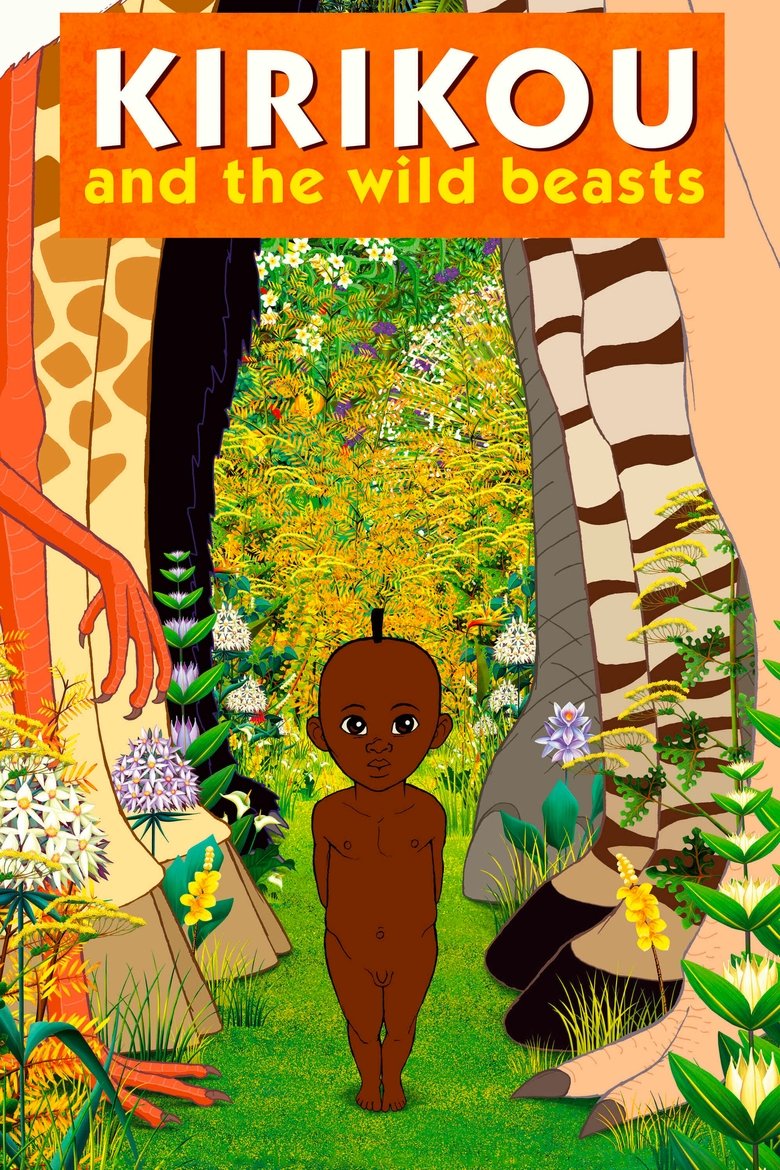
There's something quietly radical about an animated film that has no real villain, no ticking clock, and no third-act showdown. Kirikou and the Wild Beasts is that kind of film, and whether that strikes you as a relief or a disappointment will probably tell you everything about what you expect from animation. I found it somewhere in the middle: charming, graceful, occasionally a little too meandering for its own good, but always worth my time.
This is a follow-up to Kirikou and the Sorceress (1998), which I loved for the sheer boldness of its vision, its roots in West African folklore, and its refusal to behave like anything coming out of the major Western studios. This second film carries that same spirit into new territory, structured as a series of episodes in which our tiny, fearless hero ventures across the landscape, encountering animals and uncovering the reasons behind their strange or threatening behaviour. Each encounter is essentially a fable, and the film wears that plainly, without any embarrassment about it.
The animation is gorgeous. That hand-drawn style, all bold outlines and vivid, sun-baked colours, is still as distinctive as ever. The landscapes shift from dense forest to open savanna to something drier and more sparse at the edges, and the backgrounds feel genuinely alive with texture and care. There's a richness to the visual world here that you don't get from glossy, effects-heavy productions, and I'd take it any day. Stylised figures, yes, but full of expression and movement. The whole thing has a warmth to it that's hard to manufacture.
What the film does brilliantly is trust its audience. It isn't talking down to children. The moral lessons are there, about ecology, about coexistence, about understanding why a creature behaves the way it does before rushing to judge or destroy it, but they're woven in rather than announced. There's real respect for young viewers in that, and it's rarer than it should be. The storytelling reflects the rhythms of traditional oral narrative rather than the mechanics of a Hollywood three-act structure, and I think that's largely to its credit.
That said, I'd be lying if I said the episodic format never tested my patience. Without a central antagonist or an overarching dramatic question pulling things forward, certain stretches feel a little loose. One story flows into the next with a gentle ease that's admirable in theory, but in practice there are moments where the whole thing starts to feel more like a pleasant wander than a journey. For viewers raised on faster-paced storytelling, that might be a dealbreaker. For me, it was just a mild frustration with an otherwise thoughtful film.
What stays with me is the philosophy underneath it all. Wisdom over spectacle. Cooperation over confrontation. Curiosity as a form of courage. Kirikou doesn't defeat the animals he meets; he understands them. That's a genuinely different idea of heroism, and it's one I wish more films, animated or otherwise, would explore. It makes the film feel educational without ever being a chore, which is a difficult balance to strike.
Three stars. Kirikou and the Wild Beasts won't dazzle you, and it doesn't try to. What it offers instead is something quieter: a window into a storytelling tradition that deserves far more attention than it gets, rendered with real beauty and genuine warmth. It doesn't quite reach the heights of the original for me, but it's a good film, and a rare one. Sometimes that's more than enough.
Rating: ★★★ | Year: 2005 | Watched: 2026-04-30
Related on Movies With Macca
More from Michel Ocelot: Kirikou and the Sorceress (1998) · Princes and Princesses (2000)
More from France: Fantastic Planet (1973) · Letter from Siberia (1957) · Lessons of Darkness (1992) · Here and Elsewhere (1976)
More from the 2000s: Anchorman: The Legend of Ron Burgundy (2004) · Daredevil (2003) · Apocalypto (2006) · Old Joy (2006)
More adventure: Alice in Wonderland (1951) · The Eagle (1925) · Louisiana Story (1948) · The General (1926)
More animation: Fantastic Planet (1973) · Alice in Wonderland (1951) · Mononoke the Movie: The Phantom in the Rain (2024) · Mononoke the Movie: Chapter II - The Ashes of Rage (2025)