The Snow Woman (1968)

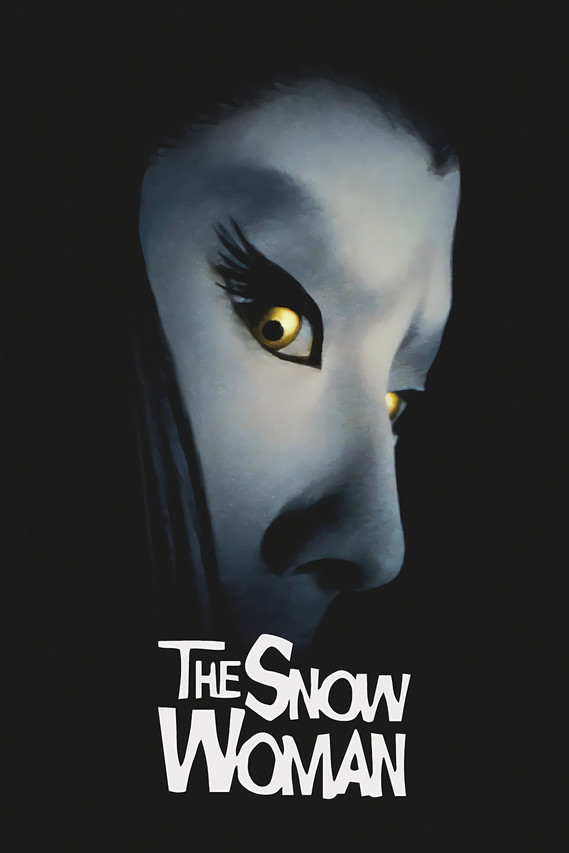
There's a moment early in The Snow Woman where the frame holds on a vast white landscape, the silence so complete you can almost feel the cold through the screen, and you know immediately that this film is going to do things its own way. Tokuzo Tanaka isn't in a hurry. He trusts the image. And if you trust him back, the rewards are considerable.
This is a film that tends to get lost in the shadow of its more celebrated contemporaries, which is a shame, because visually it can stand alongside the best of them. The colour palette alone is worth the price of admission: stark whites, deep blues and sudden bursts of crimson arranged with a painter's eye. The Yuki-onna herself, the snow spirit at the heart of the story, is a genuinely iconic image, all flowing white robes against frozen landscapes, the kind of image that burns itself into your memory. You can see the fingerprints of this film on later works, including Lady Snowblood, though where that film is violent and operatic, The Snow Woman is restrained and melancholic, more interested in dread than spectacle. There are echoes of Onibaba too, in the rural setting, the exploration of desire, and the way it blurs the erotic and the eerie into something genuinely unsettling.
The pacing will not be for everyone, and I'll be straight with you about that. The early acts move deliberately, taking their time with a young potter's life, his world, his relationships, the rhythms of village existence before the supernatural intrudes. It demands patience. There are stretches where atmosphere is doing nearly all the work, and if you're watching with one eye on your phone, you'll lose the thread entirely. But that slow accumulation is precisely the point. By the time the film's supernatural and emotional currents finally converge, the payoff lands with real weight. The finale feels earned in a way that so many horror films don't manage, because you've been made to wait for it, to feel the full gravity of what's at stake.
What keeps this from being merely a handsome genre piece is the thematic weight underneath the ghost story. At its heart (and I use that phrase deliberately, not as filler) this is a film about promises: the promises we make to others, the ones we make to ourselves, and what happens when we break them. Memory and loss run through every scene. The horror here is poetic rather than visceral. There's not a jump scare in sight. Instead, the film builds something closer to tragedy, an impossible love with an inevitable consequence, and by the end you feel the sadness of it more than the fear.
I've written before about how much I love the classical tradition of Japanese supernatural cinema. My review of The Ghost of Yotsuya touches on how that canon handles female spirits and the horror of broken vows, and The Snow Woman sits comfortably in the same lineage. It's a film that understands folklore as something genuinely frightening, not because monsters leap out of the dark, but because the consequences of human weakness are inescapable. More recently I found similar ideas at work in Mononoke the Movie: The Phantom in the Rain, which shows how alive that tradition still is.
Is The Snow Woman a flawless film? No. The deliberate pacing tips occasionally into something closer to inertia, and there are moments in the middle section where the film tests your goodwill. But I'd rather watch a film that takes its time and delivers than one that rushes and leaves you empty. When this one settles into you, it really settles.
Three and a half stars.
Visually stunning, thematically rich, and patiently crafted: this is a film that lingers like frost on glass long after the credits roll. If you have any love for Japanese folklore or supernatural cinema, seek it out. It deserves to be spoken of in the same breath as the classics it quietly, subtly helped to shape.
Rating: ★★★½ | Year: 1968 | Watched: 2026-05-20
Where to watch
Watch in the UK
Stream: Shudder Amazon Channel
Physical: Amazon UK · Zavvi
Watch in the US
Stream: Philo · AMC Plus Apple TV channel · AMC+ Amazon Channel · AMC+ Roku Premium Channel
Rent: Amazon Video · Fandango At Home
Buy: Amazon Video · Fandango At Home
Physical: Amazon US
Affiliate disclosure: Movies With Macca may earn a small commission on purchases or subscriptions started via these links. It costs you nothing extra.