Zero for Conduct (1933)
★ — Zero for Conduct (1933)

There's a particular kind of frustration that comes with watching a film you know you're supposed to admire. You sit there, willing yourself to feel the electricity that critics and historians promise is crackling off the screen, and instead you feel... nothing much. That's where I landed with Jean Vigo's Zero for Conduct, and I'm not going to pretend otherwise just because saying so feels like kicking a sacred cow.
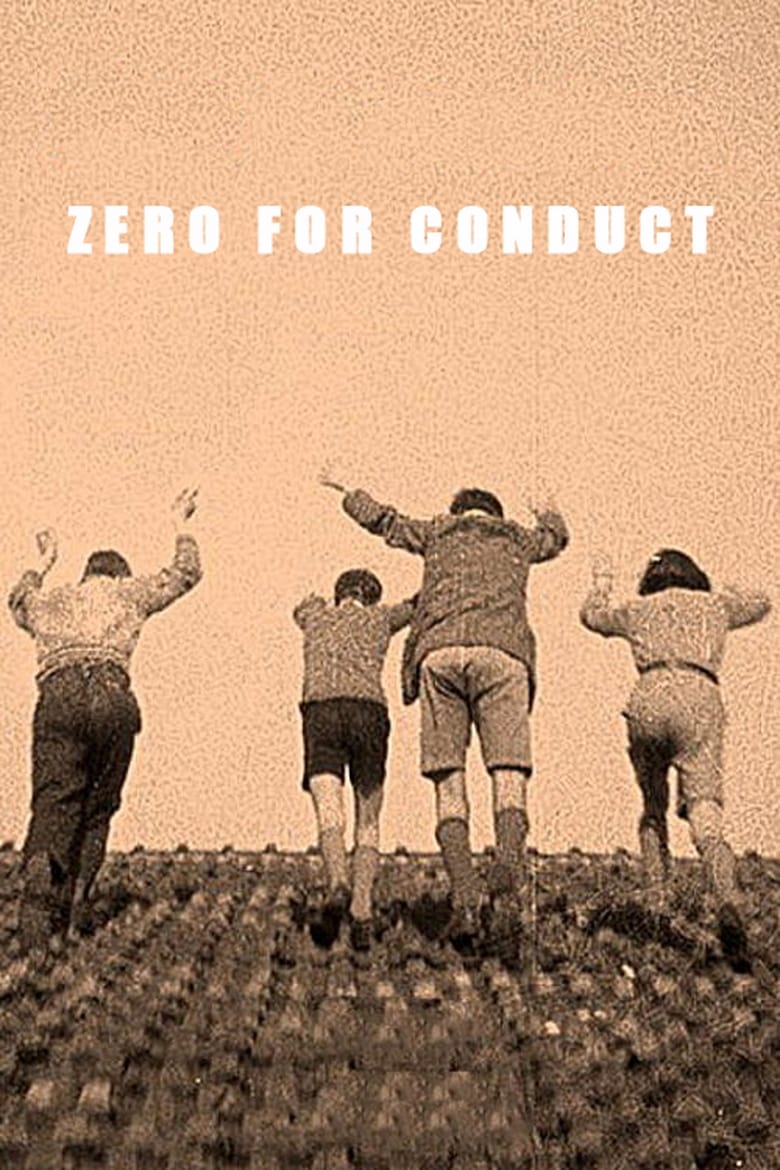
The setup is simple enough: schoolboys in a French boarding school, ground down by petty, tyrannical teachers, eventually rise up in rebellion. Forty-one minutes of it. And in those forty-one minutes, I found sluggish pacing, performances from the child actors that veer into broad caricature, and a dreamlike quality that kept threatening to become something genuinely strange and interesting before drifting off into aimlessness instead. The famous pillow fight sequence, the centrepiece of the whole thing, is charming enough in concept. Feathers floating in slow motion, boys marching across rooftops in makeshift regalia. I get what Vigo was going for. But as a piece of actual filmmaking it plays out with such languid simplicity that any real excitement drains away before it can build.
Here's the thing, though. I don't doubt for a second that this film mattered. Banned in France for over a decade after its release, Vigo's little rebellion fantasy clearly rattled enough cages to warrant suppression, which tells you something. And you can draw a fairly straight line from this film to any number of later works about institutional cruelty and youthful defiance. I've reviewed Mustang on this site, a film that deals with similarly suffocating authority bearing down on young people, and the contrast is instructive: where that film builds genuine emotional pressure, Zero for Conduct keeps things so sketchy and underdeveloped that the stakes never feel real. There's barely any character depth to speak of, and without it the rebellion carries no emotional weight.
It's also worth acknowledging the company it keeps. I've sat through plenty of films from the early 1930s that still crackle with life, The Invisible Man being a fine example from the same year, films where the craft and the energy translate directly across nine decades without needing a history lesson to prop them up. Zero for Conduct doesn't manage that. Stripped of its context, stripped of the knowledge that this was radical for 1933, what you're left with is something that reads as naive rather than anarchic. The revolt feels basic. The emotion feels thin.
None of that is entirely Vigo's fault. He was working with almost no resources, an inexperienced cast, and under conditions that would have tested any filmmaker. And he died tragically young, before he could develop the ideas you can see flickering here into something more fully realised. That's genuinely sad. But sympathy for the circumstances of a film's creation doesn't make the film itself more watchable.
Some films earn their place in the canon through their ongoing power to move or excite or disturb. Others earn it through influence and historical significance, through what they started rather than what they achieved on their own terms. Zero for Conduct is firmly in the second camp. Watch it if you're working your way through early European cinema and want the complete picture. Read about it if you're curious about the roots of a certain tradition of rebellious, poetic filmmaking. But don't go in expecting to be swept away, because you almost certainly won't be.
One star.
Rating: ★ | Year: 1933 | Watched: 2026-03-23
Where to watch
Watch in the US
Physical: Amazon US
Affiliate disclosure: Movies With Macca may earn a small commission on purchases or subscriptions started via these links. It costs you nothing extra.
Related on Movies With Macca
More from France: Fantastic Planet (1973) · Letter from Siberia (1957) · Lessons of Darkness (1992) · Here and Elsewhere (1976)
More from the 1930s: Earth (1930) · Monkey Business (1931) · Sabotage (1936) · People on Sunday (1930)
More comedy: The Eagle (1925) · The General (1926) · Americana (2023) · The Naked Gun: From the Files of Police Squad! (1988)
More drama: Viy (1967) · Wonder (2017) · A Better Tomorrow (1986) · Beautiful Boy (2018)