
A Throw of Dice (1929)
★½ — A Throw of Dice (1929)

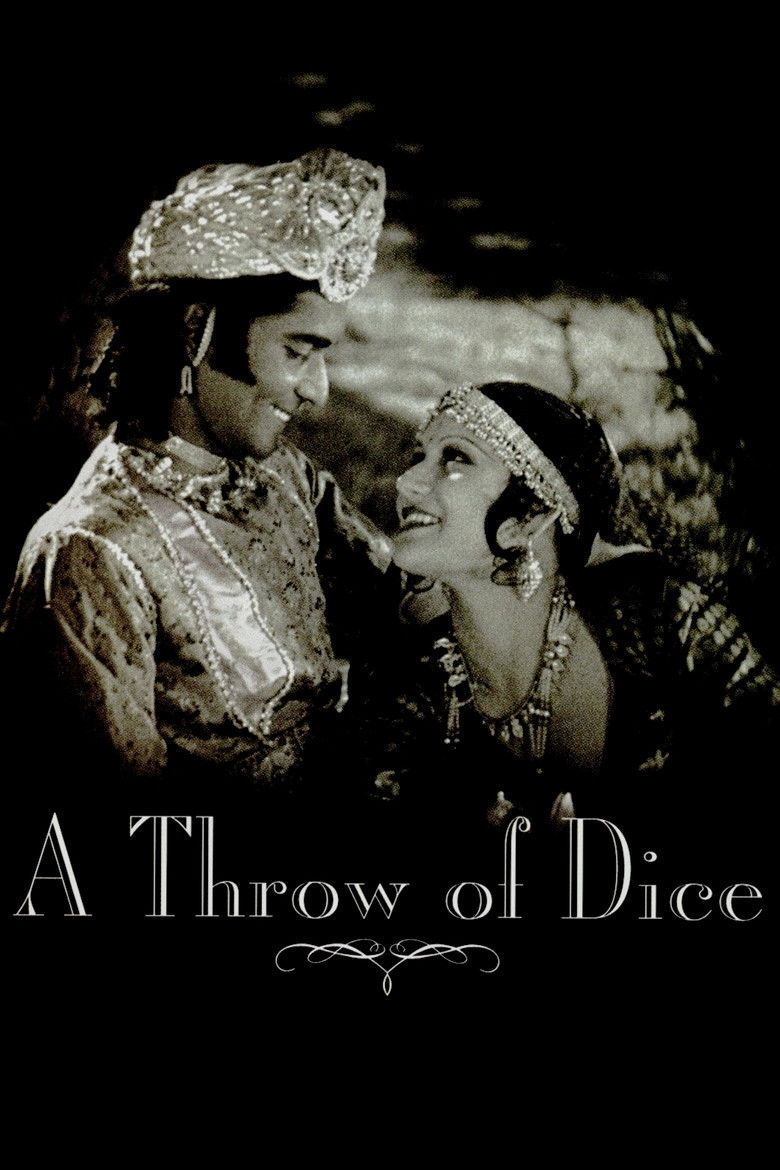
Some films age like fine wine. A Throw of Dice ages like a beautifully decorated biscuit tin: gorgeous on the outside, empty on the inside, and leaving you vaguely disappointed you bothered opening it. I wanted to admire this 1929 Indian silent epic, and in certain moments I did, but admiring something and actually enjoying it are two very different things, and this film reminded me of that distinction pretty sharply.
The premise is mythological and grand: royal rivalry, divine fate, the turn of a dice deciding lives and kingdoms. On paper, that sounds like the kind of material that should crackle with tension and sweep you up in its drama. In practice, what you get is roughly 70 minutes of people staring meaningfully at one another, gesturing dramatically at the middle distance, and then standing very still while a title card arrives to explain what their faces were just attempting to say. It's less a story unfolding than a series of ornate tableaux, held together by intertitles and not much else.
And look, I understand the context. Silent cinema demanded a certain theatricality from its performers. I've seen it done brilliantly, and films like The General or The Cameraman show you exactly how expressive and physically dynamic the form could be. The pantomime in those films feels purposeful, energised, funny, alive. Here, the performances lean so heavily on stagey gesture and widened eyes that there's no real human texture beneath them. Characters don't feel like people with inner lives. They feel like participants in a pageant.
The visual production is where I'll give the film genuine credit. The sets are elaborate, the ceremonial pageantry is lavish, and as an artefact of early Indian cinema it's genuinely impressive that something of this scale was pulled off at all. There's real historical significance here, and I don't want to brush past that. But historical significance and watchability aren't the same thing, and I'm reviewing a viewing experience, not a museum exhibit.
The camera barely moves. The editing does little to build rhythm or momentum. Scenes that should feel urgent simply don't, because the film hasn't built any real sense of stakes or character investment to make you care about the outcome. The climactic dice sequence, which ought to be the film's tense, pivotal centrepiece, lands with almost no impact whatsoever. By that point you're just waiting for it to be over.
What really kills it is the repetition. The same dramatic gestures, the same static compositions, the same cycle of action followed by explanatory title card, over and over. There's no momentum, no escalation, no emotional hook that pulls you through. I kept waiting for the film to shift gears and it never did. It just continued, steadily and unhurriedly, being exactly what it was from the opening frame.
To be genuinely blunt about it: this is a slog. Not an offensive one, not an irritating one, just a dull one. The kind of film that makes you feel slightly guilty for being bored, because you can see the craft and the ambition in its bones, but bored is what you are regardless. Not all silent films have aged with grace, and this is one that hasn't, at least not as a piece of storytelling you can connect with emotionally in 2026.
One and a half stars. A relic worth knowing about, perhaps, but not one I'd rush to revisit.
Rating: ★½ | Year: 1929 | Watched: 2026-04-24
Where to watch
Watch in the UK
Stream: Amazon Prime Video · Amazon Prime Video with Ads
Rent: Amazon Video
Buy: Amazon Video
Physical: Amazon UK · Zavvi
Watch in the US
Rent: Amazon Video
Buy: Amazon Video
Physical: Amazon US
Affiliate disclosure: Movies With Macca may earn a small commission on purchases or subscriptions started via these links. It costs you nothing extra.
Related on Movies With Macca
More from Germany: Lessons of Darkness (1992) · Cemetery Man (1994) · The Grand Budapest Hotel (2014) · Resident Evil: Retribution (2012)
More from the 1920s: The Eagle (1925) · The General (1926) · The Docks of New York (1928) · Safety Last! (1923)
More drama: Viy (1967) · Wonder (2017) · A Better Tomorrow (1986) · Beautiful Boy (2018)
More adventure: Alice in Wonderland (1951) · The Eagle (1925) · Louisiana Story (1948) · The General (1926)



