Tiger Stripes (2023)

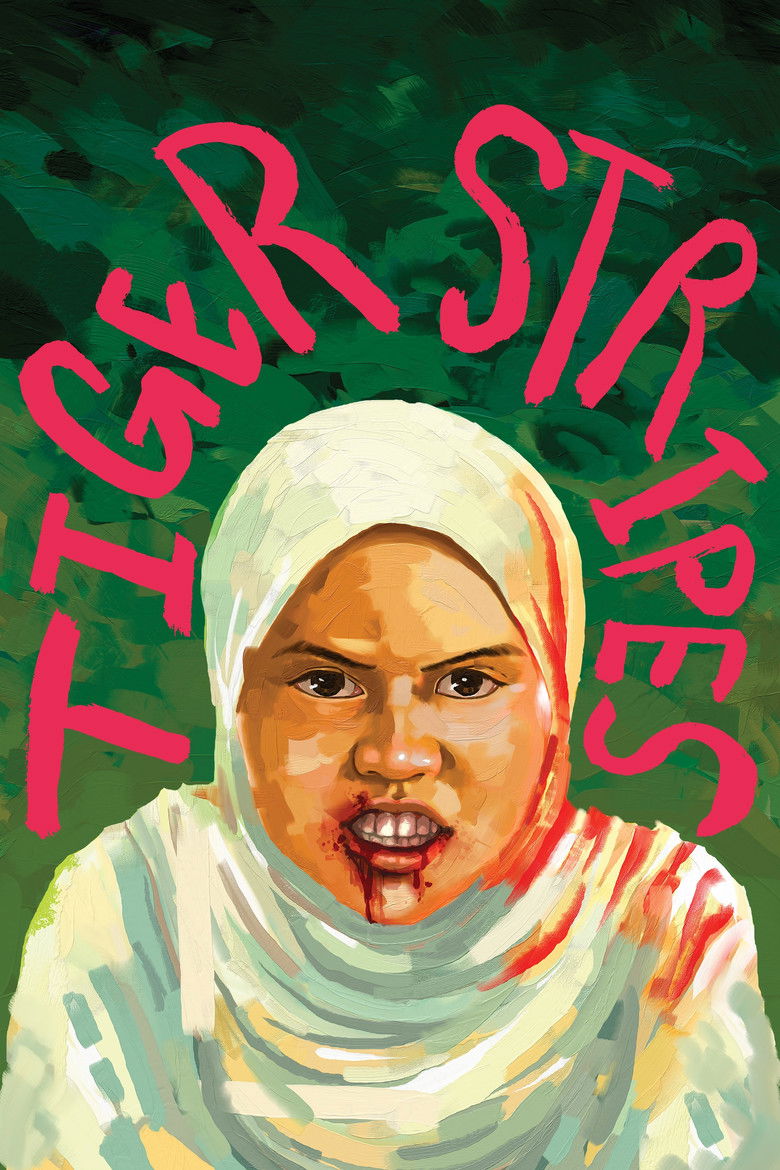
There's a moment early in Tiger Stripes where you can feel the film it wants to be, and it's a genuinely exciting one. A young Malaysian girl, Zaffan, becomes the first among her friends to menstruate, and the world around her shifts in that quiet, cruel way it always does for girls crossing that threshold. The weight of conservative expectation, religious tradition, the sudden sense of being watched differently by everyone around you. Director Amanda Nell Eu has found something raw and real here, and for a while, the film feels poised to do something special with it.
That early stretch is compelling precisely because it trusts the material. The young cast are remarkable, bringing a grounded, lived-in quality to their performances that you don't often see from actors at this stage. There's a naturalism to the friendships, the cruelties, the small rebellions, that feels genuinely observed. You settle in, thinking this is going to be a culturally specific, deeply felt coming-of-age story. Something in the spirit of what I loved about Fish Tank, that willingness to sit with a young woman's anger and confusion without tidying it up.
And then the body horror kicks in, and the film starts losing me.
I understand the impulse. Puberty as transformation, as monstrous otherness, as something society treats like a curse. It's not a new idea, but it's a durable one, and in the right hands it can be viscerally effective. The trouble is that Tiger Stripes doesn't use the horror metaphor to deepen what it's already exploring. It replaces it. The psychological complexity that the first act was carefully building gets traded in for genre spectacle, and the film's intimacy drains away almost immediately. What should feel like an externalisation of something internal instead feels like a shortcut, a way of signalling meaning rather than creating it.
Heavy-handed is the word I keep coming back to. When metaphor is this literal, when every internal struggle is given a physical, monstrous equivalent, there's nothing left for the audience to interpret. The film does all the work for you, and loudly. The result is that scenes which should feel unsettling end up feeling obvious, and the emotional payoff the first act promises simply never arrives.
It's a genuine shame, because the foundation is so strong. The setting, the cultural specificity, the portrait of what it means to grow up female in a community where your body is everyone else's business. These are things worth exploring on screen, and Eu clearly has both the eye and the instinct for it. There are individual images here that are striking and strange in the best possible way. But the discipline to let the story breathe, to trust that restraint can be more powerful than spectacle, isn't quite there yet.
The cast deserves better than the script ultimately gives them. They remain committed even as the material escalates around them, which is no small thing. But committed performances can only carry a film so far when the direction keeps pulling focus toward shock over feeling.
Tiger Stripes ends up caught between two films: a quiet, culturally resonant character study and a visceral horror-fantasy. It never commits to either with enough discipline to make them cohere, and the tension between them doesn't feel productive, just frustrating. This is a film with a genuinely bold premise and real talent both in front of and behind the camera, but it mistakes loudness for daring. The subtlety it flirts with in its opening act is exactly what it needed to hold onto, and letting go of it is the decision that costs it most dearly.
Two and a half stars. Watch it for what it could have been, and keep an eye on everyone involved, because the potential here is real. I just hope next time it's matched by a little more restraint.
Rating: ★★½ | Year: 2023 | Watched: 2026-06-04
Where to watch
Watch in the UK
Rent: Apple TV Store · Amazon Video · Google Play Movies · Sky Store
Buy: Apple TV Store · Amazon Video · Google Play Movies · Sky Store
Physical: Amazon UK · Zavvi
Watch in the US
Stream: Philo · AMC Plus Apple TV channel · AMC+ Amazon Channel · AMC+ Roku Premium Channel
Rent: Amazon Video · Apple TV Store · Google Play Movies · YouTube
Buy: Amazon Video · Apple TV Store · Google Play Movies · YouTube
Physical: Amazon US
Affiliate disclosure: Movies With Macca may earn a small commission on purchases or subscriptions started via these links. It costs you nothing extra.