Salaam Cinema (1995)

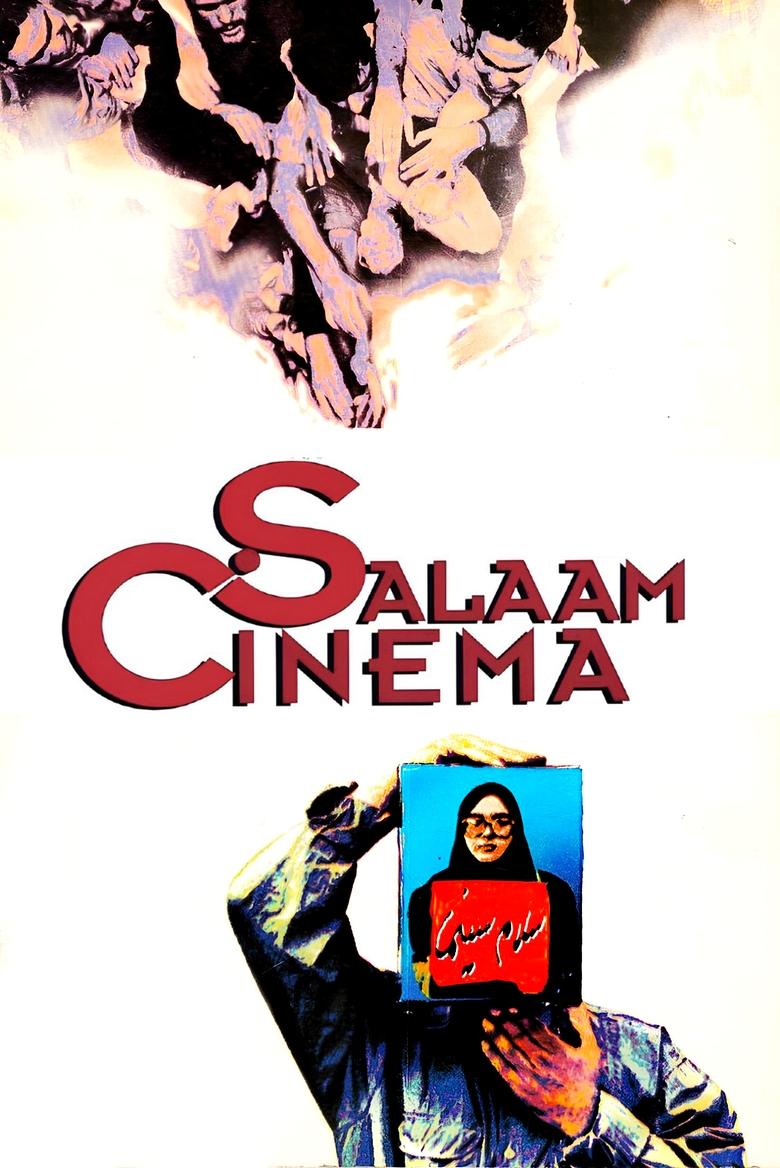
What does it mean to want to be seen? That's the question humming underneath every frame of Salaam Cinema, and it's one I haven't been able to shake since watching it. Mohsen Makhmalbaf turns a simple premise, open auditions for a film in Tehran, into something so strange and so searching that genre labels start to feel beside the point. Is it a documentary? A piece of meta-fiction? A social experiment? All three, probably. None of them, maybe. Honestly, it doesn't matter. What matters is what ends up on screen: hundreds of ordinary Iranians, children, elders, dreamers, opportunists, stepping in front of a camera and, whether they know it or not, revealing themselves completely.
The crowds alone are extraordinary. When word spreads that a film is being cast, people pour in from across the city, clamouring for their chance. There's something immediately affecting about that image, all these faces jostling to be chosen, to matter, to be part of something larger than their daily lives. Cinema has always promised that kind of transformation, and here you see the hunger for it laid completely bare. It reminded me of how I felt watching Homework, another Makhmalbaf film where the camera becomes a kind of confessional booth, drawing out truths that more conventional filmmaking would never reach.
What makes Salaam Cinema genuinely compelling, rather than merely interesting, is Makhmalbaf's refusal to just observe. He probes. He challenges. He asks questions that pull at the seams of his subjects' self-presentation until you start to see what's underneath. Motivations vary wildly. Some people are there for art, some for escape, some for reasons they can barely articulate themselves. You watch identities being constructed in real time, people negotiating with an authority figure who holds, or appears to hold, the power to change their lives. It's anthropology conducted through filmmaking, and it's done with a precision that's almost unsettling.
Almost, because that precision is where my one real discomfort with the film lives. There's a scene involving a woman who reveals that the audition is essentially her last hope of getting a visa and being reunited with someone she loves. It's raw and it's painful, and Makhmalbaf doesn't flinch from it. Neither does the camera. And sitting there watching, I found myself genuinely uncertain: is this empathy or voyeurism? Is the film honouring her by refusing to look away, or is it using her? The film doesn't answer that, and I respect it for the refusal. But the discomfort is real, and I think it's meant to be. The act of filming is never neutral, and Salaam Cinema knows that better than almost any film I've seen.
Iranian cinema has produced some of the most quietly radical filmmaking of the past few decades, and this sits comfortably among the best of it. If you've spent time with A Separation or The Salesman, you'll recognise that same instinct for ethical complexity, that willingness to put the audience in an uncomfortable position and trust them to think their way through it rather than spoon-feeding a verdict. Salaam Cinema does that throughout, and it does it with a looseness and energy that those more structured films don't quite replicate.
I'll be honest: there are moments where the film's method feels like it might be getting away with something. The line between revelation and manipulation is thin here, and I'm not always sure which side Makhmalbaf is on. But I think that ambiguity is a feature rather than a flaw. What you're left with is a portrait of a universal human hunger: the need for recognition, for connection, for the feeling that your life could be, even briefly, worth watching. That's what cinema promises everyone who buys a ticket. Salaam Cinema just makes the transaction visible.
Four stars. Essential viewing, approached with your eyes wide open.
Rating: ★★★★ | Year: 1995 | Watched: 2026-05-28
Trailer
▶ Watch the official trailer for Salaam Cinema (1995) on YouTube