Three Outlaw Samurai (1964)
★★★½ — Three Outlaw Samurai (1964)

There's a moment you feel it shift. What looks, on the surface, like a straightforward story about ronin and peasants suddenly reveals itself to be something thornier, something that isn't interested in easy heroism or clean moral lines. That's the promise Hideo Gosha makes with Three Outlaw Samurai, and to his considerable credit, he keeps it.
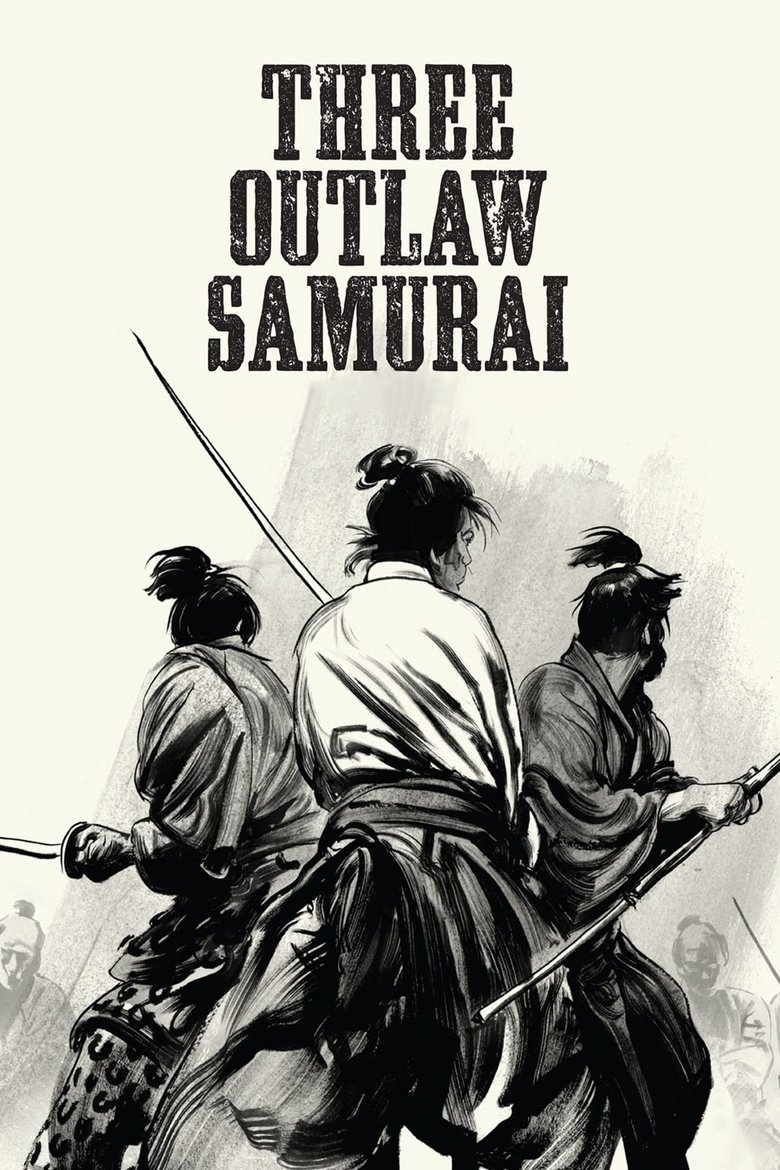
The setup is simple enough: a group of desperate villagers kidnap a corrupt magistrate's daughter, hoping to leverage her safety into some scrap of justice for their suffering. Three masterless samurai get pulled into the standoff, and from there it becomes a battle of wills, loyalty, and bloodshed, where the question of who exactly the outlaws are gets murkier by the scene. The title tells you these men are on the wrong side of respectability. The film makes you wonder whether that's such a bad place to be.
What I find most interesting is how Gosha carves each of the three leads out of a completely different philosophy. One wants order restored, one seems to practically enjoy the chaos, and one walks somewhere between the two, working things out as he goes. Together they generate a dynamic that feels genuinely alive, the kind of friction between characters that keeps you watching even when the plot itself slows down. And it does slow down, particularly in the middle act, where some of that momentum loses its footing and a couple of character threads don't get the depth they deserve. It's not enough to sink the film, but it's noticeable.
When the action arrives, though, it earns its place. There's no wirework showmanship here, no theatrical flourish for its own sake. The swordplay is brutal and grounded, choreographed with real weight behind every movement. You feel the danger in it. These aren't superhuman warriors, they're men who are very good at violence, which is a different thing entirely, and often a lonelier one.
The black-and-white photography suits all of this beautifully. Stark, high-contrast images, deep shadows, wide shots that make the countryside feel both open and oppressive. The score pushes tension into scenes that might otherwise breathe a little too easily. Technically, for a debut feature, this is remarkably assured work from Gosha. There's a confidence in the framing that you don't usually see from a director finding their feet.
It's worth saying that this film sits comfortably in conversation with other Japanese genre pictures of its era. I've covered some brilliant, unsettling work from that period, including The Ghost of Yotsuya (1959), and what strikes me about both films is how willing Japanese cinema of this time was to get genuinely dark about power, corruption, and who pays the price when systems fail ordinary people. Three Outlaw Samurai belongs in that company.
It's also, I'd argue, a film that laid groundwork. The anti-authoritarian bite here, the suspicion of institutions and those who run them, the sympathy for the people crushed underneath, you can trace a line from this to the more rebellious strain of jidaigeki that followed in the years after. It's less celebrated than Seven Samurai or Harakiri, and that's a genuine shame, because it's doing something just as serious, just with a rawer, hungrier energy.
It's not a perfect film. I'll own that. But it's a principled one, and in a genre that can sometimes mistake spectacle for substance, that matters. A story about what it costs to do the right thing inside a broken system, told with sharp steel and a steady hand.
Three and a half stars.
Rating: ★★★½ | Year: 1964 | Watched: 2025-10-18
Where to watch
Watch in the US
Stream: Criterion Channel
Physical: Amazon US
Affiliate disclosure: Movies With Macca may earn a small commission on purchases or subscriptions started via these links. It costs you nothing extra.
Related on Movies With Macca
More from Japan: Mononoke the Movie: The Phantom in the Rain (2024) · Mononoke the Movie: Chapter II - The Ashes of Rage (2025) · Blue (1993) · The Ghost of Yotsuya (1959)
More from the 1960s: Viy (1967) · Persona (1966) · Carnival of Souls (1962) · Daisies (1966)
More action: A Better Tomorrow (1986) · The General (1926) · Hand of Death (1976) · Daredevil (2003)
More drama: Viy (1967) · Wonder (2017) · A Better Tomorrow (1986) · Beautiful Boy (2018)