
The Third Man (1949)
★★★ — The Third Man (1949)

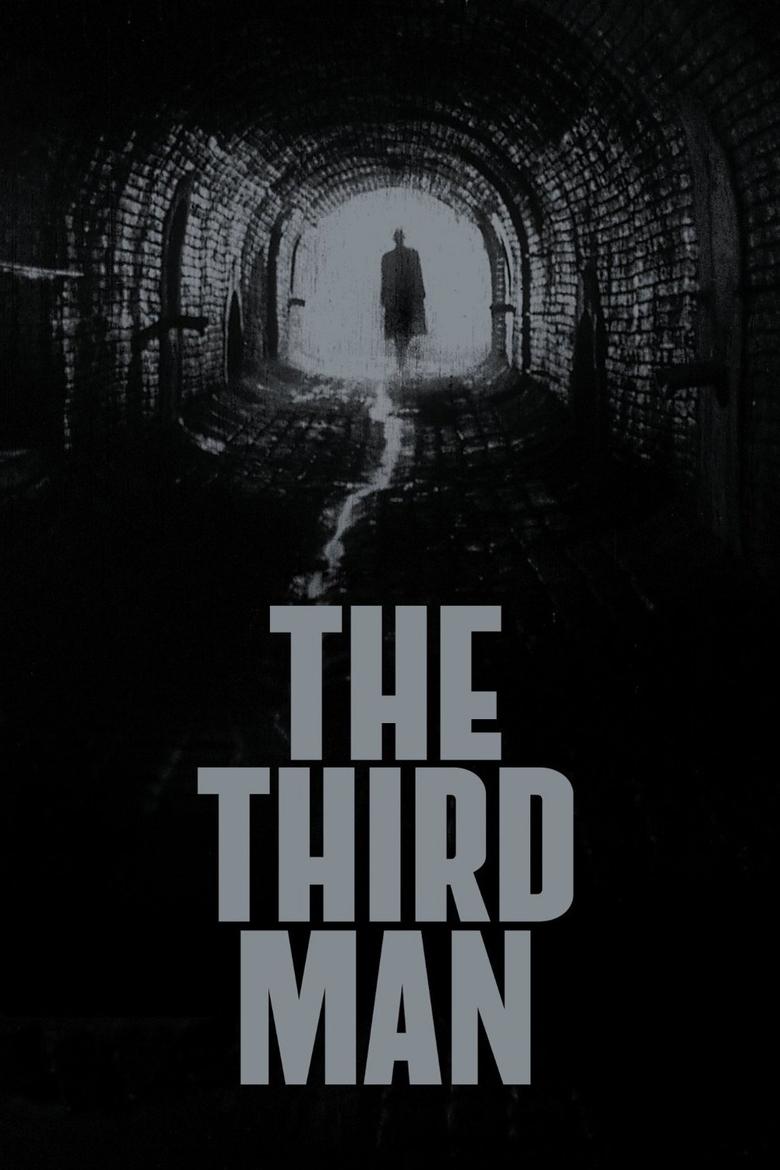
Let me get this out of the way first: I don't think The Third Man is a masterpiece. I know that's not what you want to hear. It's one of those films that comes loaded with so much critical baggage, so many "greatest ever made" proclamations, that sitting down to watch it feels less like an evening's entertainment and more like a compulsory visit to a museum. And when the lights go up, my honest reaction is: yes, brilliant in parts, genuinely flawed in others. Three stars. There, I said it.
What Carol Reed gets absolutely right is the atmosphere. Post-war Vienna has rarely looked so beautiful and so rotten at the same time. The cinematography is extraordinary, all canted angles and wet cobblestones slick under lamplight, shadow carving up every frame. The city itself becomes a character, crumbling, occupied, morally compromised. You can practically smell the damp and the desperation. Graham Greene's screenplay matches the visuals, sharp and cynical, with a wit that cuts through even the grimmest scenes. There's a genuine pleasure in how the story is constructed, Joseph Cotten's Holly Martins arriving to mourn a friend and finding that grief is a more complicated business than he'd bargained for.
And then, of course, there's the reveal. I won't spell it out for anyone who's somehow avoided it, but it remains one of the most purely satisfying moments in all of British cinema. Orson Welles appears on screen for a fraction of the film's running time, yet he colonises the whole thing. His Harry Lime is charming, monstrous, unforgettable, and his famous speech about cuckoo clocks and the Borgias is the kind of writing that lodges permanently in your brain whether you want it to or not.
So why only three stars? Because admiring something and being moved by it are two different things, and The Third Man kept me at arm's length for much of its running time. Some of the supporting performances feel like they wandered in from a different era entirely, theatrical in a way that the camera's intimacy exposes rather than flatters. The stage and the screen demand different things from actors, and not everyone here makes the adjustment.
My bigger problem, though, is Anton Karas's zither score. I know it's iconic. I know people love it. But I find it genuinely disruptive. That jaunty, almost fairground quality sits oddly against the film's paranoia and moral rot. When a scene is building real tension, that plinking theme can puncture it completely, tipping the mood from sinister into something weirdly playful. A score should work with a film's grain, not across it. Every time I started to feel genuinely unsettled, the zither had a way of nudging me back out of the moment. It's a strange creative choice that I've never quite made my peace with, and I've tried.
I think about films like The 39 Steps, which operates in a similar tradition of British suspense and pulls me in completely, every time. The Third Man is the more celebrated film, the more formally ambitious one, and yet it's The 39 Steps that I'd reach for on a dark evening. There's something to be said for a film that doesn't make you work so hard to love it.
None of which means The Third Man isn't worth your time. It absolutely is. It's visually stunning, brilliantly plotted, and Welles alone earns the price of admission. As a piece of film history, it matters enormously, and the craft on display is beyond question. But a landmark and a personal favourite are different things, and I think this film gets conflated with perfection more often than it deserves. You can acknowledge that something is important and still feel it leaves a little cold. That's where I am with this one. More admired than felt, more studied than loved. A classic, just not quite a flawless one.
Rating: ★★★ | Year: 1949 | Watched: 2025-11-08
Where to watch
Watch in the UK
Stream: STUDIOCANAL PRESENTS Apple TV Channel · Studiocanal Presents Amazon Channel · Artiflix
Rent: JustWatch TV · Apple TV Store · Rakuten TV · Amazon Video
Buy: Apple TV Store · Rakuten TV · Amazon Video · Google Play Movies
Physical: Amazon UK · Zavvi
Watch in the US
Stream: IndieFlix · Cineverse · BFI Player Amazon Channel · IndieFlix Shorts Amazon Channel
Rent: Amazon Video · Apple TV Store · Google Play Movies · YouTube
Buy: Amazon Video · Apple TV Store · Google Play Movies · YouTube
Physical: Amazon US
Affiliate disclosure: Movies With Macca may earn a small commission on purchases or subscriptions started via these links. It costs you nothing extra.
Related on Movies With Macca
More from United Kingdom: Lessons of Darkness (1992) · Shinjuku Boys (1995) · The Curse of Frankenstein (1957) · Blue (1993)
More from the 1940s: Louisiana Story (1948) · The Ox-Bow Incident (1943) · Men Without Wings (1946) · The Bank Dick (1940)
More thriller: Invasion of the Body Snatchers (1956) · Angst (1983) · The Long Walk (2025) · Punishment Park (1971)
More mystery: Mononoke the Movie: The Phantom in the Rain (2024) · Mononoke the Movie: Chapter II - The Ashes of Rage (2025) · Carnival of Souls (1962) · One Way or Another (1975)



